
Quick Answer
cutting tool edge honing improves tool life by removing fragile micro-chipping at the cutting edge and replacing it with a controlled edge radius or K-factor that is more stable under load. In wet blasting systems, abrasive suspended in water is accelerated by compressed air to create a fine, repeatable honing action with lower dust and lower risk of abrasive embedding than dry processes. For carbide tools, inserts, drills, and end mills, the main value is a more uniform edge before coating or final use.
| Core Factor | Typical Conclusion |
|---|---|
| Process type | Wet abrasive edge preparation using slurry plus compressed air |
| Primary objective | Controlled edge radius, micro-burr removal, and edge stabilization |
| Typical workpieces | Carbide inserts, end mills, drills, reamers, PCD-related tool components |
| Process environment | Low airborne dust relative to dry blasting |
| Main quality focus | Edge uniformity, repeatability, and coating-ready substrate |
| Typical project lead time | Standard systems are typically faster than highly customized multi-axis cells |
What Is Cutting Tool Edge Honing
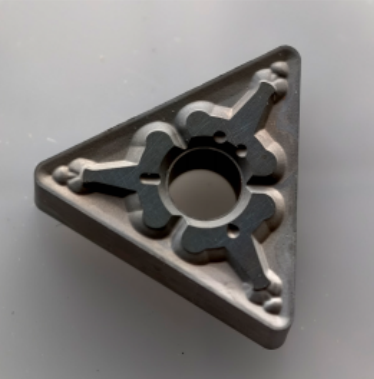
Cutting tool edge honing is the controlled preparation of a cutting edge to remove weakness at the tool tip and create a defined micro-geometry before coating or final use. Instead of leaving a freshly ground edge in a sharp but fragile condition, the process deliberately forms a small radius, waterfall edge, trumpet edge, or asymmetric K-factor profile according to the intended cutting application. This is especially important in carbide tooling, where microscopic edge defects can become crack initiation points during cutting.
In the wider family of surface treatment processes, cutting tool edge honing sits between grinding, polishing, deburring, and functional surface engineering. It is not just cosmetic finishing. The process changes how the edge engages the workpiece, how stresses are distributed, how coating adheres, and how long the tool resists micro-chipping in interrupted or demanding cuts.
For industrial users, the point of edge honing is to make the edge more consistent, not merely less sharp. A tool may leave the grinder with local burrs, micro-notches, or edge serration that are difficult to control part-to-part. Honing replaces that variability with a designed edge condition that can be measured, repeated, and matched to machining strategy.
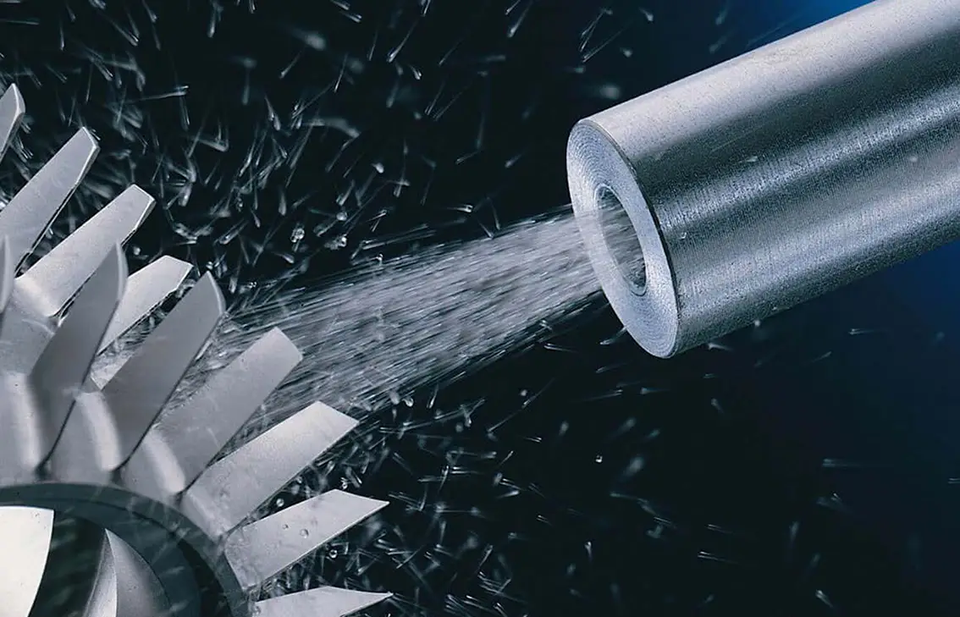
Wet blasting is one of the most common ways to perform precision edge honing on carbide tools because it combines abrasive action with a cushioning water phase. The water reduces airborne dust, supports finer surface action, and helps prevent the harsh dry impact that can produce less controlled results on delicate geometries. In that sense, edge honing is often best understood as a precision application of slurry blasting rather than as a generic cleaning operation.
Why Cutting Tool Edge Honing Matters Before Coating
Edge preparation strongly influences the outcome of PVD, CVD, and related coating processes. If the edge contains grinding burrs or fractured micro-peaks, the coating can bridge unstable features instead of anchoring to a stable substrate. A honed edge typically improves coating support because the substrate geometry is more uniform and less prone to local stress concentration.
This is why many toolmakers treat honing as a prerequisite, not an optional finishing step. The tool does not only need the right macro-shape and flute geometry; it also needs an edge that can survive coating, entry impact, and initial wear without spalling prematurely.
Surface Treatment Benefits of Wet Sandblasting for Tool Edges
Wet blasting-based edge honing offers several process benefits. It can reduce dust, support finer matte finishes, and produce more even material removal at the micro level than many dry blasting setups. It also allows the process engineer to tune abrasive size, slurry concentration, pressure, nozzle angle, dwell time, and workpiece motion to achieve a target edge form rather than a random rounding effect.
For buyers evaluating tool-finishing methods, the key appeal is K-factor control. A well-tuned wet blasting process can produce repeatable edge preparation across similar tools while still allowing different recipes for roughing tools, finishing tools, interrupted-cut inserts, and coating-sensitive geometries. That is the practical difference between general blasting and true edge honing.
How Does Cutting Tool Edge Honing Work
Cutting tool edge honing by wet blasting works by circulating a slurry of water and abrasive, accelerating that slurry through blast nozzles with compressed air, exposing the cutting edge to a controlled micro-erosion effect, and then recovering the used slurry for reuse and waste separation. The goal is not bulk stock removal. The goal is precise modification of the edge micro-geometry with stable process energy.
Slurry System for Wet Blasting Edge Preparation
In a wet blasting edge-honing cell, the abrasive media is mixed with water in a tank and kept in suspension by agitation or recirculation. This slurry is then delivered to one or more nozzles. Because the abrasive is carried in water rather than in a dry air stream alone, the impact tends to be more cushioned and more controllable for sensitive cutting edges.
The slurry formulation matters greatly. Media type, particle size, hardness, and concentration all influence the cutting behavior at the tool edge. A coarse or overly aggressive slurry may remove material too quickly and distort the target radius, while an overly soft or diluted slurry may fail to eliminate grinding defects consistently.
Compressed Air Path, Nozzle Angle, and Edge Exposure
Compressed air accelerates the abrasive-water mixture through the nozzle toward the cutting edge. In edge honing, nozzle angle and stand-off distance are often as important as pressure because they govern where material removal is concentrated. A slight change in angle can shift the edge profile from more symmetrical rounding to a more directional waterfall-style preparation.
Tool handling is equally important. Inserts may be rotated or indexed, while drills and end mills may be presented with controlled axial and circumferential motion to expose the cutting lip evenly. On more advanced systems, servo X/Y/Z movement and programmed part motion are used to achieve wet blasting edge preparation with high repeatability.
Closed-Loop Recovery, Sedimentation, and Waste Handling
After blasting, the slurry drains back into the machine’s recovery loop. Reusable water and still-effective abrasive are recirculated, while fines, fractured media, and removed tool material are separated by sedimentation, screening, or other waste-sand handling methods. A stable recovery loop is essential because edge honing is sensitive to media breakdown and contamination drift.
If the slurry becomes overloaded with fines, the process can lose cutting consistency. The result may be slower removal, different edge texture, or more variation from one batch to the next. That is why industrial systems rely on monitored slurry management rather than simple refill-and-run operation.
Dust Collection, Water Mist Control, and PID Pressure Stability
Although wet blasting greatly reduces dry dust, enclosure design and mist extraction are still necessary. Visibility, machine cleanliness, and operator comfort depend on proper control of splash and water mist inside the blasting chamber. In precision honing, clear visual access can also support setup verification and maintenance.
PID closed-loop pressure control helps maintain a stable blasting condition despite nozzle wear, air fluctuation, or production length. When the process target is a narrow edge-radius window, even small pressure drift can matter. Combined with HMI recipe management, this creates a more reliable foundation for edge radius consistency across repeated production runs.
In carbide edge preparation, consistency at the micron scale matters more than maximum blasting force.
| Process Parameter | Typical Range or Practice | Why It Matters |
|---|---|---|
| Working pressure | Typically about 0.15-0.45 MPa, application dependent | Controls removal intensity and edge-shaping rate |
| Slurry concentration | Often maintained in a typical controlled low-to-medium solids range | Influences cutting action and repeatability |
| Abrasive particle size | Fine media are commonly used for edge preparation; exact PSD depends on target radius | Affects surface texture and micro-geometry control |
| Nozzle stand-off and angle | Set by tool type, edge location, and desired K-factor profile | Determines where material removal is concentrated |
| Media consumption rate | Depends on contamination load, breakdown, and target aggressiveness | Influences cost and process stability |
| Control system | PLC/HMI recipes with pressure regulation and often servo motion | Supports repeat part-to-part edge preparation |
Cutting Tool Edge Honing vs Dry Blasting vs Other Methods
Cutting tool edge honing is often compared with dry blasting, brush honing, drag finishing, and even shot peening, although the objectives are not identical. The right choice depends on whether the user needs precise edge shaping, bulk deburring, coating preparation, or fatigue-related surface treatment. A useful starting point is the broader definition of [abrasive blasting processes], which places wet and dry blasting within the same family while leaving room for very different process behavior.
Dry blasting can produce fast material removal, but for fine carbide edge preparation it may generate more airborne dust and a harsher impact profile. Shot peening, described in [ASTM shot peening terminology], is usually chosen to induce compressive stress rather than to create a controlled cutting-edge radius. Drag finishing can deliver very smooth mass-finishing results, but it may be less selective when the process engineer needs localized edge preparation rather than whole-tool smoothing.
When Wet Blasting Has an Advantage in Tool Honing
Wet blasting edge honing is strongest where the target is controlled micro-geometry and a stable, coating-ready surface. It can be particularly effective on carbide inserts, drills, and end mills where the edge must be prepared without introducing excessive variability. The water phase helps suppress dust and can reduce the tendency toward abrasive impregnation on sensitive surfaces.
That does not mean it replaces every other method. If the requirement is aggressive macro-deburring, high-volume barrel finishing, or a compressive-stress peening objective, other technologies may be better aligned. The selection should follow the desired edge form, production scale, and process capability study.
| Evaluation Dimension | Wet Blasting Edge Honing | Dry Blasting | Shot Peening | Drag / Vibratory Finishing |
|---|---|---|---|---|
| Primary purpose | Controlled edge preparation and surface conditioning | Cleaning, roughening, or general blasting | Compressive stress induction and fatigue improvement | Bulk smoothing and edge softening on multiple surfaces |
| Airborne dust | Low relative to dry blasting | High unless extraction is very strong | Moderate in enclosed dry systems | Low external dust, but media and compound management remain necessary |
| Edge-profile control | High when pressure, angle, and dwell are controlled | Moderate to high, but often less gentle on delicate edges | Limited for true K-factor shaping | Moderate, often less localized |
| Media embedding risk | Reduced on many surfaces because of the water phase | Higher on some sensitive substrates | Depends on shot and material combination | Not directly comparable to blasting embedment |
| Surface finish outcome | Fine, matte, and uniform with good pre-coating potential | Often rougher or more aggressive | Functional peened texture | Smooth all-over finish, sometimes with lower local selectivity |
| Best-fit workpieces | Carbide inserts, drills, end mills, precision tool edges | Robust parts needing general blasting | Springs, gears, fatigue-critical parts | Batches of smaller tools or components needing overall smoothing |
Key Specifications to Evaluate Before Buying
For cutting tool edge honing, the most important specification is not the maximum chamber size. It is the ability of the system to produce the same edge condition repeatedly across the same tool family. That requires coordinated control of pressure, slurry, nozzle geometry, tool positioning, motion logic, and inspection method.
Process Window and Target Edge Geometry
The buyer should define the required edge form before comparing equipment. That may mean a symmetric radius, an asymmetric K-factor, a waterfall edge, or a narrow range of honed land behavior before coating. Without that target, it is impossible to judge whether the machine needs fixed nozzles, indexed fixtures, or servo-linked motion.
The process window should include allowable variation, not just a nominal result. For example, a supplier may demonstrate an acceptable average edge radius while still showing too much part-to-part spread. Cutting tool edge honing is a precision process, so capability matters more than a single successful sample.
Motion Accuracy, Tool Holding, and Nozzle Repeatability
Tool positioning has a direct effect on the edge result. Inserts require precise and repeatable presentation, while drills and end mills may require controlled rotation, indexing, or sweep motion to expose lips and margins evenly. Buyers should ask how the system controls stand-off distance, angle, and orientation at the actual point of blasting rather than relying on nominal axis claims alone.
On more advanced systems, servo-driven X/Y/Z linkage can improve local control of the blast path. This matters especially when tools have complex geometry or when several edge zones must be prepared differently in a single cycle. Where the workpiece family is stable, a dedicated fixture layout may outperform a more flexible but slower generalized setup.
HMI, Recipes, and Quality Traceability
Recipe management is essential when one machine serves multiple tool families. The HMI should store pressure settings, cycle time, nozzle positions, motion paths, slurry conditions, and user permissions. That reduces setup drift between operators and helps preserve process repeatability in multi-shift production.
Quality traceability can also be a differentiator. Some plants need batch records, alarm logs, or parameter recall when a coating or machining issue appears downstream. In those cases, a basic manual system may be cheaper initially but more expensive in troubleshooting time and quality escape risk.
Utilities, Footprint, and Maintenance Planning
Compressed air quality, water handling, electrical requirements, and extraction capacity all matter in wet blasting edge honing. The buyer should also verify how easily the machine can be cleaned, how nozzles are replaced, and how spent slurry or waste sand is discharged. Fine-edge work often depends on stable media condition, which means maintenance convenience has a direct effect on process consistency.
A practical procurement checklist should cover:
- target edge radius or K-factor range;
- acceptable variation band and inspection method;
- tool family, material grade, and coating sequence;
- nozzle arrangement, stand-off, and angle control;
- fixture design for inserts, drills, end mills, or form tools;
- pressure regulation method and slurry concentration control;
- motion accuracy, indexing logic, and throughput;
- HMI recipes, user permissions, and batch traceability;
- mist extraction, sedimentation, and waste handling;
- maintenance access, spare parts, and abrasive replenishment.
Applications Across Industries
Although cutting tool edge honing is most closely associated with carbide tooling, the process supports a wider industrial ecosystem. It is used wherever cutting-edge stability, coating readiness, or controlled micro-geometry affect downstream machining results. The best-known use case is [edge honing of cutting tools], but the same wet blasting logic also appears in deburring, pretreatment, and selected post-processing operations.
In many factories, cutting tool edge honing is part of a broader finishing strategy rather than an isolated station. Toolmakers may validate a new edge recipe in an R&D cell, transfer it to a batch production machine, and later scale it into more automated motion control if the tool family becomes high volume. In that workflow, flexible systems such as [robot-type wet blasting for R&D] and more standardized formats such as [single-chamber production cabinets] each serve different stages of process maturity.
Where Edge Honing Connects to Other Surface Treatment Tasks
The same engineering principles used in tool honing also support nearby applications. Selective deburring on precision metal parts, coating pretreatment, and additive-manufacturing post-processing all benefit from controlled slurry concentration, stable pressure, and well-managed abrasive condition. In that sense, cutting tool edge honing is a specialized branch of wet blasting surface engineering rather than a standalone niche.
Recognized guidance from the [AMPP protective coatings community] is more relevant to coating pretreatment than to tooling, but it helps frame why controlled surface condition matters before downstream functional layers are added. In toolmaking, the downstream layer is often a hard coating rather than paint, yet the need for a stable substrate is conceptually similar.
| Application Type | Target Industry | Workpiece Example | Process Benefit |
|---|---|---|---|
| Cutting-edge preparation | Carbide cutting tool manufacturing | Inserts, end mills, drills, reamers | Controlled edge radius and better coating support |
| Micro-burr removal | Precision tooling and metalworking | Ground carbide or HSS tool edges | Removes weak burrs without heavy stock removal |
| Coating pretreatment | Tool coating and surface engineering | Honed tools before PVD or CVD | More uniform substrate before functional coating |
| Post-grind defect conditioning | Tool reconditioning | Reground inserts and rotary tools | Reduces micro-chipping and edge irregularity |
| Complex-form edge treatment | Aerospace and medical tooling | Form tools and profile cutters | Better access to localized edge zones |
| AM tool-component finishing | Additive manufacturing and hybrid tooling | Printed tool holders or functional inserts | Controlled cleanup on repeat geometries |
| Light deburring of metal parts | Precision component manufacturing | Small machined components | Selective edge cleanup using similar wet blasting logic |
| Fine matte finishing | Electronics and technical parts | Small precision components | Uniform cosmetic or tactile surface treatment |
Equipment Selection Guide
The right equipment for cutting tool edge honing depends on production scale, tool geometry, and the level of edge-control required. A plant producing a few prototype end mills does not need the same system architecture as a carbide insert factory running repeat lots with strict K-factor control. That is why equipment selection should follow application maturity as much as raw output.
Choosing Between R&D, Batch, and Production Edge-Honing Systems
R&D systems are useful when the edge target is still being developed. They allow adjustment of media, pressure, angle, motion, and cycle logic while engineers evaluate wear behavior and coating performance. Production systems become more attractive once the edge recipe is validated and the main task is maintaining that recipe at stable cost and throughput.
Single-piece or chamber-based machines often suit smaller families of high-value tools. Higher-volume toolmakers may need more fixture density, more consistent part presentation, or partially automated handling to keep takt time under control. In some cases, a double-chamber format offers better utilization than a more complex inline design when the workpieces are discrete tool batches rather than continuous stock.
Matching Geometry to Machine Architecture
Flat inserts, rotary tools, and complex form tools do not interact with the blast stream in the same way. Inserts can often be processed with indexing fixtures and repeatable nozzle angles. Rotary tools may need controlled rotation and multi-axis exposure, while complex tools benefit from programmable sweep paths or more flexible robot-assisted handling.
The selection matrix below shows a practical way to segment common configurations:
| Configuration / Model Tier | Target Production Scale | Workpiece Size Range | Precision Level | Recommended Applications |
|---|---|---|---|---|
| 1. Bench R&D unit | Lab trials and recipe development | Very small tools | Moderate | Early-stage media and pressure validation |
| 2. Robotic sample-testing cell | R&D and small pilot runs | Small precision tools | High | Multi-angle trials on inserts, drills, and complex edges |
| 3. Manual batch cabinet | Small-lot production | Small to medium tools | Moderate | Flexible trial production and mixed tool families |
| 4. Standard single-chamber cabinet | Repetitive batch production | Inserts and small rotary tools | High | Validated edge honing with stable recipes |
| 5. Single-piece dedicated system | Medium-volume discrete tools | Medium tools | High | Individual part control and repeatable edge exposure |
| 6. Servo multi-axis honing cell | Precision production | Small to medium complex tools | Very high | Directional K-factor control and complex edge geometry |
| 7. Double-chamber utilization-focused system | Higher batch throughput | Small to medium repetitive tools | High | Parallel loading and blasting for better output |
| 8. Custom application-specific line | Large or specialized programs | Tool-specific geometry range | High to very high | Dedicated edge preparation integrated with upstream or downstream operations |
Cost, Lead Time and ROI Considerations
The cost of a cutting tool edge honing system depends heavily on how much precision control is required around the edge, not only on chamber size or installed power. A simple wet blasting cabinet for general finishing is one thing; a tool-focused system capable of stable K-factor preparation across multiple geometries is another. Fixture design, motion control, recipe management, and slurry stability all contribute to cost because they directly affect edge repeatability.
Automation level is a major driver. Manual or semi-manual systems can be suitable for small lots, process development, or mixed geometries, but they depend more on operator consistency. Servo-assisted motion, indexed fixtures, and programmable recipes raise the initial investment while typically improving repeatability and reducing the cost of process drift.
Media and slurry management also deserve attention. Fine edge preparation is sensitive to abrasive breakdown, contamination, and concentration change, so machines with better agitation, sedimentation, and waste handling may cost more up front but reduce quality variation later. The same logic applies to mist extraction, nozzle wear management, and maintenance access.
Lead time should be treated as typical rather than fixed. Standard cabinets or established model tiers are usually delivered faster than heavily customized edge-honing cells with unique fixture packages or validation requirements. Projects often take longer when sample testing, edge measurement correlation, or multi-tool-family recipe development is part of the scope.
ROI is usually strongest where edge preparation clearly affects downstream cost. In cutting tools, that may mean longer tool life, fewer early-edge failures, better coating adhesion, less scrap during tool proving, and more predictable wear behavior in the customer’s machining process. Even a modest improvement in edge stability can carry high value when the tool itself is expensive or when failure causes machine downtime.
The economics also depend on what process the new system replaces. If the current method is manual deburring, inconsistent dry blasting, or an operator-dependent workaround after grinding, the new process may save labor and reduce variation simultaneously. If the plant already has a capable automated edge-preparation route, the business case may depend more on incremental quality gains than on labor reduction alone.
A disciplined ROI review should therefore compare total process outcomes rather than machine price in isolation. That includes sample qualification time, abrasive consumption, operator skill requirement, maintenance burden, coating performance, and the cost of rejected or unstable tools. In high-value tooling, small differences in edge quality can outweigh large differences in auxiliary equipment cost.
Why Choose DasiAuto?
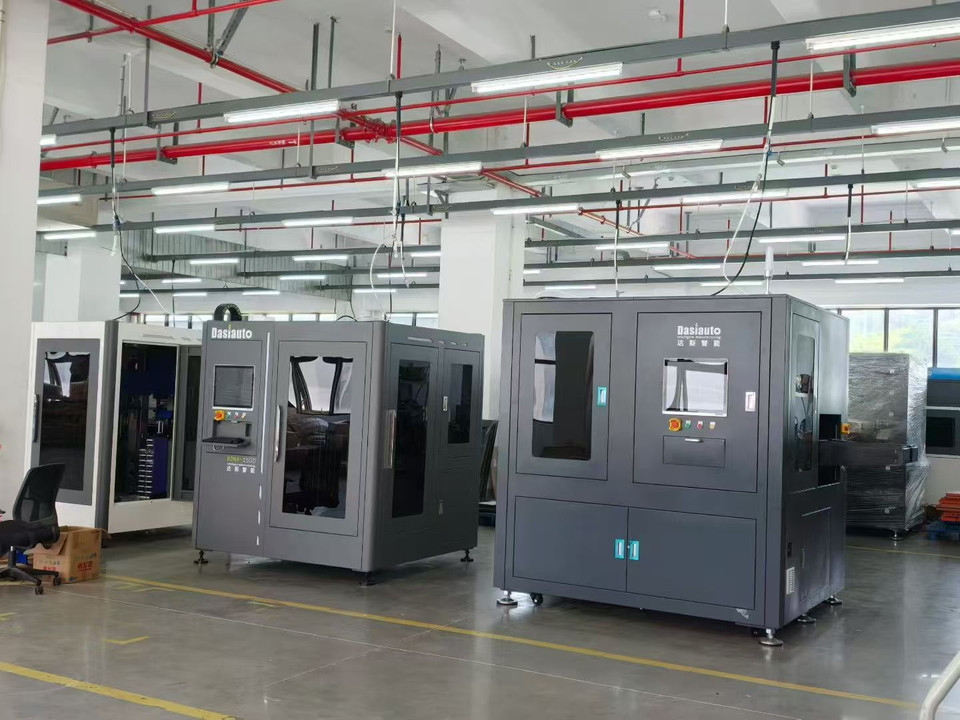
Established in 2012, DasiAuto develops and manufactures wet blasting equipment for industrial surface treatment. The company brings together equipment engineering, abrasive media, and application development, as described in About DasiAuto.
Application testing and process development help evaluate abrasive media and treatment settings before the equipment configuration is defined. Equipment engineering can bring together the blasting system, fixtures, automation, and part handling around the application.
Suitability for a particular material, geometry, finish, or dimensional requirement needs to be established through representative sample testing. DasiAuto supports installation, operator training, and ongoing technical support through the production workflow.
FAQ
Can Cutting Tool Edge Honing Be Customized for Different Tool Geometries?
Yes. Inserts, drills, end mills, reamers, and form tools usually require different nozzle angles, fixtures, cycle times, and sometimes different media grades. A capable system should allow recipe-based adjustment so that each tool family can be processed to its own edge target rather than forcing one general setting.
Is Sample Testing Necessary Before Ordering an Edge-Honing Machine?
In most cases, yes. Sample testing helps verify the achievable edge radius or K-factor, confirm whether the process is symmetrical or directional, and show how the edge behaves before coating. It also reveals whether the application needs a simple batch machine or a more advanced motion-controlled setup.
What Production Information Should Be Prepared for Quotation and Process Evaluation?
Suppliers typically need drawings, tool photos, substrate material, current edge condition, target edge geometry, expected throughput, and coating sequence. If available, edge-measurement data and tool-life feedback are also useful because they help connect the honing target to actual machining performance. This shortens the time needed to define a realistic process window.
How Long Does Installation and Commissioning Usually Take?
That depends on machine complexity. A standard chamber-based wet blasting system is generally faster to install than a custom multi-axis cell with specialized fixtures and recipe validation. Commissioning should include media setup, pressure verification, nozzle alignment, trial processing, operator training, and correlation of the machine result with the chosen edge-measurement method.
What Consumables and Spare Parts Are Most Important in Cutting Tool Edge Honing?
Common planning items include blasting media, nozzles, hoses, seals, pump wear parts, viewing protection items, and slurry-handling components. Because edge quality is sensitive to media condition, abrasive replenishment and contamination control are not minor details; they are part of the process itself. Plants should also plan for periodic nozzle replacement because wear changes the blast pattern over time.
How Should After-Sales Support Be Evaluated for a Precision Edge-Honing Project?
The key issue is not only machine repair but process stability after handover. Buyers should review whether the supplier can support recipe adjustment, spare-parts supply, abrasive resupply, training refreshers, and troubleshooting when edge measurements drift or downstream coating results change. For precision tool finishing, support quality is closely tied to long-term control of the process window.