
Quick Answer
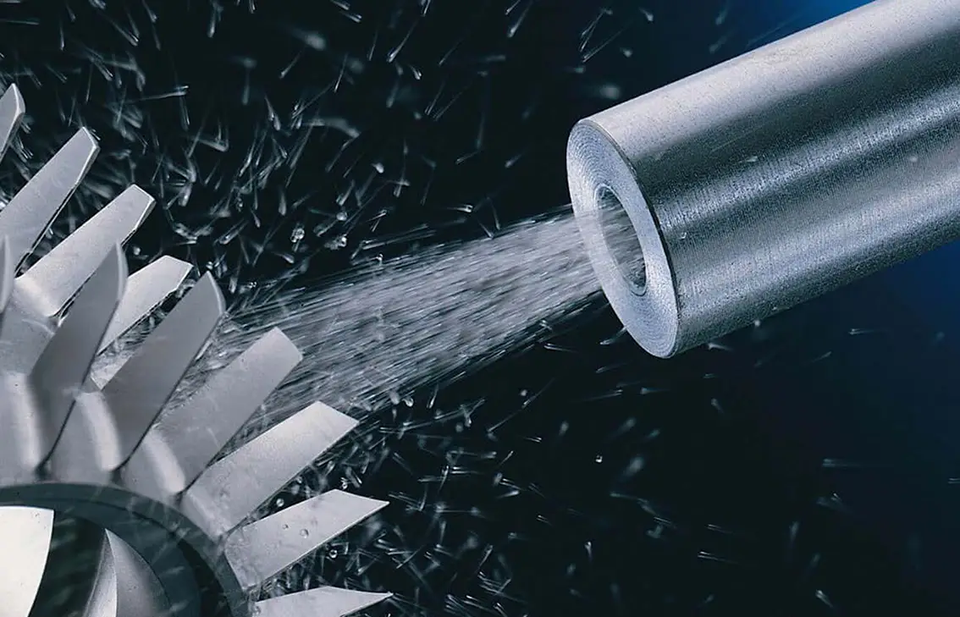
Carbide insert edge honing improves tool life by replacing a fragile, freshly ground edge with a controlled micro-geometry that better resists chipping, coating failure, and unstable wear. In wet blasting systems, abrasive suspended in water is directed at the insert edge under controlled pressure, angle, and exposure time, producing repeatable edge preparation with lower airborne dust than dry blasting. For most manufacturers, the process is valuable when they need stable edge radius, pre-coating consistency, and scalable batch production for inserts used in milling, turning, grooving, or drilling.
| Core Factor | Typical Conclusion |
|---|---|
| Process type | Wet blasting / slurry blasting edge preparation |
| Common pressure band | Typically low-to-medium blasting pressure for controlled micro-erosion |
| Quality objective | Defined edge radius, K-factor, and burr-free edge condition |
| Dust behavior | Low airborne dust relative to dry blasting |
| Main workpieces | Carbide turning inserts, milling inserts, grooving inserts, indexable drills |
| Typical project timing | Standard batch systems are typically faster than fully custom servo cells |
What Is Carbide Insert Edge Honing
Carbide insert edge honing is the controlled preparation of the cutting edge on cemented carbide inserts after grinding and before coating or final use. Instead of leaving the edge in a highly sharp but mechanically vulnerable condition, the process forms a small, intentional edge geometry that can better withstand cutting loads. Depending on the application, that geometry may be a symmetric radius, a chamfer-plus-radius combination, or a directional edge form tailored to chip flow and wear behavior.
In the broader industrial process family, carbide insert edge honing belongs to precision surface treatment and is commonly achieved by wet blasting, wet sandblasting, slurry blasting, or vapor blasting. The underlying logic is related to abrasive blasting terminology, but the purpose is more specific: the machine is not just cleaning the insert surface. It is shaping the edge at a micro scale so the insert enters service with a more stable cutting zone.
For carbide-tool makers, the main benefit is edge radius stability. Ground inserts often carry burrs, micro-chips, or irregular peaks that are difficult to see but easy to activate under cutting load. Edge honing removes those weak features and converts the edge into a more durable, repeatable geometry that can support coating adhesion and reduce early failure in service.
Why the Process Matters Before Coating
The importance of carbide insert edge honing increases when inserts are coated. A coating deposited over an inconsistent or overly sharp edge may crack, thin out, or detach earlier at the edge zone, especially under interrupted cuts or hard materials. By creating a defined pre-coating edge, the honing step gives the downstream coating process a more consistent substrate to follow.
That is why many carbide producers treat edge honing as part of the full tool-engineering chain rather than as a cosmetic finishing step. Grinding defines the macro geometry, honing stabilizes the edge, coating builds the wear system, and cutting performance reflects the interaction of all three.
Where Wet Blasting Fits in the Process Family
Among the available methods, wet blasting is widely used because it can combine fine abrasive action with relatively gentle, uniform material removal. Water carries the abrasive, suppresses dust, and cushions the impact compared with a purely dry stream. In a production setting, that helps the process hold a narrow operating window for edge preparation rather than behaving like a rough cleaning operation.
Another benefit is cleaner part handling. Wet blasting supports enclosed, low-dust processing and can reduce the risk of stray particulate contamination across the finishing area. For insert manufacturers handling large volumes of small parts, that process discipline matters almost as much as the edge result itself.
Core Selling Points of a Dedicated Honing Process
A dedicated carbide insert edge honing process usually offers four advantages over less controlled alternatives:
- more repeatable edge geometry from batch to batch;
- lower airborne dust than dry blasting;
- finer, more uniform matte surface conditioning;
- better integration with pre-coating production flow.
These points explain why many toolmakers treat wet blasting-based honing as a production technology, not merely a finishing convenience. On a well-configured line, the same process logic used for edge honing of cutting tools can also support recipe discipline, operator consistency, and traceable process development across insert families.
How Does Carbide Insert Edge Honing Work
Carbide insert edge honing works by circulating a slurry made of water and fine abrasive media, accelerating that slurry with compressed air, directing it onto the insert edge at a controlled angle and distance, and then recovering the spent slurry in a closed-loop system. The process removes a very small amount of carbide from the edge zone through repeated micro-impacts rather than through single-point cutting. That makes it especially suitable for stabilizing the edge without regrinding the entire insert.
Slurry System and Abrasive Suspension
The process begins in a slurry tank where water and abrasive are mixed into a stable suspension. Agitation or circulation is needed so the media do not settle out and create drift in cutting intensity during the shift. For insert production, stable slurry condition is essential because small changes in concentration can affect both edge radius growth and surface finish.
Abrasive choice depends on the carbide grade, the starting edge condition, and the target K-factor or radius. Finer media are generally used when the objective is subtle edge conditioning and minimal surface disturbance. Coarser media may accelerate stock removal, but they also widen the process window and can make fine geometry control more difficult.
Compressed Air Acceleration and Nozzle Exposure
Once mixed, the slurry is delivered to the blast circuit and accelerated by compressed air through the nozzle. Nozzle size, angle, and stand-off distance determine how the abrasive energy is distributed along the cutting edge. In carbide insert edge honing, the aim is not maximum attack but controlled, repeatable exposure.
Insert fixturing is equally important. Because inserts are small and often have multiple usable edges, the machine must present each edge consistently to the blast stream. The more consistent the fixture and nozzle relationship, the more predictable the resulting edge geometry.
Closed-Loop Recovery and Sedimentation
After blasting, the slurry falls back into the machine’s recovery area and returns to the circulation loop. During that cycle, broken abrasive, carbide fines, and sludge are separated gradually through sedimentation and waste handling. A closed-loop system reduces consumption, but its deeper value lies in keeping the process stable over time.
When recovery and sedimentation are poorly managed, the machine may continue running while producing a different result than it did earlier in the day. That is why automatic waste-sand management is not just a housekeeping feature. It is part of process repeatability in precision insert manufacturing.
Dust Collection, Water Mist Control, and Pressure Stability
Although wet blasting sharply reduces dry dust, the cabinet still needs proper control of water mist, splash, and visibility. Enclosed chambers and wet-process-compatible dust or mist collection help keep the work zone stable and safer for operators. This is particularly important where many inserts are loaded and unloaded repeatedly through the shift.
Pressure control is another critical variable. A system using PID-regulated blasting pressure can maintain a more constant process state as nozzle wear, line resistance, or air demand changes. For carbide insert edge honing, stable pressure is often more valuable than high pressure, because the process window is defined by micro-geometry consistency rather than by removal speed alone.
In carbide insert edge honing, consistency of the edge form matters more than aggressiveness of the blast.
| Process Parameter | Typical Range or Practice | Why It Matters |
|---|---|---|
| Working pressure | Typically about 0.15-0.45 MPa, application dependent | Controls micro-erosion rate and edge-forming intensity |
| Slurry concentration | Usually maintained in a controlled low-to-medium solids band | Affects cutting action, finish, and batch stability |
| Abrasive particle size | Fine media commonly selected for insert edge preparation | Influences edge radius growth and surface texture |
| Stand-off and nozzle angle | Set according to insert shape and target K-factor | Determines where energy is concentrated on the edge |
| Media consumption | Depends on breakdown, contamination, and cleaning practice | Influences operating cost and result consistency |
| Control system | PLC/HMI recipes with regulated pressure and timed exposure | Supports repeatable insert-to-insert processing |
Carbide Insert Edge Honing vs Dry Blasting vs Other Methods
Carbide insert edge honing is usually evaluated against several competing finishing routes: dry blasting, drag finishing, vibratory finishing, and in some cases brushing or peening-related methods. Each has a place, but they solve somewhat different problems. The best choice depends on whether the factory values local edge control, whole-part smoothing, low dust, fixture flexibility, or the lowest capital entry point.
Dry blasting can remove material quickly and may be adequate for rougher surface work, but it tends to create a harsher environment for precision insert finishing. Drag and vibratory methods can be effective for general edge smoothing across multiple edges at once, yet they often affect the entire insert more broadly and may offer less selectivity in edge shaping. Shot peening is an established process class with its own framework in shot peening standards and methods, but its primary purpose is not the same as precise insert-edge radius formation.
Wet Sandblasting Versus Dry Blasting for Inserts
For carbide inserts, the strongest case for wet blasting is controlled edge conditioning with lower airborne dust. Water acts as the carrier medium, helping produce a more even, cushioned micro-erosion effect than a fully dry stream. That generally makes it easier to achieve fine, repeatable edge preparation without treating the part like a rough-cleaning target.
Dry blasting still has uses where a shop prioritizes simple equipment and is less sensitive to dust load or ultra-fine edge control. However, when the insert manufacturer needs narrow radius targets and reliable pre-coating behavior, wet blasting often offers a more manageable process window.
Why Other Methods Remain Relevant
Vibratory and drag finishing remain relevant because they can process many parts together and may suit certain insert programs where overall smoothing is more important than highly directional K-factor control. Brushing can be economical for light burr removal, but it is generally less robust for complex or tightly controlled edge outcomes. The procurement decision should therefore be based on the geometry target and quality-control method, not on tradition alone.
| Evaluation Dimension | Wet Blasting Edge Honing | Dry Blasting | Shot Peening | Vibratory / Drag Finishing |
|---|---|---|---|---|
| Main purpose | Controlled insert edge preparation | General blasting and rougher edge treatment | Surface stressing / functional peening | Whole-part smoothing and deburring |
| Dust generation | Low relative to dry blasting | High unless extraction is extensive | Moderate in enclosed systems | Low airborne dust, but media separation is needed |
| Edge selectivity | High with nozzle, fixture, and time control | Moderate | Limited for precise edge shaping | Moderate, often less localized |
| Surface finish | Fine, uniform matte finish is typical | More aggressive texture is common | Peened functional texture | Smooth overall finish |
| Media embedding risk | Reduced on many surfaces due to water phase | Higher on some sensitive surfaces | Depends on media and material pairing | Different mechanism; not directly comparable |
| Environmental handling | Wet sludge and slurry management | Dust collection burden is higher | Dry media containment required | Media, compound, and wastewater handling |
Key Specifications to Evaluate Before Buying
When evaluating equipment for carbide insert edge honing, the first step is to define the output in measurable terms. That means more than “remove burrs” or “make the edge stronger.” The procurement team should specify the target edge radius or K-factor range, the acceptable variation band, the insert families involved, and whether the process occurs before or after any cleaning or coating steps.
A second priority is blasting-pressure stability. Pressure range matters, but stable control matters more. For insert production, a machine should hold a consistent blasting state through long runs, nozzle wear, and routine maintenance cycles. If the pressure fluctuates significantly, the process can drift even while time and fixturing remain unchanged.
Motion and positioning capability should match the insert mix. Flat, indexable turning inserts may work well in high-density batch fixtures, while more complex insert geometries may need programmable indexing or multi-axis nozzle motion. Where multiple edges must be honed with controlled symmetry, repeatable part presentation becomes a deciding factor in machine selection.
Throughput should be evaluated together with loading logic. A chamber that accepts many inserts at once may look productive, but if fixture setup is slow or changeovers are frequent, practical throughput can fall below expectation. The best analysis compares cycle time, fixture density, operator intervention, and inspection frequency as one system rather than as isolated numbers.
HMI and recipe control are also essential. A production-grade machine should store blasting pressure, cycle time, motion path if applicable, user permissions, and alarm history. On multi-shift production, recipe locking can be just as important as nozzle design because it prevents informal adjustment that widens edge variation.
Maintenance design deserves close attention. Buyers should ask how slurry is mixed, how sediment is discharged, how quickly nozzles can be changed, how visibility is maintained in the cabinet, and how the machine signals abrasive degradation. These factors directly affect uptime and consistency, particularly in a process where small drift can change insert behavior on the machine tool.
Utilities and safety are part of the specification, not afterthoughts. Compressed air quality, water management, enclosure sealing, interlocks, and mist extraction all influence whether the process can run cleanly in production. Facilities teams should also review floor space, service access, and whether the machine layout fits the wider finishing and inspection flow.
Finally, the buyer should judge the machine by its ability to support process validation. If the supplier can help correlate blasting settings with actual edge measurement and downstream cutting performance, the machine becomes a controlled manufacturing step rather than a black-box finishing station. That distinction usually determines whether the investment scales successfully beyond the initial trial phase.
Applications Across Industries
Although carbide insert edge honing is the primary focus here, the same wet blasting principles extend to many adjacent finishing applications. That matters because many factories do not buy a process only for one part family. They buy a platform that can also support deburring, pretreatment, and fine surface conditioning across different product lines.
In the cutting-tool industry, insert honing is typically used before PVD or CVD coating and before final quality verification. Outside that segment, similar abrasive control can be used for burr removal, additive-manufacturing cleanup, scale removal, or matte finishing of sensitive surfaces. The overlap is one reason wet blasting equipment often appears in mixed manufacturing environments rather than only in tool plants.
A related example is pretreatment before painting or conversion coating. Surface condition has long been recognized as central to coating performance, and the broader framework behind surface preparation for coatings explains why controlled cleaning and roughness matter before downstream layer application. While coating pretreatment is a different use case from insert honing, the equipment logic of controlled wet abrasive exposure is closely related.
| Application Type | Target Industry | Workpiece Example | Process Benefit |
|---|---|---|---|
| Edge honing of cutting tools | Carbide tool manufacturing | Turning inserts, milling inserts, grooving inserts | Stable edge geometry and reduced weak-edge defects |
| Burr removal | Precision metal parts | Small machined, stamped, or sintered components | Selective deburring with controlled surface impact |
| Scale removal | Steel and forging supply chain | Bars, forgings, heat-affected surfaces | Oxide removal before downstream processing |
| Pretreatment before coating | General industrial finishing | Metal parts before paint or functional coating | Cleaner, more uniform substrate condition |
| AM post-processing | Additive manufacturing | 3D-printed metal parts and hybrid tools | Surface refinement and loose-powder cleanup |
| Peening of metal parts | Mechanical component manufacturing | Springs, gears, load-bearing components | Functional surface conditioning |
| Glass surface treatment | Architectural and technical glass | Frosted panels and specialty glass parts | Uniform matte appearance |
| 3C device finishing | Electronics and precision housings | Covers, frames, decorative metal parts | Fine smoothing and cosmetic consistency |
Equipment Selection Guide
Selecting equipment for carbide insert edge honing depends on whether the plant is still developing the process or already running validated insert families. Early-stage projects often need flexibility to test abrasive type, angle, and exposure time. Mature programs usually need fixture density, recipe locking, and predictable shift-to-shift output.
Eight Common Configuration Paths
A practical way to organize the decision is by configuration tier. A lab or pilot team may start with a robot-assisted or flexible R&D cell that allows rapid method development across multiple insert shapes. In the DasiAuto lineup, an R&D robot wet blasting unit fits that role, because sample validation often requires more flexibility than volume.
Once the recipe is stable, a batch chamber becomes more attractive. A single-chamber batch cabinet can suit routine insert production where one family of inserts is processed repeatedly with controlled loading. When utilization rises further, a double-chamber wet blasting system can improve line efficiency by separating loading and blasting activities more effectively.
Matching Configuration to Insert Mix
The right choice also depends on how varied the inserts are. Standard turning inserts with consistent geometry may be ideal for dense batch fixturing, while special milling inserts, chipbreaker variations, or complex edge-preparation requirements may justify more motion control or single-piece exposure. Factories with broad product catalogs often benefit from modular fixturing and strong recipe management even if their nominal throughput is not the highest.
| Configuration / Model Tier | Target Production Scale | Workpiece Size Range | Precision Level | Recommended Applications |
|---|---|---|---|---|
| 1. Bench development unit | Lab screening and early trials | Small inserts and coupons | Moderate | Abrasive and pressure feasibility testing |
| 2. Robot-assisted R&D cell | Pilot validation and sample work | Small precision inserts | High | Multi-angle process development |
| 3. Manual flexible cabinet | Small lots and mixed insert types | Small inserts | Moderate | Frequent changeovers and varied geometry |
| 4. Standard single-chamber batch system | Regular batch production | Small to medium insert families | High | Stable recipe-based edge honing |
| 5. Single-piece controlled machine | Medium-volume discrete processing | Individual high-value inserts | High | Tight cycle control and traceability |
| 6. Servo multi-axis honing cell | Precision production | Complex insert geometries | Very high | Directional K-factor and advanced edge access |
| 7. Double-chamber utilization system | Higher-throughput batch output | Repetitive insert programs | High | Parallel loading with consistent recipes |
| 8. Custom application-specific line | Dedicated industrial workflow | Insert-specific range | High to very high | Integrated honing inside a broader finishing line |
Cost, Lead Time and ROI Considerations
The cost of carbide insert edge honing equipment depends mainly on control complexity rather than on cabinet size alone. A basic wet blasting setup for general deburring is fundamentally different from a machine intended to deliver controlled insert-edge geometry. Price is typically shaped by motion capability, fixture sophistication, HMI depth, recovery-loop design, mist control, and the level of automation built into loading or indexing.
Lead time follows a similar pattern. Standardized machines with known chamber layouts are usually delivered faster than custom systems requiring sample studies, insert-specific fixtures, or advanced motion programming. As a rule, the more the project depends on validated process development before shipment, the more the total timeline reflects engineering and testing rather than fabrication alone.
For ROI, the most relevant comparison is not “machine cost versus manual labor” in isolation. A better model compares the current edge-preparation route with a controlled wet blasting route across labor, scrap, coating performance, and field tool life. If inserts currently need frequent rework or show early edge failure, the economic effect of process control can easily exceed the labor savings alone.
Labor savings still matter, especially where operators manually blast, brush, or sort inserts with inconsistent outcomes. A recipe-based machine can reduce dependence on individual technique and shorten time lost to adjustment or repeated inspection. That effect becomes more visible as volume rises or when multiple shifts must maintain the same quality window.
Quality-related return is often stronger. Carbide insert edge honing can support more stable coating coverage at the edge, reduce fragile micro-defects, and lower the probability of early chipping in service. Even modest improvement in the stability of insert performance can have a large downstream value because cutting tools influence cycle time, scrap, and confidence on the customer’s machine tool.
A third ROI category is process integration. When wet blasting edge honing is linked logically with grinding, cleaning, coating, and inspection, the plant spends less time diagnosing whether failures come from the edge, the coating, or handling variation. In that sense, a well-implemented honing machine reduces process ambiguity as well as operating cost.
Why Choose DasiAuto?
Established in 2012, DasiAuto develops and manufactures wet blasting equipment for industrial surface treatment. The company brings together equipment engineering, abrasive media, and application development, as described in About DasiAuto.
Application testing and process development help evaluate abrasive media and treatment settings before the equipment configuration is defined. Equipment engineering can bring together the blasting system, fixtures, automation, and part handling around the application.
Suitability for a particular material, geometry, finish, or dimensional requirement needs to be established through representative sample testing. DasiAuto supports installation, operator training, and ongoing technical support through the production workflow.
FAQ
Can Carbide Insert Edge Honing Be Customized for Different Insert Grades and Chipbreaker Geometries?
Yes. Different carbide grades, edge strengths, chipbreaker forms, and coating plans usually require different blasting pressure, abrasive selection, fixture design, and exposure time. A useful production setup should allow recipe-based adjustment so the process can be matched to several insert families without uncontrolled manual changes.
Is Sample Testing Necessary Before Buying Carbide Insert Edge Honing Equipment?
In most cases, yes. Sample testing helps verify whether the target edge radius or K-factor can be achieved on the actual insert geometry and whether the finish remains suitable for coating and final cutting use. It also helps determine whether a standard chamber machine is sufficient or whether a more advanced motion-controlled configuration is justified.
What Information Should a Buyer Provide for Quotation and Technical Review?
The supplier will usually need insert drawings, carbide grade information, the current edge condition after grinding, the desired edge geometry, coating sequence, and expected production volume. Edge measurement data, photos, and notes on actual failure modes in cutting are also useful because they help translate a general request into a workable process specification.
How Are Installation, Commissioning, and Operator Training Usually Handled?
A proper commissioning scope should include machine startup, slurry preparation, nozzle and fixture setup, recipe validation, and basic maintenance instruction. Operator training should not stop at button operation; it should also cover slurry condition, nozzle wear, cleaning intervals, and how process drift appears in edge results.
What Consumables and Spare Parts Matter Most in Carbide Insert Edge Honing?
Abrasive media, nozzles, hoses, seals, pump wear components, cabinet protection parts, and slurry-handling items are the core consumables. Because edge result depends on stable abrasive behavior, media management is a process-control issue rather than a simple purchasing issue. Spare parts planning should therefore focus on the components most likely to affect blast pattern and pressure stability.
How Should Buyers Evaluate After-Sales Support for a Honing Project?
The most important question is whether support extends beyond mechanical repair into ongoing process stability. Buyers should review how the supplier handles spare parts, abrasive resupply, troubleshooting, recipe refinement, and revalidation when insert geometry or coating requirements change. For carbide insert edge honing, long-term support is closely tied to long-term consistency.