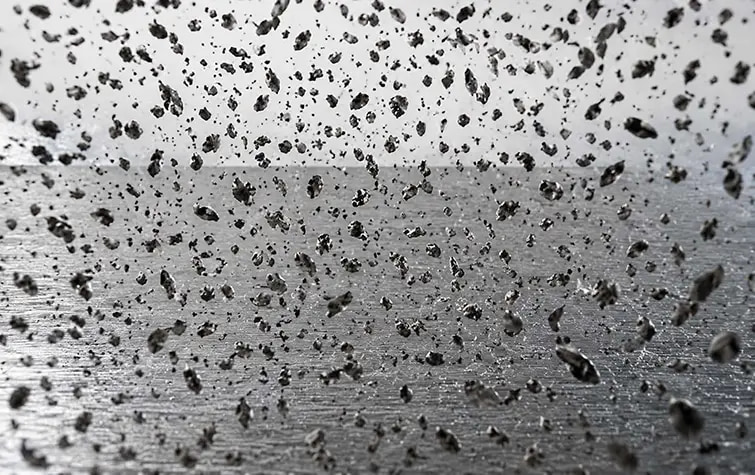
Wet blasting directs water and abrasive particles onto a workpiece with compressed air. For deburring, the aim is to remove unwanted projections at a surface or edge while keeping the surrounding part within its requirements.
The starting point is the burr itself: where it occurs, how firmly it is attached and what must remain unchanged around it. Fine-burr removal, appropriate abrasive selection and treatment of selected areas define the starting scope for a DasiAuto application review.
Define the Task
Identify the Burr and the Surface to Preserve
A deburring specification should describe both the unwanted material and the acceptable finished condition. A visibly cleaner part may still fail if a hole edge, mating feature or surface texture changes beyond its allowance.
Before discussing equipment, identify:
- Burr Location: External contours, hole edges and any other treatment areas marked on the drawing or sample.
- Incoming Condition: The material, preceding operation and variation between representative parts.
- Permitted Edge Change: Which edges may be softened and which must retain their specified geometry.
- Surface Requirements: The required texture, appearance and any surfaces that need protection.
Use the largest or most difficult recurring burr as part of the assessment. A sample chosen only for its good starting condition cannot establish the process boundary for production.
Surface and Edge Examples
Fine Burr Removal and Edge Condition
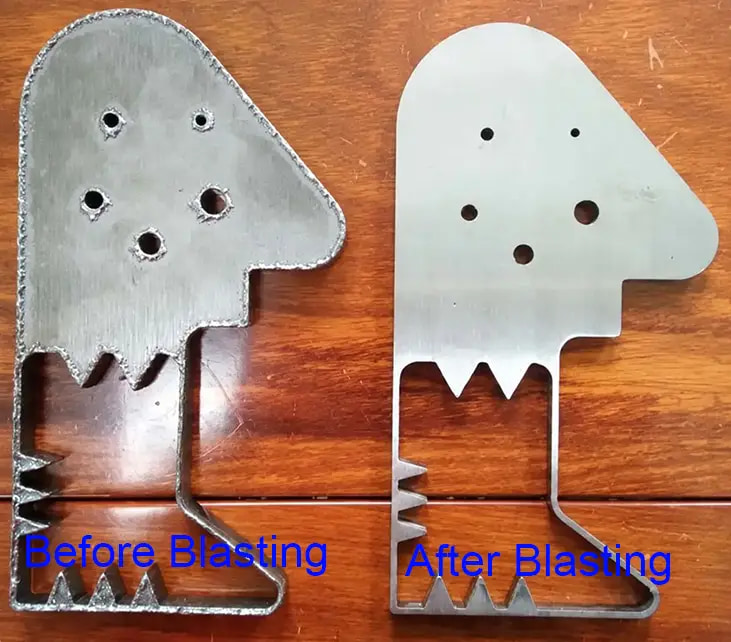
The before-and-after photograph places two plate-shaped parts side by side with different overall appearances. View the complete parts together when considering the desired finished condition.
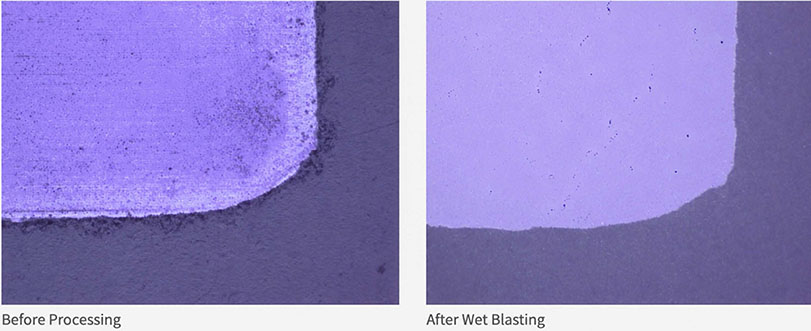
The separate cross-section comparison brings the edge into closer view. Together, these photographs provide qualitative examples of surface and edge appearance. Set dimensional, texture and burr-removal acceptance criteria using the requirements of the actual component.
The Process
Control Abrasive Action and Treatment Access
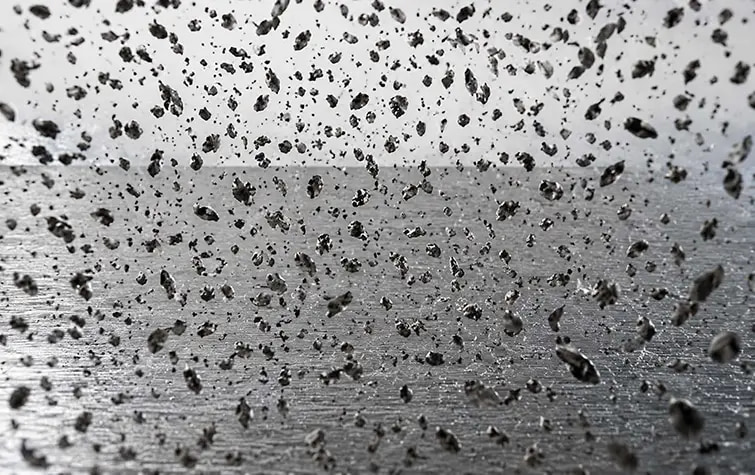
The original process description combines fine particles, water and compressed air. Abrasive selection and exposure need to match the burr and the surrounding substrate; a single particle size should not be specified for all parts.
For treatment of selected areas, review nozzle access, part orientation and any masking or shielding needed. Check that the proposed arrangement can reach the burr while keeping exposure of adjacent features within the agreed limits. Do not assume that every recessed surface receives the same treatment as an exposed edge.
Include rinsing, drying and removal of loose abrasive in the process discussion. The finished-part assessment should cover these steps as well as burr removal, especially where holes or recesses can complicate cleaning.
Equipment Selection
Select Equipment Around Access and Handling
Equipment selection follows the part and acceptance requirements. Consider how the component will be located, how treatment areas will be presented to the nozzles and how finished parts will move to inspection or the next operation. Compare the published formats in the wet blasting equipment overview before developing the handling arrangement for your component.
For thin plate handling, PP2000 Plate-Shaped Part Equipment provides a published conveyor-based, double-sided processing reference. Its stated deburring applications concern semiconductor resin and LED packages. Suitability for a particular metal burr and finish needs separate confirmation.
Production questions should include loading consistency, changeover between part types, cleaning access and the quantity of acceptable finished parts needed per shift. Treat throughput as part of the complete proposed route, including handling and inspection.
Evaluate the Result
Define Acceptance Before Scaling Up
Agree how remaining burrs, nearby geometry and the surface condition will be checked. Inspect the specific treatment locations under consistent viewing conditions, and use the drawing’s dimensional or finish requirements where applicable.
Keep burr removal separate from deliberate cutting-edge shaping. If the objective is to create a specified tool-edge profile, review Cutting Tool Edge Honing as that distinct application.
Your Application Brief
What to Provide for an Application Review
Provide a marked drawing or clear photographs, material information and representative untreated parts. Add the burr locations, incoming variation, acceptable edge change, finish requirements and any cleaning restrictions. An accepted reference part is useful when appearance forms part of acceptance.
Include production quantities, part mix, handling constraints and the next operation. Together, these details give the equipment discussion a clear target: an acceptable finished component and a practical production route.