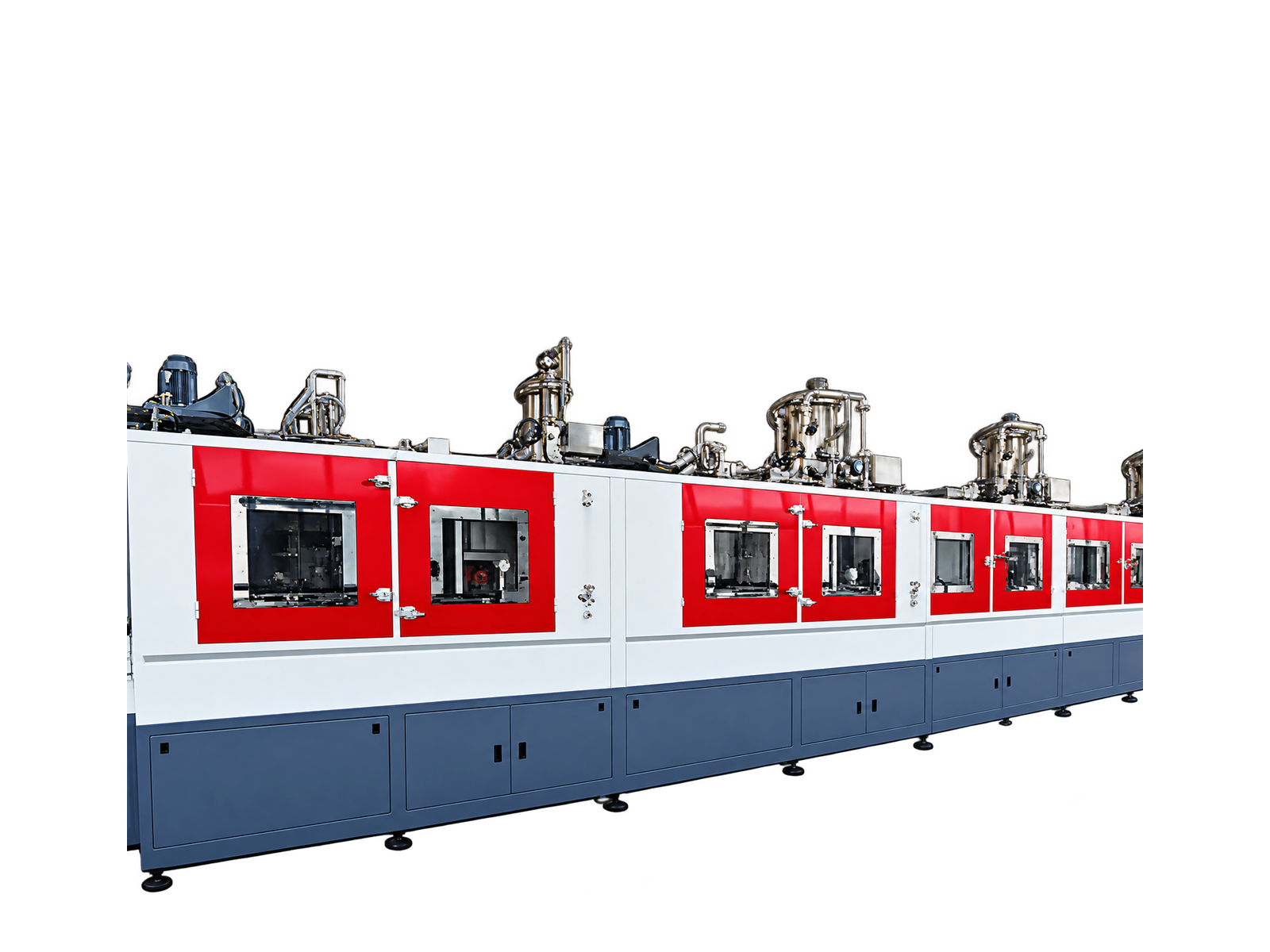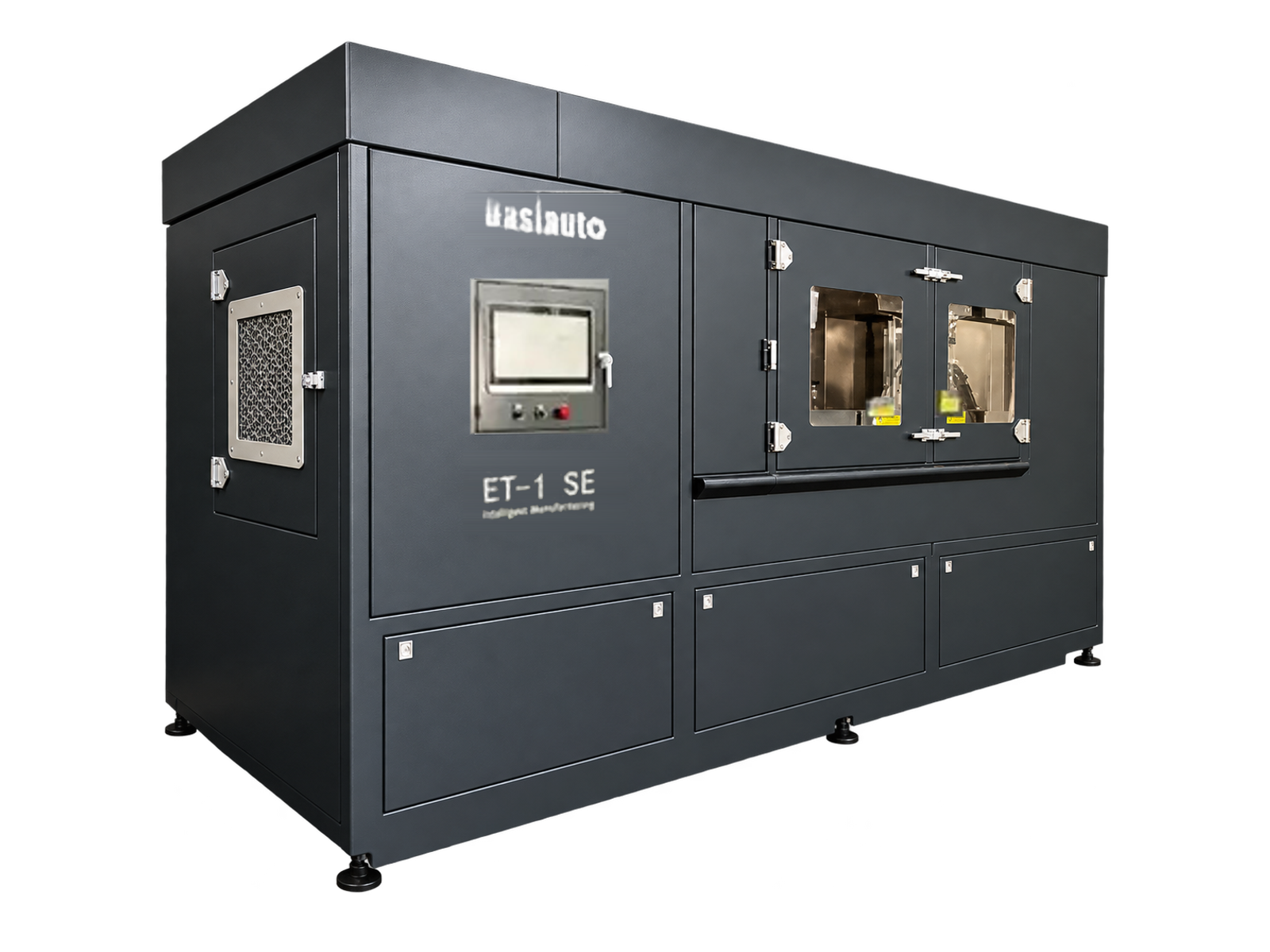
Wet Blasting Equipment
PH14000 Wet Blasting and Phosphating Equipment
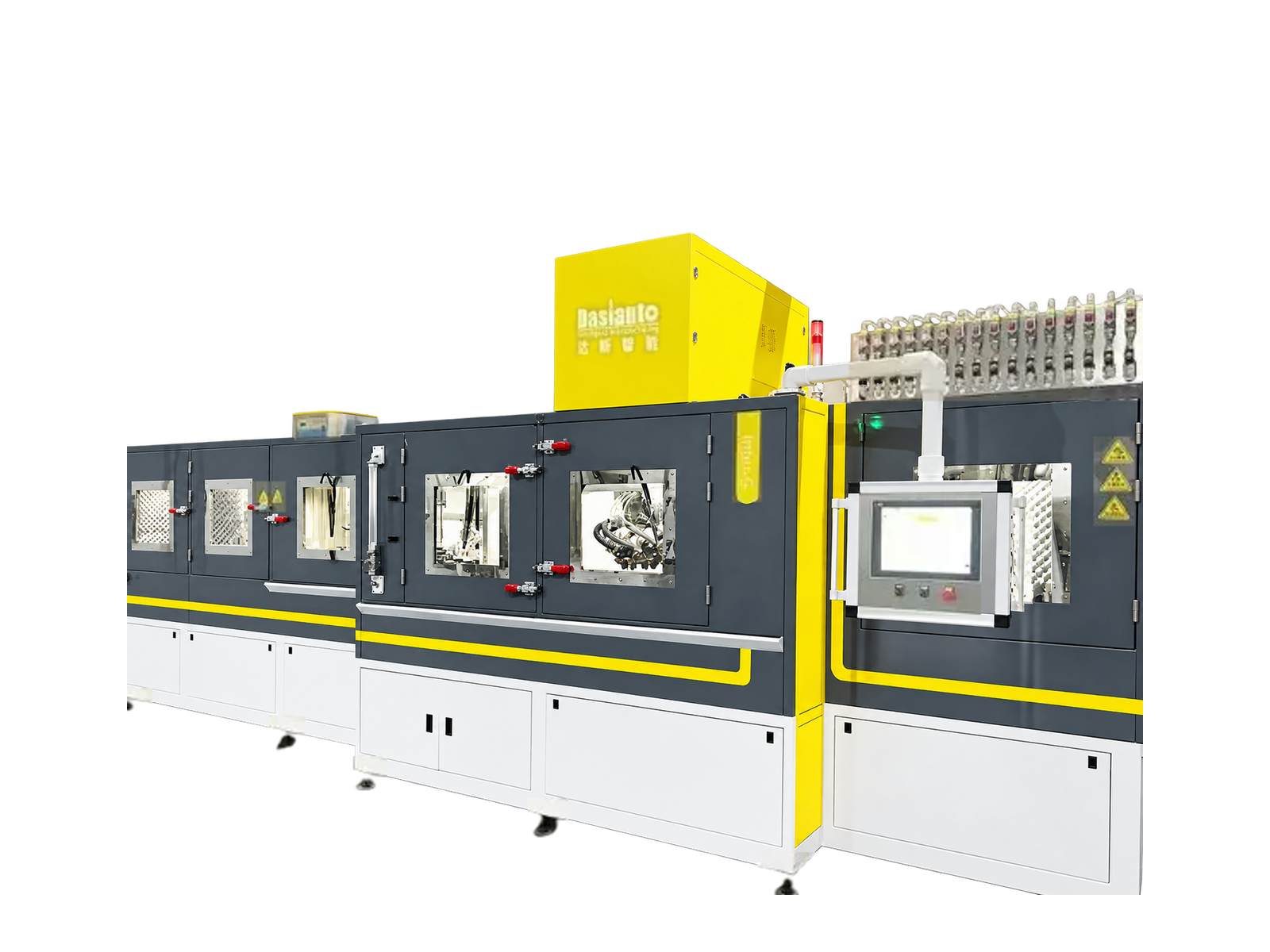
Continuous wet blasting and chemical phosphating in one system for preparation before painting or coating.
Process Overview
Wet Blasting and Chemical Phosphating in One Line
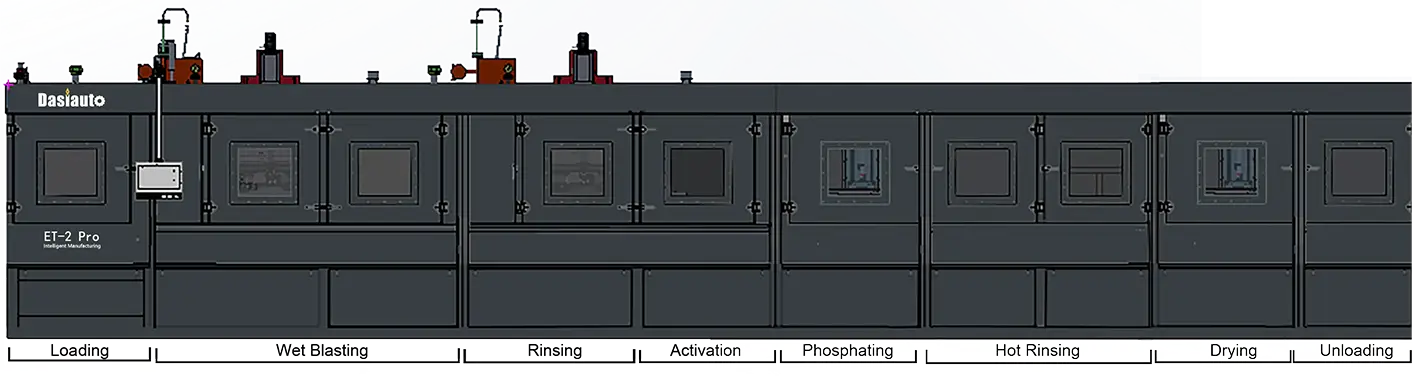
The PH14000 combines abrasive blasting and chemical conversion (phosphating) in one fully automatic, continuous in-line system. The phosphating process can form an iron or zinc phosphate layer ahead of subsequent painting or coating.
Workpiece examples include cylindrical parts such as bushings, plate-shaped parts such as disc brakes, and complex-shaped components. Part size, loading arrangement and phosphate requirements should be confirmed together for the proposed application.
Process Sequence
PH14000 Flow Procedure
Technical Data
PH14000 Specifications
Workpiece and Operation
- Dimension
- 14000(W) × 2000(D) × 2000(H) mm
- Workpiece Size
- Diameter < 200mm
- Load Capacity
- < 100kg
- Operating Speed
- Customized
Supply and Options
- Powder Supply
- AC 350V, 50HZ
- Air Supply Pressure
- 0-0.7MPa
- Options
- Loader & unloader, abrasive customized
Specifications shown are from the published product information. Confirm the workpiece envelope, load-capacity basis, phosphating configuration and electrical supply for the proposed line.
Application Fit
Define Your PH14000 Configuration
Define the part and the downstream painting or coating process together so the wet blasting and phosphating configuration can be discussed as one line.
- Part and Loading
- Part shape, material, dimensions, weight and the proposed holding or feeding arrangement.
- Phosphating Target
- Iron or zinc phosphate requirement, downstream painting or coating process, and inspection criteria.
- Line Operation
- Part feed, handling method and the required operating speed for the continuous process.
- Site Conditions
- Available line space, electrical and compressed-air supplies, and the utilities required for the phosphating configuration.
Explore Further