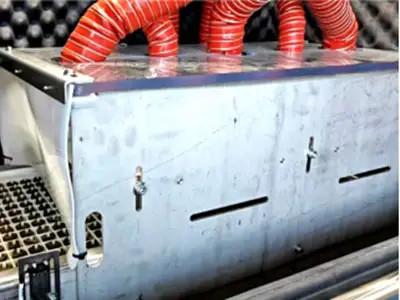
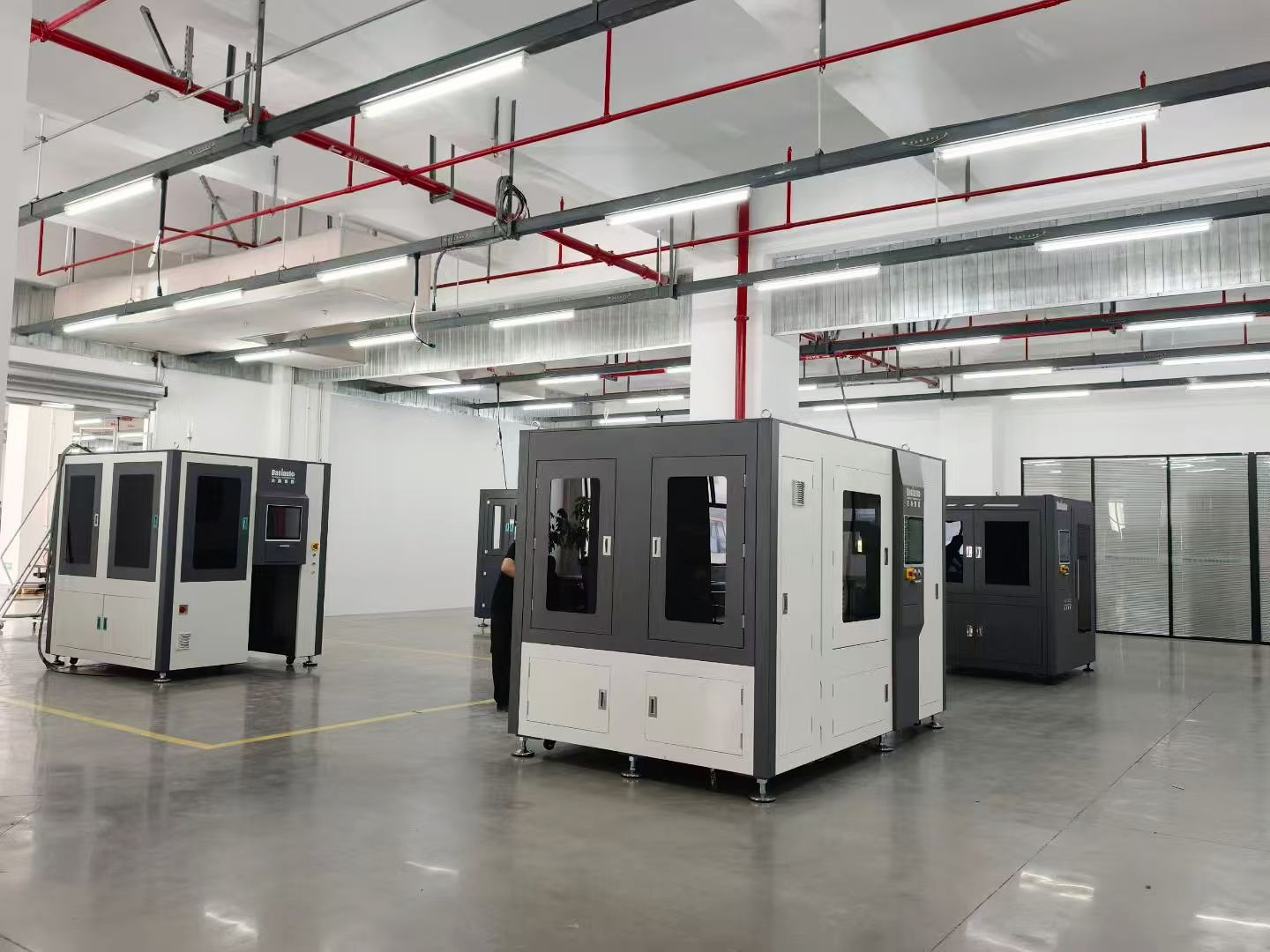
For a visible device component, the finish is part of the product design. Appearance, texture and feel need to work together across exposed faces, edges and detailed features. Wet blasting offers an abrasive finishing route to evaluate against a defined surface reference.
The original application discusses components used in smartphones, tablets, smartwatches, laptops and cameras, with titanium alloy, stainless steel and zirconia ceramics as material contexts. Develop the treatment for the actual material and component geometry, using the intended finish as the reference.
The Finishing Objective
Start With the Intended Finish
Terms such as smooth, uniform or finely finished are useful starting points, but they do not define an acceptance standard. A reference sample or a clear appearance specification gives the development work a more concrete target.
Distinguish the visible texture from measured roughness and the condition of functional features. A surface can be assessed for appearance while separate checks address edges, openings, fits or subsequent coating requirements. A mirror finish, where required, needs its own acceptance definition rather than being assumed from the use of fine abrasive media.
Media and Part Geometry
Match Abrasive Action to the Component
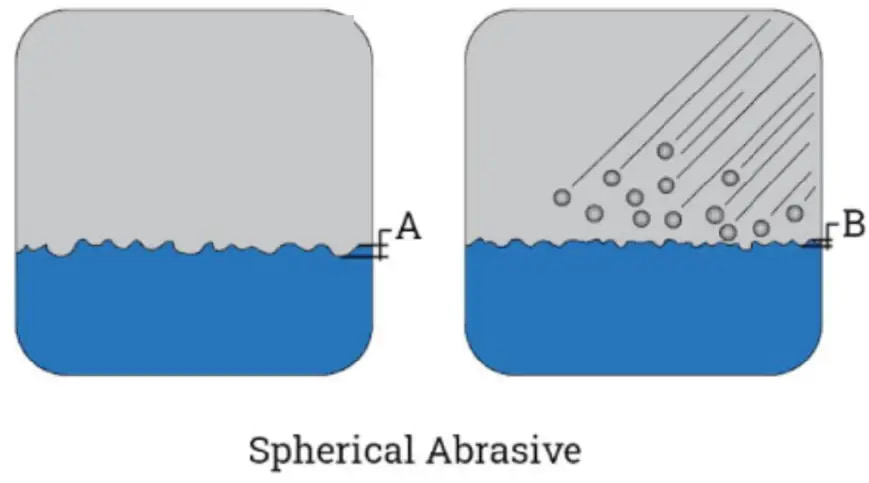
Wet blasting uses abrasive media carried in water to act on the component surface. For cosmetic finishing, the material, incoming machining marks and intended texture help frame the choice of media and treatment exposure.
The original illustration shows spherical abrasive interacting with a surface. Use it to discuss the relationship between media action and the intended texture, then select the actual media and treatment settings through component evaluation.
Part presentation matters as well as media selection. Identify which faces need the same appearance, where geometry changes and which details must remain protected. Discuss how the workpiece can be held and exposed so that the evaluation reflects the proposed production arrangement.
Component Appearance
Before-and-After Component Appearance
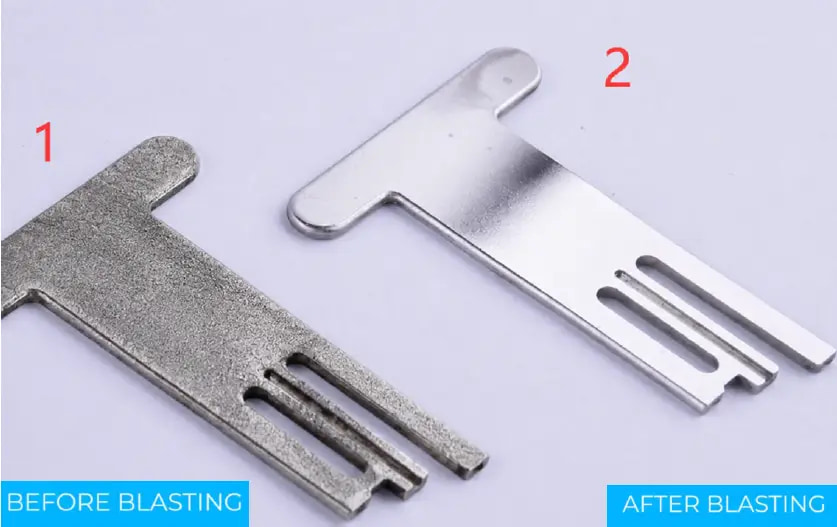
The source page includes a labelled comparison of a thin plate-shaped component before and after blasting. It shows a visible change in surface appearance. The image does not identify a particular device, material grade, customer or measured surface roughness.
An application evaluation should use your component or an agreed representative sample. Compare it with the intended finish under consistent viewing conditions, and assess any specified texture or dimensional requirements separately. Where coating follows blasting, include the later coating appearance and preparation requirements in the review.
Material and Process
Develop the Finishing Route Around the Material
Titanium alloy, stainless steel and zirconia ceramic describe different material families. State the actual material grade, current finish and any existing surface layer when discussing a proposed treatment. The desired texture and features to preserve should guide the evaluation rather than a universal recipe.
Include cleaning, rinsing, drying and handling requirements in the proposed route. The finished appearance should be assessed after these steps, at the point relevant to the next production operation. Water-based abrasive treatment does not by itself demonstrate that a component is free from embedded media or other residues.
Your Application Brief
Prepare a Cosmetic Finishing Brief
Provide the information that makes the finish reproducible enough to discuss:
- Material designation, component drawing and incoming surface condition.
- A reference sample or appearance specification, with any required texture measurements.
- Visible faces and protected edges, openings, fits or other functional details.
- Subsequent coating or assembly operations and their preparation requirements.
- Sample quantity, proposed inspection conditions and production handling needs.
These details give the sample evaluation a defined target and help separate an attractive visual example from a finish that meets the component’s production requirements.