Oxide scale on steel bars and forgings can obscure the surface that the next operation needs to work with. Wet blasting uses an abrasive-and-water stream to remove unwanted surface material and condition the exposed metal.
The useful outcome is a surface suited to its next operation. A drawing process, an inspection stage and a finished visible component may need different levels of cleaning and different surface textures. Set that requirement before choosing the treatment conditions.
Treatment Objective
Balance Scale Removal With Surface Condition
Three aspects define the application:
- Incoming Scale: Steel grade, prior heating or forming, the extent of scale and its adhesion to the workpiece.
- Exposed Surface: The required appearance or texture, permitted material change and any dimensions or features that need protection.
- Following Operation: Drawing, machining, inspection or another specified process, together with its cleanliness requirements.
DasiAuto’s original application identifies carbon steel, alloy steel and stainless steel as materials to consider. Its physical removal mechanism provides an alternative to a chemical descaling route. Material grade and scale condition still affect the application; one setup should not be assumed suitable for every steel or forging.
Surface Appearance
Surface Appearance After Descaling
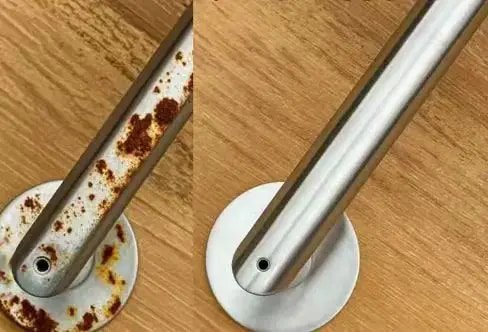
The comparison illustrates a visible difference in the surface condition of a tubular assembly. It provides an appearance example, rather than a measured result for a particular steel grade, scale condition or surface profile.
For a production decision, judge both removal and the metal left behind. Assess the required texture, dimensions and cleanliness alongside the visible appearance. The sample review should also include the downstream operation’s requirements, so that descaling leaves the component ready for its next stage.
Production Route
Place Descaling Within the Production Route
The source diagram places wet blasting between correction and drawing in a wider route: rolling, annealing, correction, wet blasting, drawing and cutting. A second line identifies oxide-scale removal, rinsing and drying.
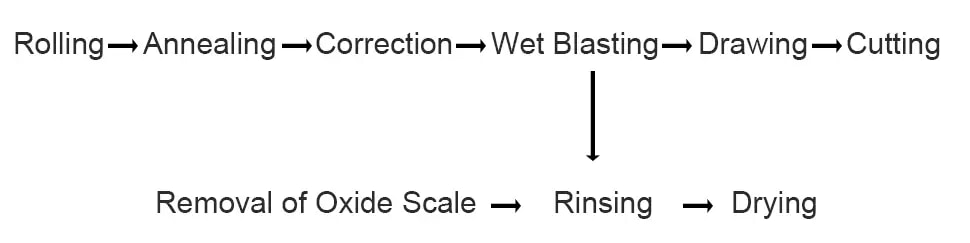
The diagram connects several production operations around the wet blasting stage. Rolling, annealing, correction, drawing and cutting belong to the surrounding route. Rinsing, drying, transfer and their integration with the blasting equipment need to be defined in the proposed line’s scope of supply.
Equipment Selection
Select Handling for the Workpiece
For continuous round-rod treatment, the RP12000 Round-Rod Wet Blasting Equipment is a documented starting point. Its original product description explicitly includes rod descaling, continuous feed and possible rod rotation during travel. Review the wet blasting equipment overview for other published handling formats; forging suitability still requires a separate assessment.
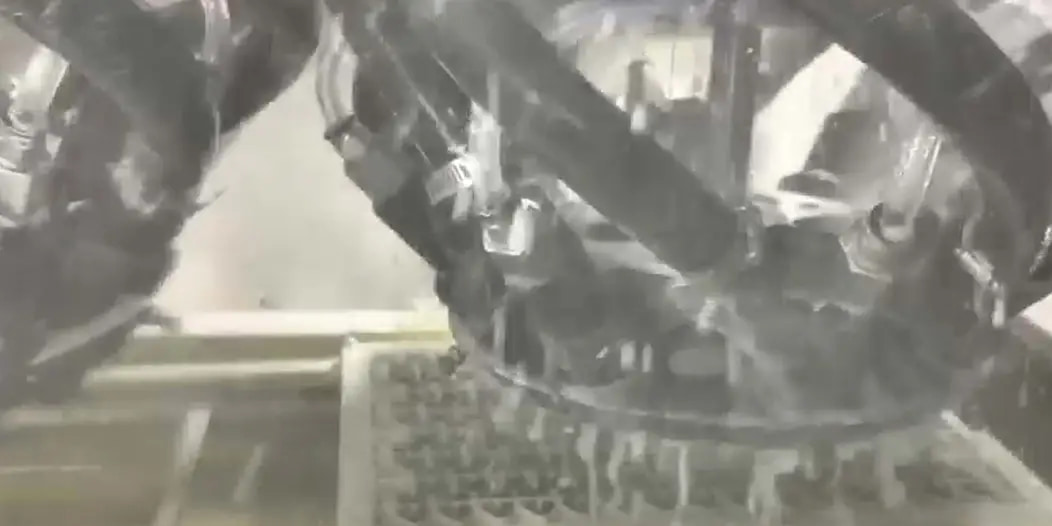
That handling arrangement should be evaluated against rod length, diameter, straightness and support needs. A forging with irregular faces needs nozzle access and fixturing developed around its own geometry. Machine selection for forgings therefore needs a separate geometry and removal assessment.
Wet blasting may also be compared with shot blasting or pickling. Compare the required removal, resulting surface and full production route. Include residual media and surface integrity among the comparison criteria, alongside rinsing, drying and waste handling.
Your Application Brief
Prepare a Useful Application Brief
Provide the steel grade, part drawing or sample, dimensions and weight, photographs of the incoming scale, and the required finished condition. Include production quantity or feed requirements and the next operation’s acceptance criteria.
For an existing line, identify how parts arrive, where rinsing and drying occur, and how treated parts move onward. These details connect a successful surface result to a workable production arrangement.