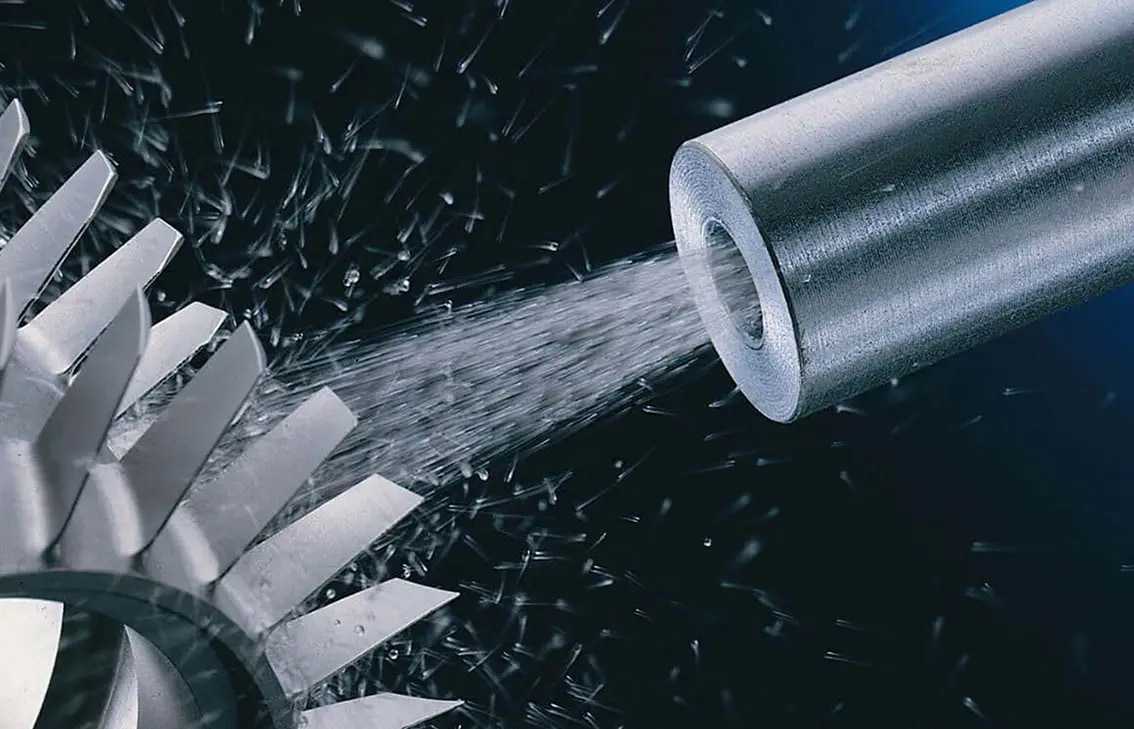
Peening uses repeated particle impacts to deform a metal surface, with the objective of introducing residual compressive stress. The intended compressive layer opposes tensile stress at the surface and supports resistance to cracking under repeated loading. Its engineering purpose means a peening requirement needs more than a description of the finished appearance.
In wet peening, spherical media are delivered with water. The process combines a functional impact treatment with the surface-cleaning and finishing characteristics of wet blasting. Media shape and the required surface effect distinguish this application from abrasive cutting or general cleaning.
Functional Requirement
Start With the Functional Requirement
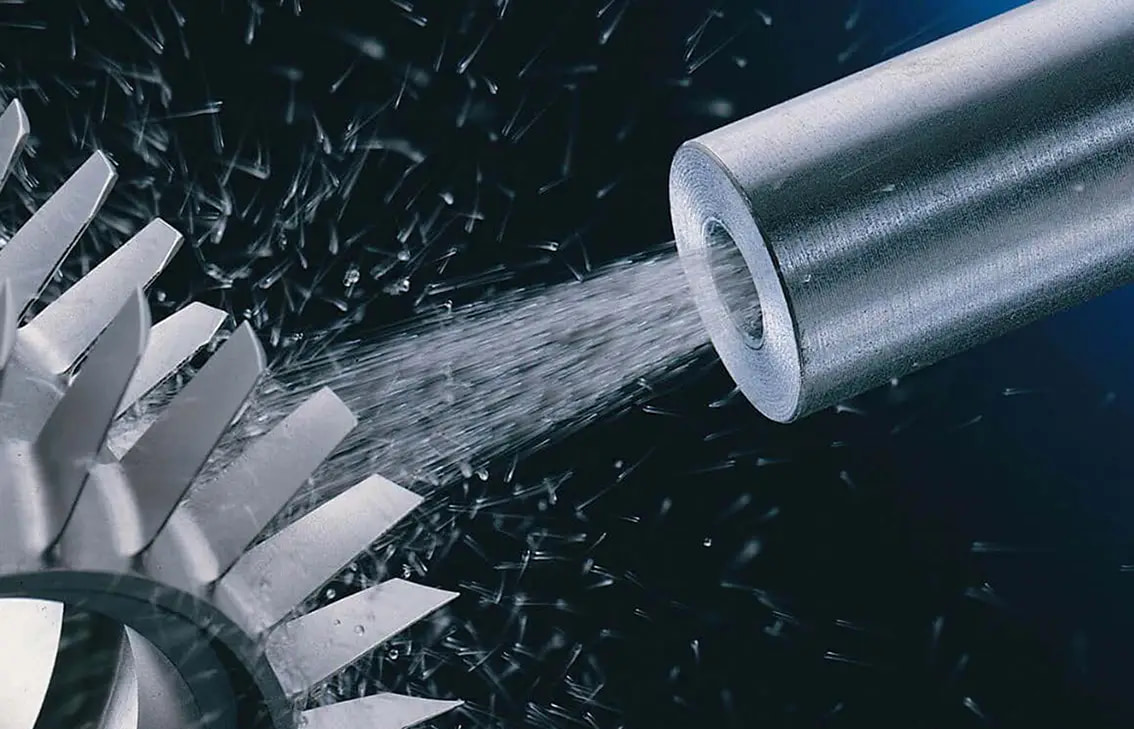
Gears, springs and aerospace parts are application categories identified by DasiAuto, alongside thin-walled, delicate and embrittlement-sensitive components. Suitability depends on the part specification and the assessment needed to demonstrate its functional condition.
For a gear or spring, the relevant treatment area depends on the component design and service requirement. For a thin-walled component, preserving geometry may be as significant as the surface objective. In each case, identify the functional faces, protected features and permitted changes before developing the treatment.
A residual-compressive-stress objective should remain distinct from a cosmetic request. A more uniform texture can accompany treatment. Assess the stress-treatment outcome against the functional requirement separately from the visual finish.
Impact Treatment
Use Spherical Media for the Intended Impact Action
Spherical particles are selected for an impact action that deforms the surface. Angular abrasive media used for material removal serve a different purpose; substituting one for the other changes the treatment objective.
Media selection and condition, the delivered stream, nozzle direction, distance and exposure all belong in the proposed process. Part presentation matters because the nozzle needs access to the intended surfaces. A fixture must support the component while leaving the relevant areas available for treatment.
Water forms part of the delivery and cleaning environment. The impact treatment still needs to suit the component’s sensitivity and functional requirement. Include dimensional checks and the required functional assessment when evaluating thin walls or delicate parts.
Surface Appearance
Surface Appearance After Wet Peening
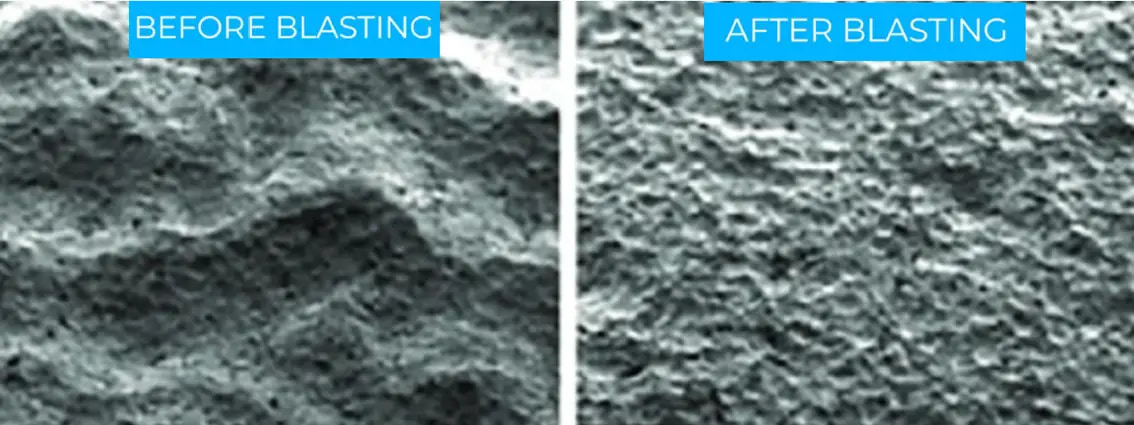
The labeled comparison shows different surface textures. These are appearance examples; mechanical results need separate assessment for the specified part and process.
Acceptance should follow the part’s functional specification. Surface appearance, dimensional condition and the required evidence of the stress-treatment outcome are separate considerations. Evaluate each against its own criteria, including the condition of protected features and areas sensitive to unwanted change.
Equipment Selection
Define the Equipment Around the Treatment
Choose a peening configuration around the component and its treatment requirement. A machine’s ability to clean or texture a part is only one element of that decision.
Relevant decisions include spherical-media compatibility, nozzle access, part support and motion, treatment consistency, and how the part is rinsed and dried afterward. Production quantity and handling needs then help define whether a manual or automated arrangement is appropriate to investigate. Define these functions in the proposed configuration alongside the acceptance requirements.
Your Application Brief
Prepare the Application Information
Provide the material and its condition, a drawing or representative sample, the functional surfaces and the applicable treatment specification. Identify thin walls, delicate features, protected areas and dimensional limits.
Include any existing process and acceptance records, the intended post-treatment condition and production quantity. If the request concerns only cleaning or cosmetic texture, state that directly so the process discussion can address the actual objective. If peening is required, its functional acceptance criteria should guide both equipment selection and evaluation.