
Quick Answer
A cutting tool honing machine is the right choice when a toolmaker needs controlled edge preparation, micro-burr removal, and consistent pre-coating geometry on carbide or similar hard-tool substrates. In wet blasting systems, abrasive suspended in water is accelerated by compressed air to hone the cutting edge with lower airborne dust and better process stability than many dry methods. The best machine fit depends on tool geometry, throughput, required edge-radius consistency, fixture complexity, and whether production is still in sample-validation mode or already in repetitive batch manufacturing.
| Core Factor | Typical Conclusion |
|---|---|
| Process type | Wet blasting / slurry blasting edge preparation |
| Common pressure band | Typically low-to-medium blasting pressure for controlled micro-erosion |
| Typical quality target | Stable edge radius or K-factor with repeatable surface condition |
| Dust behavior | Low airborne dust relative to dry blasting |
| Main workpieces | Carbide inserts, drills, end mills, reamers, form tools |
| Typical project timing | Standard machines are typically faster to deliver than custom multi-axis cells |
What Is Cutting Tool Honing Machine
A cutting tool honing machine is a specialized surface treatment system designed to prepare the cutting edge of tools by controlled abrasive action rather than by conventional grinding alone. Its main task is to remove fragile micro-defects left after grinding and to form a defined edge condition, such as a small radius or application-specific K-factor, before coating or final cutting use. In practical terms, the machine converts a nominally sharp but unstable edge into a more durable and repeatable working geometry.
Within the wider abrasive-finishing family, this equipment belongs to wet blasting, wet sandblasting, slurry blasting, or vapor blasting technology, depending on the terminology used by the plant. The process shares the basic logic of abrasive blasting, but the machine is configured for precision edge preparation rather than bulk cleaning or aggressive surface stripping. That distinction matters because cutting tools demand controlled local material removal at the micron scale, not general-purpose blasting intensity.
A cutting tool honing machine is typically used after grinding and before coating. For carbide inserts, drills, end mills, and reamers, the machine stabilizes the edge by removing burrs, weak micro-chips, and irregular peaks that would otherwise become failure initiation points during cutting. On some tool types, it can also be tuned to create directional edge forms that support specific chip-flow, wear, or coating-performance objectives.
Why Wet Blasting Is Widely Used for Tool Edge Preparation
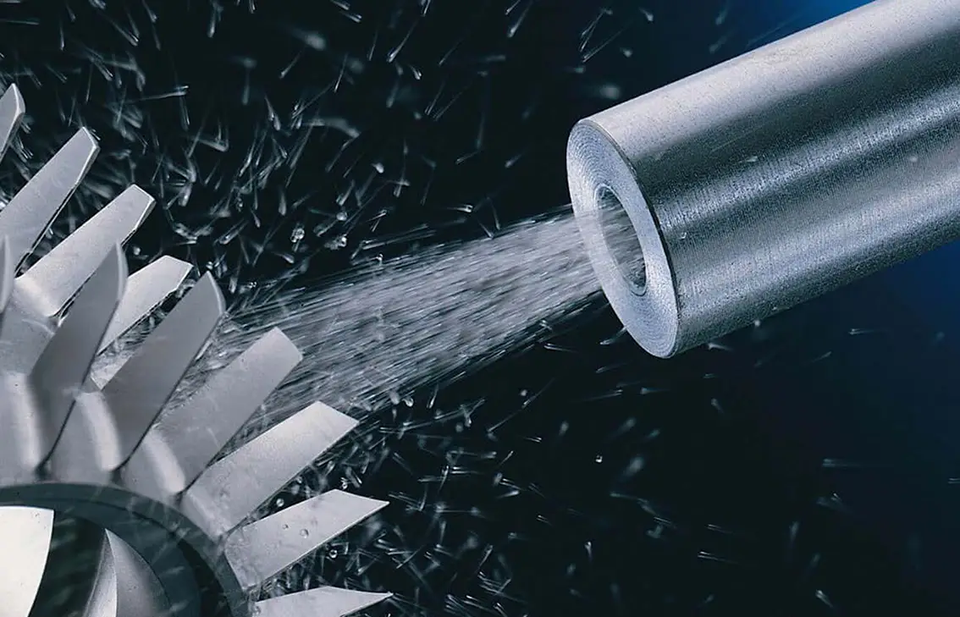
Wet blasting is favored because the abrasive is carried in a water phase, creating a more cushioned impact than a fully dry stream. That helps support finer, more uniform micro-erosion on hard-tool substrates and reduces airborne dust in the machine environment. The water phase also helps limit media impregnation risk on certain surfaces, which is one reason wet blasting is often selected for pre-coating preparation work.
The commercial importance of the machine is not just that it “rounds” an edge. A capable system creates a measurable, repeatable edge condition that can be matched to tool design, substrate grade, and downstream coating sequence. For carbide-tool plants, the difference between informal deburring and true edge preparation is often the difference between variable field performance and controlled production quality.
Process Family and Core Selling Points
From a process-engineering perspective, the cutting tool honing machine sits at the intersection of deburring, micro-finishing, and functional surface preparation. Its value comes from four practical strengths:
- reduced dust compared with dry blasting;
- uniform edge treatment on repeat geometries;
- controlled, recipe-based processing rather than operator guesswork;
- compatibility with batch, R&D, and higher-precision servo-assisted configurations.
These strengths explain why the same wet blasting platform can support both edge honing of cutting tools and adjacent applications such as selective deburring, light surface conditioning, and coating preparation. The machine is not only a finishing cabinet; it is a process platform for controlled abrasive edge engineering.
How Does Cutting Tool Honing Machine Work
A cutting tool honing machine works by creating a slurry of water and abrasive media, accelerating that slurry with compressed air through one or more blast nozzles, directing the stream at the target edge under controlled angle and distance, and then recovering the used slurry in a closed-loop system for recirculation and waste separation. The process removes a very small amount of edge material in a stable, distributed way rather than in the point-contact mode of grinding.
Slurry System and Abrasive Suspension
The slurry loop begins in a tank where water and abrasive are mixed and kept in suspension by agitation or circulation. This is critical because the edge result depends on stable abrasive concentration and uniform particle distribution. If the slurry settles unevenly, the machine may deliver one result at the start of the shift and another result later, even when pressure settings appear unchanged.
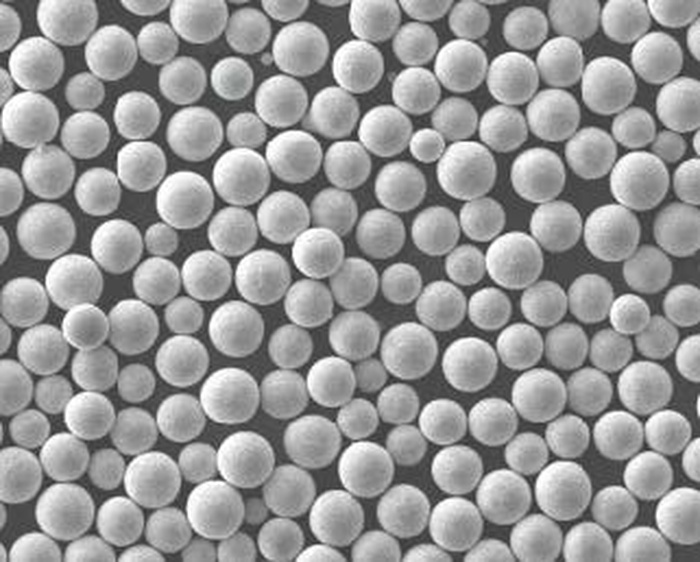
Abrasive selection depends on tool material, target radius, and desired finish. Fine media are often used for precision edge conditioning, while somewhat coarser grades may be chosen when burr removal or faster stock reduction is needed. In a cutting tool honing machine, media choice is less about “maximum cutting power” than about predictable micro-geometry formation.
Compressed Air Acceleration and Nozzle Control
Compressed air accelerates the slurry through the blast nozzle toward the tool edge. Nozzle diameter, stand-off distance, jet angle, and traverse path all influence how material is removed. In tool honing, a small change in nozzle angle can change the edge from a more symmetric radius to a more directional waterfall-like form.
This is why higher-end systems use programmed motion rather than fixed manual exposure alone. Servo movement, part indexing, and repeatable nozzle positioning help the process engineer determine exactly where the abrasive energy is concentrated and for how long. On some tools, especially drills and end mills, controlled rotation or indexing is essential to prevent uneven lip preparation.
Closed-Loop Recovery, Sedimentation, and Waste-Sand Discharge
After impact, the slurry drains or flows back into the machine’s recovery section. Reusable liquid and still-effective abrasive are recirculated, while removed workpiece material, broken media, and fine sludge are separated gradually through sedimentation or other filtration and waste-handling features. A well-managed recovery loop is central to process repeatability, because contamination and media breakdown directly affect honing behavior.
Automatic waste-sand sedimentation reduces manual cleanup and makes it easier to keep the slurry condition within a controlled band. That matters in tool production because even when average edge size looks acceptable, unstable media condition can widen the part-to-part distribution and complicate downstream coating consistency.
Dust Collection, Water Mist Management, and PID Control
Wet blasting greatly reduces dry dust, but it does not eliminate enclosure-management requirements. Water mist, splash, and chamber visibility still have to be controlled so the process remains clean, safe, and inspectable. Machines therefore use enclosed cabinets and mist-reduction or dust-collection systems designed for wet operation rather than relying on dry dust extraction alone.
Pressure stability is another core control point. PID closed-loop pressure control helps hold the blasting condition steady even as hoses age, nozzles wear, or air demand changes during production. When the target is a narrow edge-radius band, a stable pressure loop is often more important than a high nominal pressure ceiling.
In cutting tool honing, the most valuable result is not aggressive removal but repeatable edge geometry.
| Process Parameter | Typical Range or Practice | Why It Matters |
|---|---|---|
| Working pressure | Typically about 0.15-0.45 MPa, depending on tool material and edge target | Sets removal intensity and edge-forming rate |
| Slurry concentration | Usually maintained in a controlled low-to-medium solids band, application dependent | Affects cutting action, finish, and consistency |
| Abrasive particle size | Fine particle ranges are commonly selected for edge honing; exact PSD is application specific | Influences surface texture and radius control |
| Compressed air flow | Sized to nozzle count and pressure stability requirements | Supports consistent stream energy |
| Media consumption | Depends on abrasive breakdown, contamination load, and cleaning interval | Impacts operating cost and result stability |
| Control system | PLC/HMI recipe management with regulated pressure and, where needed, servo motion | Enables repeatable processing across tool families |
Cutting Tool Honing Machine vs Dry Blasting vs Other Methods
A cutting tool honing machine is not competing only with dry blasting. In real procurement discussions, it is usually compared with manual brushing, drag finishing, vibratory finishing, and sometimes shot peening or hybrid grinding-plus-finishing routes. The decision should start from the required edge geometry and the acceptable amount of process variation, not from the equipment label alone.
Dry blasting can remove material quickly, but it usually creates a harsher environment for precision tool finishing because dust generation is higher and stream behavior can be less forgiving for delicate edge control. Vibratory and drag finishing can produce good overall smoothing, but they often affect the entire tool more broadly and may offer less local selectivity. Shot peening, as framed in shot peening process terminology, is mainly selected for compressive-stress effects rather than for precise cutting-edge radius formation.
Wet Blasting Versus Dry Blasting for Tool Edges
The biggest advantage of wet blasting in this context is controllability at the edge. Because the abrasive is suspended in water, the process tends to be better suited to fine edge conditioning, low-dust operation, and more uniform matte surface preparation before coating. That does not make it universally superior, but it does make it especially relevant when carbide-tool manufacturers care more about micro-geometry consistency than about maximum blasting aggressiveness.
Dry blasting still has a place in rougher or less sensitive finishing work. However, where the goal is a stable pre-coating edge on hard tools, a dedicated cutting tool honing machine usually offers a narrower and more manageable process window.
| Evaluation Dimension | Wet Blasting Honing Machine | Dry Blasting | Shot Peening | Vibratory / Drag Finishing |
|---|---|---|---|---|
| Main purpose | Precision edge honing and surface conditioning | Cleaning, roughening, general blasting | Fatigue-oriented surface stressing | Whole-part smoothing and deburring |
| Dust generation | Low relative to dry blasting | High unless extraction is extensive | Moderate in enclosed systems | Low external dust, but media management is still needed |
| Edge-geometry control | High with recipe, fixture, and nozzle control | Moderate to high, often less gentle | Limited for true radius or K-factor shaping | Moderate, often less localized |
| Surface finish uniformity | Fine and even matte finish is typical | Often more aggressive texture | Functional peened texture | Smooth overall finish, less selective |
| Media embedding risk | Reduced on many surfaces due to water phase | Higher on some sensitive surfaces | Depends on shot/material pairing | Different mechanism; not directly comparable |
| Environmental handling | Wet waste and sludge management | Dust collection burden is higher | Dry media containment required | Compound, media, and separation management needed |
Key Specifications to Evaluate Before Buying
The most important buying question is whether the machine can hold the intended edge condition consistently across the actual mix of tools being produced. Toolmakers sometimes over-focus on chamber size, while the critical variables are pressure stability, nozzle repeatability, fixture logic, slurry control, and recipe discipline. If those are under-specified, even a large or expensive machine may fail to deliver stable edge quality.
Define the Required Edge Result First
A procurement team should begin by specifying the target output in measurable terms. That may mean edge radius, K-factor, directional asymmetry, burr-removal threshold, or coating-readiness criteria. Without that target, it is impossible to decide whether a basic batch cabinet, a single-piece machine, or a servo-linked multi-axis setup is the correct architecture.
The edge target should also include tolerance and inspection logic. One successful sample is not enough. The machine has to produce repeatable results over time, across operators, abrasive refresh cycles, and production batches.
Motion Accuracy and Tool Presentation
Tool presentation is often more important than theoretical blasting power. Inserts may need indexing fixtures with tightly controlled stand-off, while drills and end mills may need coordinated rotation, axial positioning, or programmed nozzle sweeps. If the tool geometry is complex, a machine with servo-driven X/Y/Z motion and programmable exposure paths may justify itself quickly.
Where servo X/Y/Z linkage is proposed, buyers should verify positioning accuracy and repeatability under the actual fixture and nozzle conditions. The relevant question is whether geometric repeatability at the blasting zone meets the job’s acceptance criteria.
Throughput, Footprint, and Recipe Control
Production scale matters. An R&D lab may prioritize flexibility and short setup cycles for many different tool families, while a carbide-insert plant may prioritize fixture density, parallel loading, and recipe locking for repetitive output. Throughput should therefore be evaluated together with tool mix, changeover frequency, and inspection burden rather than as a standalone “parts per hour” number.
Recipe control is equally important. A proper HMI should store pressure settings, motion paths, cycle times, user permissions, and alarm history. That is especially valuable where multiple shifts or multiple product families share the same machine.
Utility, Safety, and Maintenance Checklist
A buyer should also assess the less visible parts of the system:
- compressed air quality and stability;
- slurry tank access and cleaning convenience;
- nozzle replacement intervals and spare-parts availability;
- visibility inside the chamber during setup;
- mist extraction and enclosure sealing;
- waste-sand or sludge discharge method;
- electrical and water requirements;
- operator guarding, interlocks, and maintenance access.
In practice, the best machine is the one that preserves a stable honing process with realistic maintenance effort. When the application is precision tool finishing, maintainability is not a support issue; it is part of the process capability.
Applications Across Industries
Although the keyword points directly to cutting tools, a cutting tool honing machine belongs to a broader industrial surface-treatment landscape. The same wet blasting principles used to stabilize carbide edges also support selective deburring, coating pretreatment, additive-manufacturing post-processing, fine peening, glass frosting, and technical-component finishing. That matters because many buyers want one platform that can serve both tool-specific and adjacent finishing work.
A good example is the overlap between tool honing and deburring. Both processes require controlled abrasive exposure, repeatable fixture logic, and predictable slurry condition. Plants that already use wet blasting for burr removing of metal parts may find that the transition into tool-edge preparation is mainly a matter of tighter geometry control and different process recipes.
Cross-Industry Relevance of Wet Sandblasting Platforms
The tool industry is the most obvious home for this equipment, especially for carbide inserts, drills, and end mills. But aerospace, medical, electronics, and precision-component manufacturing also use related wet blasting approaches where delicate surfaces and low-dust processing are important. For pretreatment work before paint or coating, the broader surface-preparation framework described by AMPP surface preparation guidance helps explain why substrate condition affects downstream layer performance.
The technology can also be configured differently according to part family. R&D centers may use robot-assisted flexible sample cells; batch operations may use chamber-based cabinets; single-piece systems may be chosen for more individualized cycle control. The machine category is therefore best understood as a family of configurations built around the same slurry-blasting principle.
| Application Type | Target Industry | Workpiece Example | Process Benefit |
|---|---|---|---|
| Edge honing of cutting tools | Carbide tool manufacturing | Inserts, drills, end mills, reamers | Controlled edge radius and improved edge stability |
| Burr removal | Precision metal parts | Small machined or stamped components | Selective deburring with limited damage to adjacent surfaces |
| Scale removal | Steel processing and forging | Bars, forgings, oxidized metal surfaces | Surface cleanup before further machining or treatment |
| Pretreatment before coating | Industrial coating lines | Metal parts before painting or functional coating | Cleaner, more uniform substrate condition |
| AM post-processing | Additive manufacturing | 3D-printed metal parts and hybrid tool components | Surface refinement and powder-remnant cleanup |
| Peening of metal parts | Mechanical components | Springs, gears, selected fatigue-sensitive parts | Controlled surface impact for functional conditioning |
| Glass surface treatment | Architectural and technical glass | Frosted panels, specialty glass parts | Uniform matte texture |
| 3C device finishing | Consumer electronics supply chain | Small housings and precision covers | Fine surface smoothing and cosmetic consistency |
Equipment Selection Guide
Choosing the right cutting tool honing machine means aligning machine architecture with the maturity of the process. If the edge recipe is still being developed, flexibility matters most. If the edge recipe is already validated and the business problem is throughput with low variation, then fixture density, recipe locking, and chamber utilization matter more.
Eight Common Configuration Paths
A practical way to think about selection is to divide the market into eight configuration paths. These are not universal model names across the industry, but they reflect the functional choices buyers usually face when specifying a wet blasting honing platform.
For early-stage trials, a robot-assisted cell can be especially useful because it allows flexible angles and repeatable sample exposure. DasiAuto’s RB-6 robot-type wet blasting cell fits that R&D-oriented role, while a standard single-chamber wet blasting cabinet better reflects stable batch production. Where the program evolves toward higher utilization, a double-chamber production system can improve loading efficiency without changing the basic process principle.
Matching Tool Mix to Machine Tier
Inserts are usually the easiest to fixture in repetitive batch formats. Rotary tools, especially those with complex edge zones, often justify more motion control or single-piece presentation. Mixed product programs may prefer a flexible machine with longer setup discipline, while dedicated families can justify tooling-specific fixtures that shorten cycle time and reduce variability.
Machine selection should also account for how quality will be verified. If the plant measures edge radius at several positions and correlates it with tool-life data, then machine repeatability has direct economic value. If edge inspection is still informal, the first priority may be building a robust process-development routine rather than investing immediately in the most automated cell.
| Configuration / Model Tier | Target Production Scale | Workpiece Size Range | Precision Level | Recommended Applications |
|---|---|---|---|---|
| 1. Bench development unit | Lab trials and method screening | Very small tools | Moderate | Early evaluation of abrasive, angle, and pressure effects |
| 2. Robot-assisted R&D cell | Sample testing and pilot validation | Small precision tools | High | Multi-angle trials on inserts, drills, and form tools |
| 3. Manual flexible cabinet | Small lots and varied jobs | Small to medium tools | Moderate | Mixed geometries with frequent changeover |
| 4. Standard single-chamber batch machine | Repetitive batch production | Inserts and small rotary tools | High | Stable recipe-based edge honing |
| 5. Single-piece presentation machine | Medium-volume discrete tools | Medium tools | High | Individual cycle control on higher-value parts |
| 6. Servo multi-axis honing cell | Precision production | Small to medium complex tools | Very high | Directional K-factor control and complex edge access |
| 7. Double-chamber utilization machine | Higher batch throughput | Small to medium repetitive tools | High | Parallel loading and improved chamber utilization |
| 8. Custom application-specific line | Dedicated industrial programs | Tool-specific size range | High to very high | Integrated honing within broader finishing workflow |
Cost, Lead Time and ROI Considerations
The cost of a cutting tool honing machine is driven less by raw cabinet volume than by process-control complexity. A simple wet blasting enclosure for general deburring is one cost level; a machine engineered for repeatable edge-radius formation across several tool families is another. The differences usually come from motion control, fixture sophistication, HMI functionality, pressure regulation, slurry management, and enclosure features for wet-process cleanliness.
Automation level is a major pricing variable. Manual or semi-manual systems are often adequate for low-volume production, process development, or highly varied work, but they put more responsibility on the operator. As automation increases, machine cost usually rises because the system has to control positioning, timing, and recipe execution more tightly. In return, the plant typically gains lower variation, easier training, and better shift-to-shift stability.
Lead time should be treated as indicative rather than fixed. Standardized cabinets and known model tiers generally move faster than custom cells requiring part-specific fixtures, servo motion development, and sample correlation work. If the order includes application trials, edge-measurement validation, or several tool families with distinct recipes, the practical project timeline often extends beyond the mechanical build alone.
ROI is usually strongest where edge quality directly affects downstream cost. For toolmakers, that can mean fewer early-edge failures, more stable coating support, longer tool life, lower scrap during initial application testing, and reduced operator dependence in finishing. The machine may also replace multiple manual steps, such as hand deburring, inconsistent dry blasting, or repeated rework after inspection.
A useful ROI model compares three groups of effects. The first is labor and throughput: fewer manual finishing touches, shorter setup drift, and lower rework frequency. The second is quality: tighter edge distribution, more stable coating behavior, and fewer field complaints tied to premature chipping. The third is strategic process control: the ability to develop one recipe in trials and then reproduce it in production with much less variation.
For some factories, the payback case will be obvious because tool failure is expensive and visible. For others, the main benefit is quieter but still important: less troubleshooting between grinding, coating, and cutting performance. In both cases, the correct financial view is not “machine price versus no machine,” but “controlled edge process versus uncontrolled edge variability.”
Why Choose DasiAuto?
Established in 2012, DasiAuto develops and manufactures wet blasting equipment for industrial surface treatment. The company brings together equipment engineering, abrasive media, and application development, as described in About DasiAuto.
Application testing and process development help evaluate abrasive media and treatment settings before the equipment configuration is defined. Equipment engineering can bring together the blasting system, fixtures, automation, and part handling around the application.
Suitability for a particular material, geometry, finish, or dimensional requirement needs to be established through representative sample testing. DasiAuto supports installation, operator training, and ongoing technical support through the production workflow.
FAQ
Can a Cutting Tool Honing Machine Be Customized for Different Inserts, Drills, and End Mills?
Yes. Different tool families usually require different fixtures, nozzle angles, motion paths, cycle times, and sometimes different abrasive grades. A well-specified system should support recipe-based adjustment so the machine can process several geometries without forcing one compromise setting.
Is Sample Testing Necessary Before Purchasing a Machine?
In most projects, sample testing is the practical starting point. It helps confirm the achievable edge radius or K-factor, shows whether the process is symmetrical or directional, and clarifies whether a standard cabinet is enough or whether the job needs more advanced motion control. For many buyers, sample results are more informative than nominal machine specifications alone.
What Information Should a Buyer Prepare for Quotation and Process Evaluation?
Useful inputs include tool drawings, substrate material, current edge condition, target edge geometry, coating sequence, expected output, and any available edge-measurement data. Photos of the actual tools and notes about current failure modes are also valuable. The better the process brief, the easier it is to define realistic fixtures and cycle logic.
How Long Do Installation and Commissioning Usually Take?
That depends on machine complexity and how much process validation is included in the scope. A standard chamber-based machine is usually faster to install than a custom servo-linked cell with dedicated fixtures and multiple recipes. Commissioning should cover not only machine startup, but also slurry setup, nozzle alignment, recipe validation, and operator training.
What Consumables and Spare Parts Should Be Planned From the Start?
Typical items include abrasive media, nozzles, hoses, seals, pump wear parts, viewing protection components, and slurry-handling parts. Because the edge result depends on stable abrasive condition, media replenishment is part of normal process control rather than an occasional accessory purchase. Nozzle wear should also be monitored because it gradually changes the blast pattern.
How Should After-Sales Support Be Judged for a Precision Honing Project?
The key question is whether the supplier can support process stability after installation, not only basic mechanical repair. Buyers should review support for spare parts, abrasive resupply, troubleshooting, recipe adjustment, and refresher training when edge measurements or downstream coating results begin to drift. In precision tool finishing, long-term support is closely tied to long-term consistency.