
Quick Answer
A compact wet blasting machine is usually the right choice when a factory needs precise surface treatment in a smaller footprint without giving up process control. It is particularly effective for deburring, edge honing, cosmetic texturing, additive-manufactured parts, and coating pretreatment because the water-based slurry reduces airborne dust and helps produce a more uniform finish than many dry processes. For most buyers, the main advantage is not maximum throughput, but stable, repeatable finishing in workshops, tool rooms, laboratories, and smaller production cells.
| Core Factor | Typical Conclusion |
|---|---|
| Process type | Water-based abrasive blasting using slurry plus compressed air |
| Working pressure | Typically low to moderate, tuned to part material and finish target |
| Footprint | Smaller than many full-scale production systems, suited to compact cells |
| Dust behavior | Lower airborne dust than dry blasting because water suppresses fines |
| Common uses | Precision deburring, edge honing, matte finishing, coating pretreatment |
| Typical project lead time | Usually shorter for standard compact units; longer if custom fixtures or motion systems are required |
What Is Compact Wet Blasting Machine
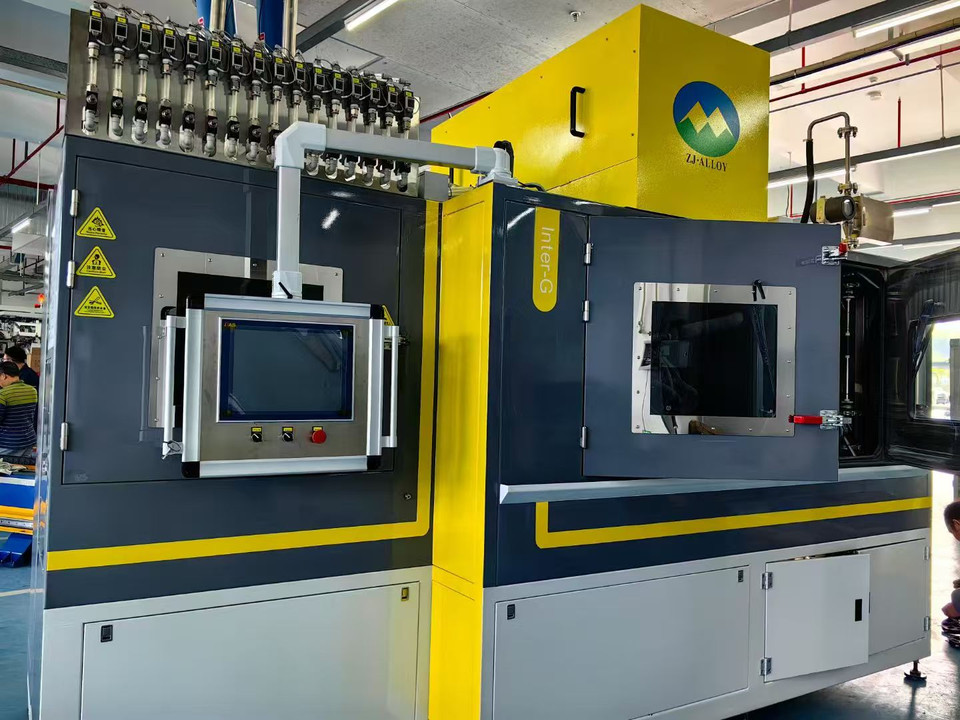
A compact wet blasting machine is an enclosed abrasive surface treatment system that uses water, blasting media, and compressed air to clean, texture, deburr, or refine a part surface in a space-efficient format. Within the wider wet blasting, slurry blasting, and vapor blasting process family, the compact version is defined by its reduced installation footprint and its suitability for technical work where control matters more than bulk tonnage.
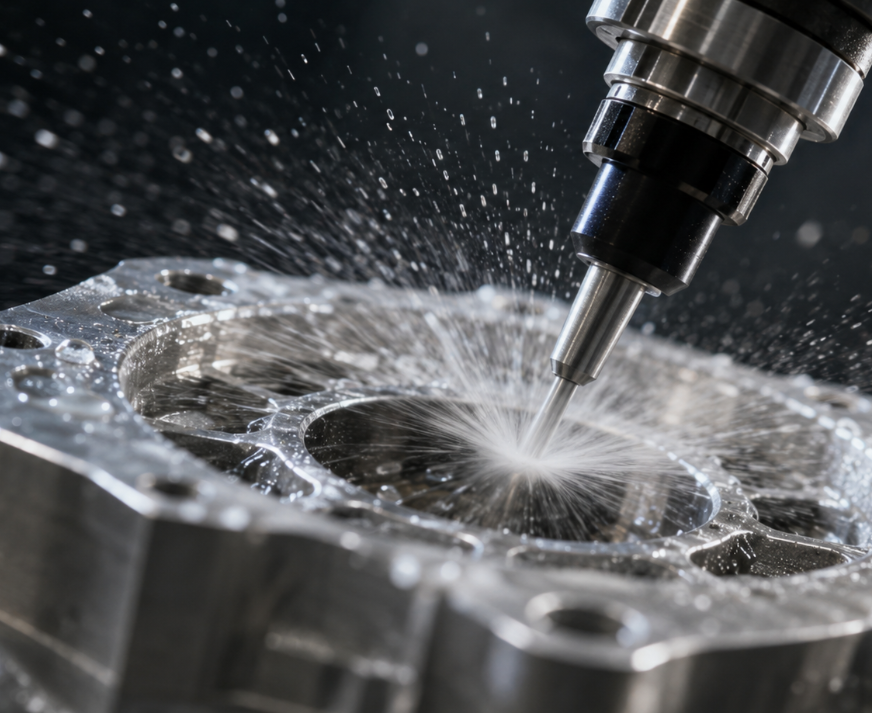
The machine operates by keeping abrasive particles suspended in water and accelerating that slurry through a nozzle onto the workpiece. Because the media strikes the surface in a water phase, the process often behaves differently from dry blasting. On many parts, it produces a finer visual texture, better finish uniformity, and less airborne dust in the work area.
Compact does not mean light-duty by default. In industrial practice, a compact wet blasting machine may be used in tool manufacturing, prototype lines, medical-component finishing, electronics housings, additive-manufactured metal parts, or precision machining support areas. The smaller envelope simply means the machine is intended to fit into tighter production layouts, laboratories, engineering cells, or smaller batch operations.
From a process-family standpoint, it belongs to abrasive blasting as generally described in abrasive blasting terminology. What separates it from dry abrasive cleaning is the slurry medium. Water changes the way particles impact the surface, helps suppress dust, and can reduce the risk of aggressive overcutting on delicate geometries.
For many buyers, the most relevant selling points are practical. The first is compact process flexibility: one machine can often handle trials, short runs, and multiple part types with fixture changes. The second is lower housekeeping burden compared with dry blasting in enclosed workshop environments. The third is finish consistency, especially where the target is a matte cosmetic surface, a controlled tool edge, or selective removal of burrs without heavy dimensional change.
A compact wet blasting machine can also be manual, semi-automatic, or motion-controlled. Some are basic cabinet systems. Others include turntables, programmable nozzle paths, or servo-driven X/Y/Z axes for repeatable finishing. That matters because compact equipment is often selected not just for saving floor space, but for placing precise surface treatment close to upstream machining, inspection, or assembly.
In other words, the “compact” attribute is operational as much as dimensional. It means the system is easier to integrate into an existing factory, easier to dedicate to a niche application, and easier to justify where throughput is moderate but process repeatability is still important.
How Does Compact Wet Blasting Machine Work
A compact wet blasting machine works by mixing abrasive media with water, circulating that slurry through a controlled delivery loop, accelerating it with compressed air, and recovering the spent mixture inside a closed cabinet for reuse and waste separation. The physical principles are similar to larger wet blasting systems, but compact machines are optimized for tighter workspaces, smaller part envelopes, and shorter operator reach.
Slurry System and Media Suspension
The process begins in a slurry tank or sump where water and abrasive are blended into a suspension. The abrasive may be selected according to material hardness, feature sensitivity, desired finish, and cost target. If the slurry concentration drifts too far, the process becomes inconsistent, so the tank design, pump selection, and circulation pattern are important even in smaller machines.
Consistent suspension is especially important in compact equipment because smaller tanks can be more sensitive to contamination loading and concentration changes during repeated cycles. A well-designed unit maintains a usable abrasive distribution throughout the blasting period instead of allowing rapid settling between passes.
Compressed Air Acceleration and Nozzle Action
The slurry is delivered to the blast gun and combined with compressed air, which accelerates the particles toward the workpiece. The actual surface effect depends on the pressure setpoint, nozzle diameter, stand-off distance, impact angle, media size, and dwell time. In compact equipment, shorter internal distances can improve operator control, but they also make visibility and mist management more critical.
For precision finishing, the objective is rarely maximum aggressiveness. The operator or control system tunes the energy so that the blast removes burrs, modifies texture, or refines an edge without damaging adjacent surfaces. That is why even a small cabinet benefits from stable pressure control and disciplined nozzle positioning.
Closed-Loop Recovery, Sedimentation, and Mist Control
After striking the part, the slurry drains back into the recovery zone. Reusable media is recirculated, while fines, broken abrasive, and removed contaminants gradually separate through settling or designated waste-removal stages. This closed-loop slurry recovery reduces media loss, supports repeatability, and keeps the compact machine economically viable for routine technical use.
Water suppresses dry dust, but wet systems still generate mist and suspended moisture inside the cabinet. A compact machine therefore needs extraction and internal airflow management to preserve sightlines and reduce water carryover. Poor visibility slows cycle time and makes operator technique less consistent.
PID Pressure Control and Recipe Management
A compact wet blasting machine becomes much more useful when it can hold a target blasting condition rather than simply allow rough manual adjustment. PID-based pressure control helps maintain a stable slurry delivery state, which is important when the same part must be processed repeatedly with minimal variation. Recipe storage in an HMI adds another layer of control by preserving pressure settings, blasting time, motion parameters, and maintenance prompts.
In compact wet blasting, footprint reduction only adds value when process stability is preserved.
The following parameters are commonly reviewed during technical evaluation:
| Process Parameter | Typical Range or Practice | Why It Matters |
|---|---|---|
| Working pressure | Typically adjusted from gentle to moderate blasting levels depending on substrate | Controls removal rate, edge effect, and surface texture |
| Slurry concentration | Maintained within a defined recipe band, often by weight or volume ratio | Affects finish uniformity, aggressiveness, and repeatability |
| Abrasive particle size | Fine to medium grades are common for compact precision applications | Influences Ra trend, burr removal behavior, and cosmetic appearance |
| Air flow demand | Sized to nozzle diameter and machine duty cycle | Prevents pressure loss and unstable blasting behavior |
| Media consumption rate | Depends on abrasive type, contamination load, and recycle efficiency | Shapes consumable cost and maintenance frequency |
| Control system | Commonly PLC/HMI with feedback control and stored recipes | Improves traceability and repeatable operation |
Compact Wet Blasting Machine vs Dry Blasting vs Other Methods
A compact wet blasting machine is often compared with dry blasting, shot peening, and vibratory finishing because all four can alter a part surface, yet they do so in different ways and for different production goals. The right comparison is not about which technology is universally superior, but about which one matches the required finish, workspace constraints, and process-control needs.
Dry blasting remains useful for aggressive cleaning, rust removal, and roughening where dust collection is already robust and the finish window is broad. In smaller cells, however, dust burden, visibility, and cleanup time can become limiting. Wet blasting often fits better where cosmetic quality, edge integrity, or fine process tuning matter more than raw surface attack.
Shot peening has a different primary aim: it is mainly used to introduce beneficial compressive stresses rather than to produce a decorative matte or remove burrs. General background on that distinction appears in shot peening definitions. Vibratory finishing, by contrast, is strong for batch smoothing and bulk edge softening, but it is less selective when only one feature or one face needs treatment.
From an environmental and operating perspective, wet blasting can also align well with coating-related surface preparation because it combines abrasive action with lower airborne dust. Organizations such as AMPP surface preparation resources provide broader context for how surface condition influences downstream coating performance.
| Evaluation Dimension | Compact Wet Blasting | Dry Blasting | Shot Peening | Vibratory Finishing |
|---|---|---|---|---|
| Airborne dust generation | Low relative to dry blasting because water suppresses fines | High unless collection is very effective | Moderate, depending on enclosure and media handling | Low external dust, but compound and media management are needed |
| Surface finish control | High for uniform matte, deburring, and precision texture adjustment | Moderate to high, often more aggressive | Not mainly intended for cosmetic finish tuning | Good for bulk smoothing, weaker for local selectivity |
| Media embedding risk | Reduced on many sensitive surfaces due to water-film effect | Higher on some soft or coated materials | Depends on media and substrate pairing | Different mechanism; typically not evaluated this way |
| Feature selectivity | Strong with nozzle targeting, masks, or fixtures | Strong but more operator-dependent in manual work | Strong in defined peening zones | Limited for isolated local treatment |
| Repeatability | High when pressure and slurry are controlled | Variable in manual work, better when automated | High in qualified peening processes | Moderate to high in steady batch loads |
| Best-fit use case | Precision deburring, edge prep, compact finishing cells | Heavy cleaning, rust removal, roughening | Fatigue improvement and residual-stress control | Batch smoothing and mass finishing |
Key Specifications to Evaluate Before Buying
Selecting a compact wet blasting machine starts with a practical question: is the machine meant for occasional technical finishing, dedicated daily production, or a bridge between development and full automation? The answer shapes everything from chamber size to slurry control architecture.
Pressure Stability and Surface Consistency
Maximum pressure is less important than stable pressure. A machine that drifts during a cycle may deliver visibly different results between the first part and the fifth. Buyers should therefore ask how pressure is sensed, how the controller corrects deviations, and whether the displayed value reflects actual blasting conditions rather than only inlet air supply.
Slurry concentration deserves the same attention. In a compact cabinet, the process volume is smaller, so contamination and settling can influence behavior more quickly. The supplier should explain how the machine maintains suspension, how operators monitor slurry condition, and how media or waste is corrected during routine use.
Compact Footprint vs Usable Workspace
A small external footprint is attractive only if the internal workspace is still large enough for the real part envelope, fixture access, and nozzle movement. Some buyers focus too much on floor-space savings and overlook cabinet reach, operator ergonomics, and visibility through the viewing window. If the machine is too tight for the workpiece, cycle time and consistency suffer.
The footprint review should also include service clearance. Pumps, nozzles, windows, hoses, and sediment-removal points all need maintenance access. A machine that fits neatly into a corner but cannot be serviced efficiently may create avoidable downtime.
Motion Accuracy, HMI, and Recipe Control
For highly repeatable work, motion control can matter as much as blasting power. Servo-driven axes, fixed nozzle paths, rotary fixtures, or robot-assisted loading can reduce operator variation and make the compact machine more suitable for qualified production work. This becomes important when the target is edge preparation, selective deburring, or a tightly specified cosmetic texture.
Where servo X/Y/Z linkage and HMI recipe management with hierarchical permissions are proposed, confirm the supplied configuration and verify its performance. In practice, buyers should ask how those features translate into actual part-to-part repeatability once fixture tolerance, nozzle wear, and abrasive condition are included.
Utilities, Waste Handling, and Safety
A compact wet blasting machine still requires a disciplined utility review. Compressed-air demand, electrical requirements, water management, drainage, and mist extraction should be checked before installation planning. Compact machines are often placed near machining or inspection areas, so noise, splash containment, and maintenance cleanliness matter.
Safety features should include enclosure integrity, window protection, emergency stop access, glove or door sealing where applicable, and controlled waste discharge. Automatic sedimentation and easy sludge removal are more valuable than they may appear in a quotation because maintenance convenience strongly affects whether the process stays consistent over time.
A useful procurement checklist includes the following points:
- Define part material, geometry, and the exact finish objective before comparing models.
- Match usable chamber space to the largest real part plus fixture clearance.
- Confirm pressure control method, not just nominal pressure range.
- Review slurry circulation, agitation, and contamination management.
- Check whether the HMI can store recipes for multiple part families.
- Evaluate operator visibility, internal lighting, and mist extraction performance.
- Ask how often wear parts typically need replacement under the intended media grade.
- Verify compressed-air demand, electrical load, and drain or water-handling requirements.
- Review waste-sand discharge and housekeeping needs for daily operation.
- Decide whether future scale-up to a production line is likely, then choose controls accordingly.
Applications Across Industries
A compact wet blasting machine is used across multiple industries because many modern parts require local, repeatable surface treatment without the footprint or output level of a full-scale blasting line. The machine is particularly valuable when part geometry is small to medium, finish quality is visible or functional, and workshop space is limited.
Tool manufacturing is a leading example. Controlled edge honing of cutting tools often requires stable abrasive action on inserts, drills, and end mills so that the cutting edge is prepared without uncontrolled rounding. Compact wet blasting fits well here because the part size is manageable and the process benefit depends on repeatability rather than high-volume enclosure size.
Precision metal parts create a second strong application area. Selective burr removing of metal parts can be evaluated or run in compact equipment where delicate features, intersecting holes, or expensive machined surfaces make manual deburring inconsistent or slow. The enclosed wet process is also attractive when the finishing cell sits close to CNC machining.
Coating-related work is another good fit. On brackets, housings, and fabricated components, coating pretreatment wet blasting can create a cleaner, more uniform surface before downstream paint or conversion coating steps. In some factories, compact equipment is used to validate the surface-treatment window before a larger integrated pretreatment line is justified.
The process also extends to additive manufacturing, peening-style surface conditioning, glass frosting, and 3C cosmetic finishing. These applications vary widely, but they share one common requirement: a controllable surface effect in a contained workspace.
| Application Type | Target Industry | Workpiece Example | Process Benefit |
|---|---|---|---|
| Edge honing | Carbide cutting tools | Inserts, drills, end mills | Controlled edge preparation and more uniform cutting-edge condition |
| Burr removal | Precision machining and stamping | Small machined or stamped metal parts | Selective deburring with less manual variation |
| Scale removal | Forging and steel processing | Forged parts, heat-treated components, bar sections | More even oxide cleaning and surface preparation |
| Pretreatment before coating | Automotive, hardware, appliance supply | Brackets, housings, fabricated parts | Cleaner substrate and improved consistency before coating |
| AM post-processing | Additive manufacturing | 3D-printed metal components | Surface smoothing and powder or residue removal on complex shapes |
| Light peening / conditioning | General engineering | Functional metal components | Controlled surface effect where gentler impact is preferred |
| Glass frosting | Glass processing | Decorative panels, small technical glass parts | Uniform matte appearance with lower dust burden |
| 3C device finishing | Electronics supply chain | Frames, shells, enclosures | Fine texture control and cosmetic consistency |
Equipment Selection Guide
A compact wet blasting machine is often the first step in a broader equipment strategy, not the final step. Buyers may start with a compact unit because floor space is tight, part volume is modest, or the application still needs process refinement. The best selection therefore depends on both the present workload and the likely upgrade path.
Matching Compact Wet Blasting to Production Intent
If the main need is flexible technical work, a compact manual or R&D-oriented system is usually appropriate. If the process is already stable and part presentation is consistent, a more dedicated machine with servo motion or part-specific fixtures may be a better investment. The important point is to choose the compact platform that matches how repeatable the operation must be.
For example, an R&D cell may emphasize recipe changes, small samples, and fast trials. A production-oriented compact system may prioritize fixed fixtures, predictable cycle time, and easier operator training. Both are compact, but they are solving different problems.
When a Standard or Automated Wet Blasting System Fits Better
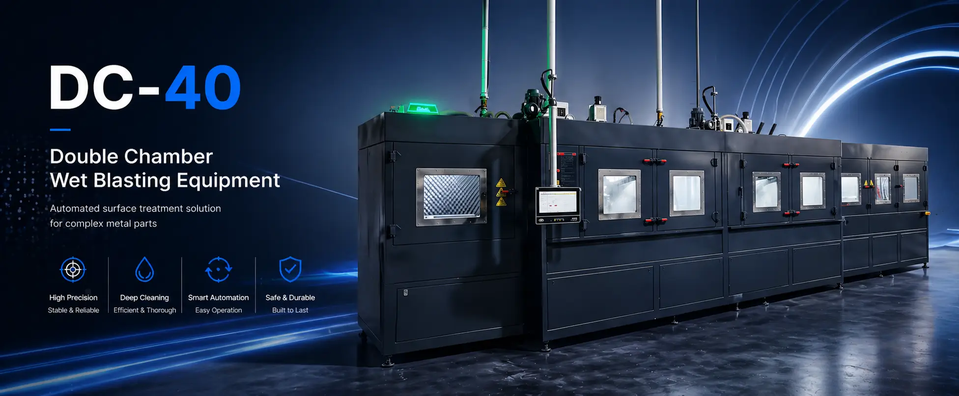
Compact equipment is not always the final answer. Once parts become larger, more numerous, or more geometry-specific, a standard single-chamber, double-chamber, or dedicated application machine may be more efficient. In DasiAuto’s product structure, a flexible RB-6 R&D wet blasting unit aligns with development work, while a single-chamber batch cabinet fits more routine batch production.
The selection matrix below reflects that progression from flexible compact cells to more specialized or higher-throughput configurations.
| Configuration / Model Tier | Target Production Scale | Workpiece Size Range | Precision Level | Recommended Applications |
|---|---|---|---|---|
| 1. Bench-top evaluation unit | Feasibility trials and very low-volume work | Very small parts | Moderate | Basic process screening and sample checks |
| 2. Compact manual cabinet | Low-volume technical finishing | Small parts | Moderate to high | Deburring, cosmetic touch-up, prototype finishing |
| 3. Laboratory / R&D cell | Process development and validation | Small precision parts | High | DOE studies, sample testing, recipe development |
| 4. Standard single-chamber cabinet | Small to medium batch production | Small to medium parts | High | Routine deburring, matte finishing, validated processes |
| 5. Single-piece dedicated system | Repetitive one-part-per-cycle work | Medium individual parts | High | Stable individual-part blasting with dedicated handling |
| 6. Servo multi-axis system | Precision engineered components | Small to medium complex parts | Very high | Complex geometry, selective blasting, edge control |
| 7. Double-chamber production system | Higher-volume batch flow | Small to medium repeat parts | High | Continuous loading with reduced idle time |
| 8. Inline integrated cell | Automated production lines | Application-specific | High and traceable | Pretreatment and connected finishing operations |
The compact segment is especially attractive when the process is technical but the volumes do not justify a large line. It can also serve as a pilot stage before scale-up. Once demand increases, the transition to dedicated platforms becomes easier if the compact machine has already generated stable process recipes and fixture logic.
Cost, Lead Time and ROI Considerations
The cost of a compact wet blasting machine is shaped by much more than its outer dimensions. A simple cabinet with manual blasting, standard controls, and a basic recovery loop sits in a different class from a compact machine that includes servo motion, advanced slurry management, recipe storage, mist control, and customized fixtures. Buyers should therefore compare system content rather than using footprint as a proxy for price.
Configuration complexity is one of the largest drivers. The more the machine must automate pressure stability, nozzle motion, waste handling, and recipe switching, the more engineering is required. That does not make the machine unnecessarily expensive; it simply reflects the difference between a general-purpose cabinet and a technical production tool.
Abrasive system design also affects cost. Some applications can tolerate simple media management and short cleaning cycles. Others require tighter control of concentration, contamination, or cross-changeover because even a small process drift changes the result. In those cases, better slurry circulation and waste handling often pay back through more consistent quality rather than through raw output.
Lead time is best discussed as a typical band, not a fixed promise. Standard compact cabinets generally move faster because the mechanical platform is already defined. Lead time usually extends when the buyer needs custom fixtures, special electrical requirements, motion axes, validation trials, or integration with upstream and downstream equipment.
ROI should be evaluated structurally rather than through invented generic payback numbers. The return can come from reduced manual deburring labor, improved consistency before coating, more predictable cosmetic finish quality, or better tool performance after controlled edge preparation. It can also come from reduced scrap, fewer rework loops, and faster process transfer from development to routine production.
In compact installations, another ROI factor is space efficiency. A smaller machine that delivers stable results can allow a factory to add a finishing process close to machining or inspection without creating a separate blasting room. That can reduce part travel, simplify supervision, and improve response time for engineering changes.
The most useful ROI framework asks five questions. What labor content is being replaced or stabilized? What defects or rework events are being reduced? How much floor space does the new process consume? How sensitive is product value to surface quality? And can the same compact machine support multiple part families over time? When the answers are favorable, even a modest-capacity system can produce a strong business case.
Why Choose DasiAuto?
Established in 2012, DasiAuto develops and manufactures wet blasting equipment for industrial surface treatment. The company brings together equipment engineering, abrasive media, and application development, as described in About DasiAuto.
Application testing and process development help evaluate abrasive media and treatment settings before the equipment configuration is defined. Equipment engineering can bring together the blasting system, fixtures, automation, and part handling around the application.
Suitability for a particular material, geometry, finish, or dimensional requirement needs to be established through representative sample testing. DasiAuto supports installation, operator training, and ongoing technical support through the production workflow.
FAQ
Is a Compact Wet Blasting Machine Suitable Only for Laboratories or Also for Daily Production?
It can be used for both, depending on the configuration and the production target. Many compact systems are installed for daily batch work when the parts are small to medium and the required output is moderate. The key limitation is usually throughput and workspace size, not the basic finishing capability.
What Information Should a Buyer Provide Before Asking for a Quotation?
The most useful inputs are part drawings or photos, material type, dimensions, target finish, current process, expected output, and any tolerance-sensitive features. If the application is deburring or edge honing, the supplier also needs to know where the treatment should and should not occur. That information helps determine nozzle arrangement, abrasive grade, fixture concept, and whether the compact format is practical.
Can Sample Testing Be Done Before a Final Compact Wet Blasting Machine Design Is Confirmed?
Yes, and that step is often important for technical applications. Sample testing helps define abrasive selection, pressure window, blasting time, and whether the desired finish can be achieved without unwanted geometry change. It also reduces the risk of specifying a machine that is either under-configured or unnecessarily complex.
How Difficult Is Installation and Commissioning for a Compact Wet Blasting Machine?
Installation is usually simpler than for a large blasting line, but utility preparation still matters. Compressed air, electrical supply, drainage or water handling, and service clearance should all be verified in advance. Commissioning should include process verification on actual parts, not only a no-load startup.
What Consumables and Spare Parts Should Be Planned From the Beginning?
Most users should plan for blasting media, nozzles, seals, hoses, window-protection items, and other wear components in the slurry delivery path. Maintenance planning should also account for sludge removal and cleaning when switching materials or abrasives. Consistent consumable management is part of keeping the process repeatable.
How Should After-Sales Support Be Evaluated for a Compact Wet Blasting Machine?
Warranty is only one part of the evaluation. Buyers should also review spare-parts availability, abrasive resupply, remote troubleshooting, operator training, and whether the supplier can help refine recipes after installation. For a compact wet blasting machine, after-sales quality matters because the machine is often expected to handle multiple part families and evolving process requirements.