
Quick Answer
Stainless steel deburring can improve part quality by removing sharp edges, feather burrs, heat-tint residues, and micro-protrusions while limiting changes to the intended base geometry. In wet blasting systems, water and abrasive media form a controlled slurry that is accelerated by compressed air and can produce a uniform, finish-friendly result. For precision stainless components, this approach can support lower dust, repeatable edge conditioning, stable cosmetic appearance, and integration into automated production when the process is validated on the actual parts.
| Core Factor | Typical Conclusion |
|---|---|
| Process type | Wet blasting / slurry blasting for controlled burr removal and surface equalization |
| Pressure behavior | Typically low-to-medium blasting pressure with closed-loop regulation |
| Finish quality | Uniform matte or refined technical finish, depending on media and recipe |
| Dust condition | Low airborne dust because the abrasive is carried in water |
| Common stainless uses | Machined parts, laser-cut components, welded fabrications, AM parts |
| Indicative lead time | Typical lead time varies by machine size, automation level, and fixtures |
What Is Stainless Steel Deburring?
Stainless steel deburring is the controlled removal of burrs, sharp corners, feather edges, recast remnants, and loose surface projections created during machining, punching, laser cutting, waterjet cutting, grinding, welding, and additive manufacturing of stainless components. The goal is not only to make a part safer to handle. It is also to improve assembly fit, coating readiness, hygiene, appearance, and dimensional consistency at the functional edge.
In surface treatment terms, stainless steel deburring sits between stock-removal machining and final finishing. It is often the bridge step that converts a technically complete part into a production-ready component. Depending on the geometry and burr root, the process may be light edge blending, selective burr removal, or combined deburring and finish homogenization.
Why Stainless Steel Parts Are Different to Deburr
Stainless steel is not especially difficult because it is always hard; it is difficult because its burr behavior varies by grade, forming history, machining condition, and thickness. Austenitic stainless may form smeared or ductile burrs, laser-cut sheet may show recast edges and oxide tint, and machined precipitation-hardening grades may carry smaller but tougher residual burrs. A single deburring method does not perform equally well across all of these cases.
The surface requirement is also usually stricter than for plain carbon steel. Stainless steel components are often visible, cleanliness-sensitive, corrosion-sensitive, or destined for food, medical, architectural, energy, or semiconductor-adjacent service. That means the deburring method must remove the burr without creating excessive roughness, trapped contamination, or random scratch patterns.
Where Wet Blasting Fits Within Stainless Steel Deburring
Wet blasting belongs to the abrasive blasting family, but it behaves differently from dry blasting because the media is suspended in water. The water phase cushions impact, suppresses airborne dust, and supports a more even surface effect. General process background is consistent with abrasive blasting terminology, but the stainless steel application is more specialized because edge shape and finish retention must be balanced carefully.
For stainless workpieces, wet blasting is often selected when the burr is small to medium, the finish must remain uniform, and the part cannot tolerate aggressive dry abrasion marks. It is especially useful when deburring must also blend heat tint boundaries, soften a laser-cut edge, refine a bead-blasted appearance, or prepare the surface for a downstream treatment.
Core Selling Points of Wet Blasting for Stainless Components
One major advantage is uniform finish control. Because the abrasive particles are carried in water, the impact is less harsh than a dry stream of the same nominal aggressiveness. That helps deburr stainless surfaces without creating a heavily etched or patchy appearance.
A second advantage is lower dust and cleaner operation. Stainless steel fines can be difficult to manage in dry finishing cells, particularly where plant cleanliness, operator visibility, or adjacent equipment protection matters. Wet blasting limits airborne particulate by keeping the abrasive and removed fines in the water phase.
A third advantage is process repeatability. Once blasting pressure, slurry concentration, nozzle angle, stand-off distance, and traverse speed are fixed, the machine can repeat the same edge condition across large batches. For stainless steel parts that must pass visual inspection as well as dimensional checks, that consistency is often more valuable than maximum removal speed.
On stainless parts, the best deburring result is usually the least visible one that still removes the defect.
What Stainless Steel Deburring Should and Should Not Do
A well-designed deburring step should remove the unwanted burr while preserving the intended edge geometry. In many applications, the right outcome is a small controlled edge break, not a large chamfer and not a rounded cosmetic-only edge. This distinction matters in mating parts, gasket seats, instrument housings, and precision brackets.
It should also avoid driving abrasive into the surface, generating random deep scratches, or creating a finish mismatch from one side of the part to the other. Those defects can complicate passivation, polishing, coating, or final visual approval. For this reason, stainless steel deburring is usually evaluated not only by burr removal but also by finish consistency and downstream compatibility.
How Does Stainless Steel Deburring Work?
Stainless steel deburring by wet blasting works through a coordinated system of slurry mixing, compressed-air acceleration, controlled exposure, and closed-loop recovery. Each part of the system affects burr removal, cosmetic finish, and media economy. On stainless substrates, stable process control matters because even minor deviations in pressure or media state can become visible on the final part.
Slurry Preparation for Stainless Steel Deburring
The process begins in the slurry tank, where water and abrasive are mixed to a stable concentration. Agitation prevents the media from settling and helps maintain a consistent abrasive load in the circulation loop. If concentration drifts too low, removal slows and the finish becomes inconsistent; if it drifts too high, the process may become unnecessarily aggressive for thin burrs or cosmetic surfaces.
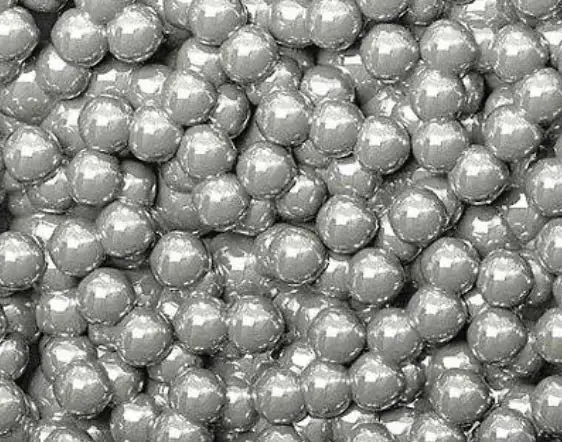
Media selection depends on the stainless grade, burr thickness, cut method, and desired final appearance. Finer media is often used where the priority is edge cleanup with minimum texture change. Medium grades are more common where laser-cut or machined parts need a stronger deburring effect or slight visual homogenization.
Compressed-Air Acceleration and Nozzle Impact
At the blast gun, compressed air accelerates the slurry through the nozzle toward the stainless workpiece. The water phase acts as both carrier and cushion, so the abrasive particles strike the burr root in a controlled micro-erosion pattern rather than an uncontrolled dry-impact pattern. This helps the system trim feather burrs, soften edges, and even out localized surface irregularities.
Nozzle angle is important. A near-perpendicular stream can increase intensity at a local feature, while a shallower approach can peel or trim directional burrs more gently. On stainless steel sheet and precision machined components, that choice can determine whether the process deburrs the edge cleanly or over-rounds it.
Motion Control and Exposure Uniformity
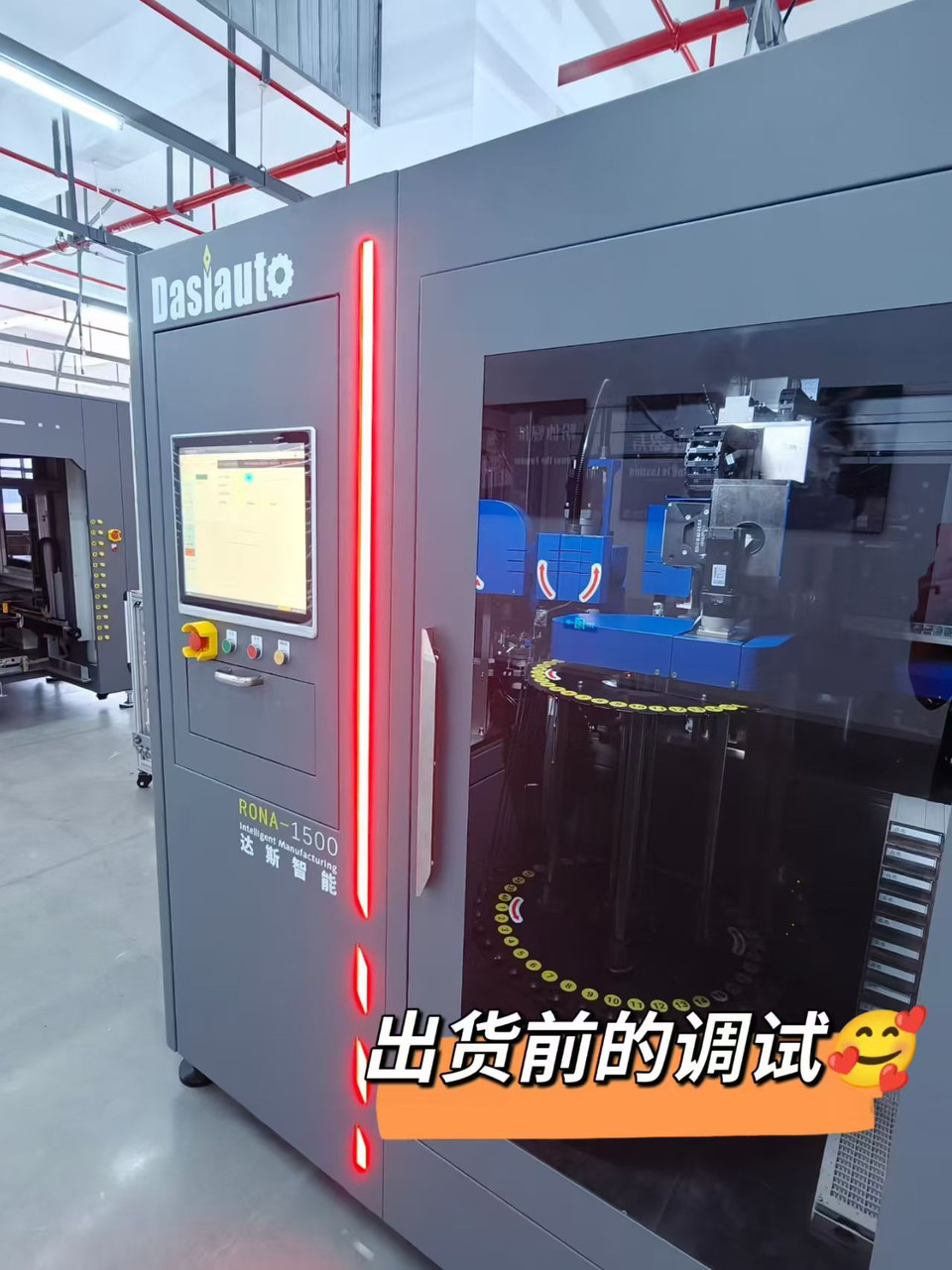
Automated stainless steel deburring can move the nozzle, the part, or both. Motion may be achieved through servo X/Y/Z axes, indexed fixtures, rotary tables, robots, or dedicated handling systems. The chosen architecture depends on whether the parts are flat, tubular, contoured, delicate, or mixed in geometry.
When finish appearance matters, motion control becomes a surface-quality variable rather than just a productivity feature. A stable path creates uniform exposure on both functional edges and visible faces. DasiAuto’s published page on burr removing of metal parts describes this selective approach, where controlled blasting paths are matched to burr location and part geometry.
Closed-Loop Slurry Recovery and Sedimentation
After striking the workpiece, the slurry drains into the recovery section and is recirculated. During this step, removed metal fines, worn abrasive, and heavy sludge must be separated from the reusable slurry. Stainless steel debris should not be allowed to accumulate unchecked because it can alter cutting behavior, reduce finish consistency, and raise maintenance frequency.
A more production-oriented system adds sedimentation management and simplified waste discharge. This makes the process more stable over long runs and reduces operator intervention. For stainless lines running mixed parts or long shifts, recovery-system quality often has as much influence on uptime as nozzle quality or pump performance.
Mist Suppression, Visibility, and Chamber Control
Wet blasting is not a dust-heavy process in the same way as dry blasting, but it still generates water mist and fine suspended droplets inside the cabinet. Chamber visibility, window cleanliness, extraction balance, and splash management therefore matter. These factors become especially important when stainless parts have reflective surfaces or when operators must visually confirm orientation and cleanliness during loading.
Effective mist control also helps with housekeeping around the cell. A poorly managed chamber can create wet residue, slippery floors, and more frequent unplanned cleaning stops. A properly integrated mist-reduction and collection system supports stable production rather than just operator comfort.
PID Control and Recipe Stability
Because stainless steel deburring is sensitive to visible finish variation, pressure stability is critical. A pressure change that seems small on paper can shift the edge condition, texture, and removal rate enough to be seen across a production batch. Closed-loop regulation can help maintain consistency in precision wet blasting.
With PID closed-loop pressure control, the machine holds the target blasting condition more consistently despite normal disturbances such as nozzle wear, media-state change, or line pressure fluctuation. Recipe-based HMI control then stores the validated parameter set by part type, helping operators call up the correct process rather than manually reconstructing it each time.
| Process Parameter | Typical Range or Practice | Why It Matters for Stainless Steel |
|---|---|---|
| Working pressure | Typically low to medium, tuned to burr root and finish sensitivity | Balances burr removal against over-texturing or edge rounding |
| Slurry concentration | Maintained as a stable water-to-abrasive ratio by weight or volume | Influences consistency, cut rate, and cosmetic uniformity |
| Abrasive particle size | Fine to medium PSD, selected by grade, burr thickness, and target Ra | Determines cutting aggressiveness and finish refinement |
| Air flow / nozzle pairing | Matched to nozzle diameter and coverage width | Affects impact energy and exposure pattern |
| Stand-off distance | Fixed by recipe for each part family | Controls local intensity and pattern overlap |
| Nozzle angle | Normal or oblique depending on burr direction and edge access | Changes trimming behavior on feather or rollover burrs |
| Media consumption | Depends on media fracture, contamination, and recovery efficiency | Drives running cost and maintenance intervals |
| Control system | PID pressure regulation, HMI recipes, alarms, recovery monitoring | Supports repeatable stainless steel deburring in production |
Stainless Steel Deburring vs. Dry Blasting and Other Methods
Choosing the right stainless steel deburring method requires understanding what problem is actually being solved. Some plants need only to knock off a burr. Others need a burr-free edge plus a controlled surface finish, low contamination risk, and minimal operator dependence. That is why wet blasting is often compared not just with dry blasting, but also with shot peening and vibratory finishing.
| Evaluation Factor | Wet Blasting | Dry Blasting | Shot Peening | Vibratory Finishing |
|---|---|---|---|---|
| Airborne dust | Low because the media is water-borne | High unless extraction is very robust | Moderate in enclosed systems | Low airborne dust, but wet waste and compound handling are common |
| Surface finish on stainless | Even, satin-like, and easier to control | More aggressive texture; can appear harsher | Not intended primarily for cosmetic refinement | Can be uniform on bulk parts, but contact marks may occur |
| Media embedding risk | Lower on many finish-sensitive stainless parts | Higher risk on some softer or smear-prone surfaces | Depends on media and application objective | Generally low, but not highly selective |
| Burr-removal selectivity | Good with programmed paths and fixtures | Good targeting, but easier to over-process | Not mainly a deburring method | Lower selectivity because all exposed areas are processed together |
| Repeatability | High with closed-loop pressure and recipe control | Good, but more affected by dust and nozzle drift | High when tightly specified | Good for bulk finishing, weaker on local critical edges |
| Environmental handling | Requires slurry recovery and sludge management | Requires dry dust collection and media containment | Requires peening media control and enclosure | Requires wastewater or compound management |
| Best-fit stainless role | Precision deburring, edge blending, finish equalization | Heavy cleaning, roughening, oxide removal | Fatigue-oriented surface treatment | Small-part batch smoothing and general edge softening |
| Relative operating profile | Balanced when recovery is efficient | Hardware may be simpler, but cleanup burden is higher | Specialized process economics | Efficient on very high counts of small tolerant parts |
Dry blasting can work well when the main requirement is aggressive cleaning or roughening rather than fine deburring. On stainless steel, however, its dry-impact profile can leave a rougher visual result or create more cleanup burden than the application really needs. That trade-off is one reason wet blasting is common in finish-sensitive stainless workflows.
Shot peening belongs in the comparison because some buyers incorrectly assume it is a deburring substitute. In reality, peening is principally used to alter residual stress and improve fatigue performance, as described in shot peening reference. It may alter an edge condition slightly, but it is not typically chosen as the primary method for precise burr removal on stainless components.
Vibratory finishing remains effective for many small stainless parts, especially when the geometry is simple and a bulk process is acceptable. Its main limitation is selectivity. If one edge is critical and another must remain sharp, or if part-to-part contact is undesirable, automated wet blasting usually offers tighter control.
Key Specifications to Evaluate Before Buying
Procurement teams often focus first on cabinet dimensions, but stainless steel deburring performance is shaped more by process stability than by outer machine size. The correct starting point is to define the burr source: machining burr, laser-cut rollover, welded spatter edge, additively manufactured surface protrusion, or mixed-condition fabrications. Each one responds differently to slurry pressure, media size, and nozzle angle.
Pressure Range and Low-End Stability
For stainless applications, the machine should not only reach a stated pressure ceiling; it should hold a stable working window at the lower and middle ranges where finish-sensitive parts are usually processed. The real question is how consistently the system maintains pressure under continuous circulation, media wear, and changing chamber load.
Motion-Axis Capability and Positioning Accuracy
If burrs occur on defined edges or inside repeatable features, motion accuracy becomes central to quality. Buyers should review whether the machine uses manual handling, indexed fixtures, servo axes, rotary positioning, or robot-assisted exposure. Where path-controlled exposure is critical, published servo accuracy and program repeatability deserve the same scrutiny as pump specification.
Throughput, Cycle Time, and Loading Method
A stainless deburring line should be evaluated by total throughput, not only blasting seconds. Loading orientation, fixturing time, drainage, blow-off, recipe call-up, and unloading all affect the true cost per part. In many plants, loading discipline is the difference between a technically capable machine and an economically efficient one.
Footprint, Utilities, and Plant Integration
Cabinet size, compressed air demand, power supply, water handling, drainage, and maintenance access all matter at installation. Stainless steel deburring cells are often placed near machining, fabrication, washing, or coating areas, so floor cleanliness and service accessibility should be assessed early rather than after purchase approval.
HMI Recipe Control and Permissions
Where multiple stainless part numbers run on the same machine, recipe control is essential. The HMI should store pressure, motion path, timing, and handling logic in a form that operators can recall quickly and supervisors can lock down. This reduces variation between shifts and shortens changeover errors.
Mist Collection and Waste-Sand Handling
Even if the deburring result is excellent, a machine becomes difficult to operate if windows fog rapidly, sludge discharge is awkward, or maintenance intervals are unpredictable. Ask how waste sand settles, how contaminants are removed, and how the machine maintains visibility during long production runs. These practical details have direct influence on uptime.
Safety and Downstream Compatibility
Interlocks, emergency stops, enclosure sealing, ergonomic loading height, and utility isolation are basic requirements. For stainless parts headed into paint, powder coating, or conversion treatment, the buyer should also think about surface cleanliness and pretreatment compatibility rather than treating deburring as an isolated step.
Applications Across Industries
Stainless steel deburring is relevant anywhere stainless is selected for corrosion resistance, hygiene, heat resistance, or appearance. Because stainless components are used across multiple sectors, the same wet blasting platform can often be adapted to very different part families through changes in fixturing, media, and recipe logic.
| Application Type | Target Industry | Workpiece Example | Process Benefit |
|---|---|---|---|
| Burr removing of metal parts | Precision machining and fabrication | Valve parts, brackets, housings, sensor bodies | Removes sharp edges while maintaining functional geometry |
| Scale removal from bars or forgings | Primary metal processing | Stainless bar stock, forged fittings, heat-affected parts | Cleans scale and prepares surfaces for later machining or inspection |
| Pretreatment before coating | Appliance, hardware, and architectural fabrication | Panels, frames, enclosures, welded stainless parts | Improves surface consistency before coating or duplex finishing |
| Post-processing of AM parts | Additive manufacturing | Printed brackets, manifolds, complex stainless forms | Reduces loose residues and moderates rough surface peaks |
| Peening of metal parts | Mechanical components | Springs, clips, selected fatigue-sensitive stainless parts | Adds controlled impact where peening is part of the route |
| 3C device finishing | Electronics supply chain | Stainless frames, covers, precision cosmetic parts | Produces even texture on visible high-value surfaces |
These are general stainless surface-treatment examples. Peening is a separate process objective, and the listed benefits and equipment suitability must be evaluated for the actual part and acceptance criteria.
In fabricated stainless products, one common requirement is simultaneous burr removal and cosmetic blending. Laser-cut or punched edges may be technically acceptable but visually inconsistent, especially after welding or brushing. Wet blasting helps unify these transitions without imposing the strongly directional scratch patterns of some abrasive belt methods.
For pre-coating or duplex-finish stainless components, surface condition matters beyond burr removal. The process may be used to clean, soften edges, and create a more even substrate before subsequent treatment. In those cases, coating pretreatment wet blasting is relevant because pretreatment consistency can influence downstream adhesion and appearance.
In tooling and precision manufacturing, stainless deburring can also overlap with controlled edge preparation. Although carbide tool edge honing is a distinct application, the process logic is similar: a small, controlled change at the edge can determine whether the part performs consistently or fails prematurely. That is why edge honing of cutting tools is often discussed alongside high-precision deburring strategies.
Equipment Selection Guide
The correct equipment configuration for stainless steel deburring depends on part size, production volume, geometry complexity, finish sensitivity, and the degree of automation required. A plant deburring laser-cut brackets by the basket is solving a different problem from a plant finishing visible stainless housings one piece at a time.
| Configuration / Model Tier | Target Production Scale | Workpiece Size Range | Control Focus | Applications to Evaluate by Sample Testing |
|---|---|---|---|---|
| R&D lab-scale robot cell | Trials, sample validation, process development | Small to medium complex parts | Flexible recipe and fixture trials | New stainless grades, burr studies, fixture and media validation |
| Single-piece wet blasting machine | Low to medium volume | Small to medium individual parts | Individual part handling | Visible stainless parts, careful one-by-one handling |
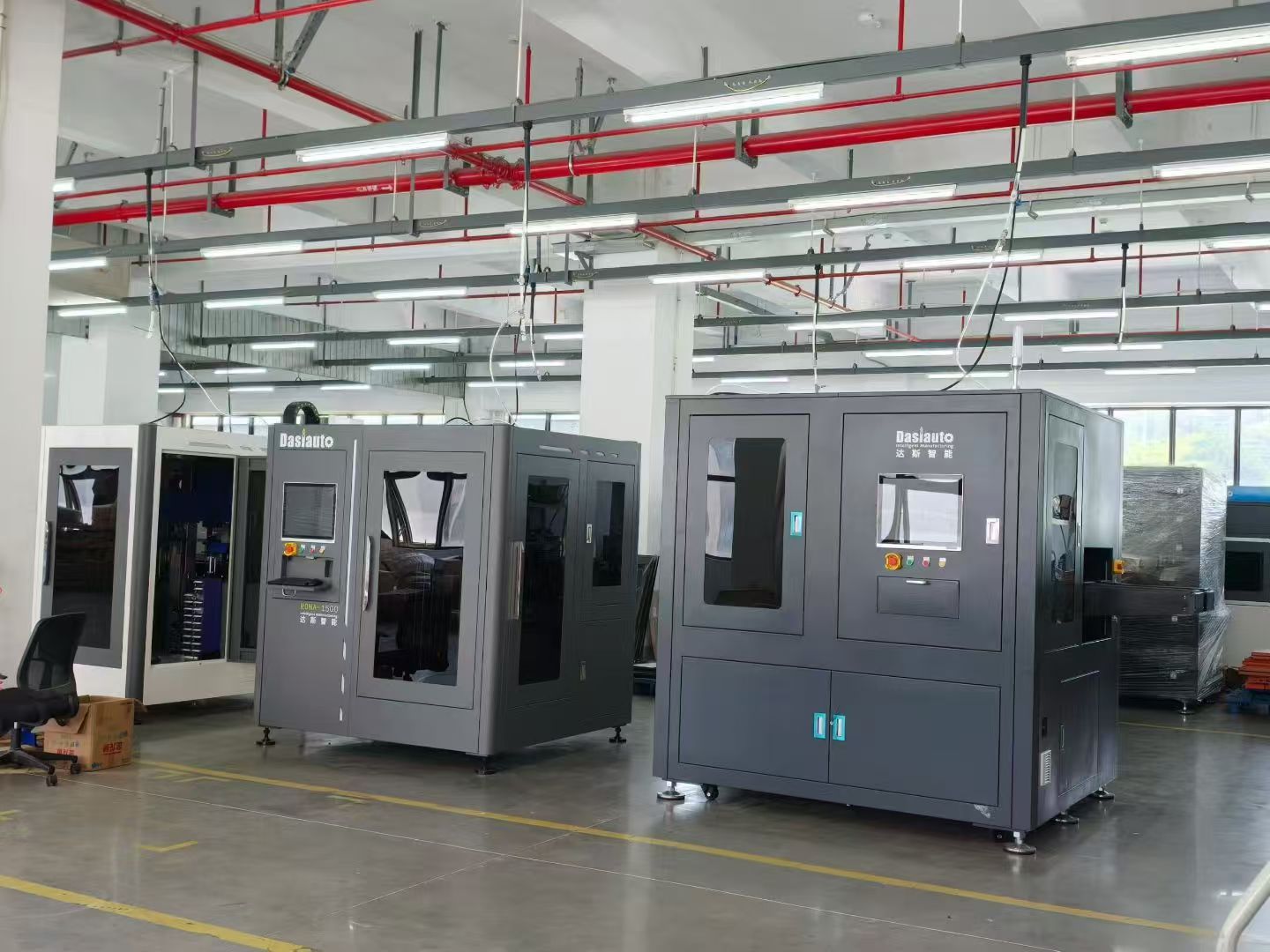
| Standard single-chamber batch cabinet | Routine batch production | Small to medium repeat parts | Repeatable batch exposure | General stainless deburring and surface equalization |
| Double-chamber production system | Medium to high throughput | Small to medium repeat parts | Coordinated loading and blasting | Overlapped loading and blasting for faster output rhythm |
| Servo multi-axis precision system | Precision-focused production | Small complex stainless geometries | Programmed paths for critical edges | Critical edges, local burrs, repeatable technical finishes |
| Complex-shape dedicated system | Engineered production cells | Medium complex parts | Multi-angle access | Contoured, recessed, and multi-angle stainless components |
| Plate-part scanning machine | Flat or panel-like work | Medium to large flat parts | Consistent scanning coverage | Laser-cut sheet, architectural panels, cover plates |
| Round-rod processing line | Semi-continuous linear work | Long cylindrical parts | Linear part handling | Stainless rods, tubes, bar-like workpieces |
These configurations are general process-planning options, not verified performance ratings or confirmed stainless-steel applications for a particular model. Validate burr removal, finish, dimensions, handling, and cycle time on representative samples before specifying equipment.
For development-stage projects, the best starting point is often a flexible lab or sample platform rather than a fixed production line. The original site presents the RB-6 wet blasting R&D cell as a development platform. Its suitability for a stainless steel project should be confirmed through recipe development, burr mapping, and media trials on representative parts before the final production architecture is frozen.
Where the part family is stable and output must be predictable, the machine should reflect the loading logic of the plant. The SC-40 single-chamber system and DC-40 double-chamber system are configurations described on the original site. Their suitability for stainless workpieces, and any throughput benefit from overlapped loading, need to be established through sample testing, fixture review, and a validated cycle study.
The key is to match the machine to the workpiece presentation, not just to the desired finish. Stainless panels, deep-drawn parts, round rods, welded frames, and small machined fittings all require different nozzle access, motion patterns, and fixturing logic. Equipment selection is therefore a process-engineering decision, not only a purchasing decision.
Cost, Lead Time and ROI Considerations
The cost of a stainless steel deburring system is influenced by much more than cabinet dimensions. Automation level, motion-axis sophistication, slurry-circulation design, recovery system, HMI recipe capability, fixturing, and mist control all affect both capital cost and running stability. In practice, the gap between a basic blast cabinet and a production-grade deburring cell is largely an engineering gap.
Main Price Drivers in Stainless Steel Deburring
The first cost driver is how precisely the burr must be removed. A system that only needs to desharpen general edges can often be simpler than one designed to protect visible cosmetic surfaces or critical functional edges. The second is part handling: manual placement, indexed tooling, servo motion, and robotic manipulation each move the project into a different cost bracket.
Abrasive strategy is another factor. Media type, size distribution stability, wear rate, recovery behavior, and compatibility with stainless finishes all influence operating cost over time. The cheapest media at purchase is not automatically the lowest-cost media in production if it shortens nozzle life or destabilizes surface quality.
Typical Lead-Time Structure
Standard platforms usually carry the shortest lead times, while customized stainless deburring systems require more engineering and therefore more schedule. Sample testing, fixture design, automation scope, chamber layout, and acceptance criteria can all extend the project timeline. For that reason, buyers should ask whether the stated lead time is for a standard machine, a modified standard machine, or a fully engineered process cell.
Commissioning time also deserves attention. A system may be mechanically complete at shipment but still require on-site tuning for burr condition, media concentration, fixture alignment, and recipe refinement. For stainless products with strict cosmetic standards, this validation period should be treated as part of the project rather than an afterthought.
ROI Logic: Where the Payback Really Comes From
The most obvious source of ROI is labor reduction versus hand deburring. Stainless parts often require careful manual finishing because sharp edges are visible and tactile, yet operator technique varies. Automation reduces that variation and makes labor output more predictable.
The second source of ROI is reduced rework and scrap. A missed burr can interfere with fit-up, sealing, cleanliness, or coating. An over-deburred part can fail on appearance or dimension. By stabilizing the exposure variables, wet blasting narrows that failure band.
Third, stainless steel deburring often improves downstream flow. More uniform edges can reduce snagging in washing, masking, assembly, and packaging. Better surface uniformity may also support more consistent coating or finishing performance when the deburring step is integrated into a broader surface-preparation route.
Why Manual Comparisons Often Underestimate Automation Value
Manual deburring appears inexpensive when judged only by direct wage cost. In reality, its hidden costs include inconsistent visual quality, fatigue-based variability, training dependence, ergonomic risk, and inspection delays. These losses are often spread across departments, so they are not always visible in a single budget line.
A better ROI model compares the full process: parts per shift, first-pass yield, operator involvement, consumables, cleaning time, maintenance burden, and downstream defect reduction. That broader view is usually where stainless steel deburring automation justifies itself most clearly.
Why Choose DasiAuto?
Established in 2012, DasiAuto develops and manufactures wet blasting equipment for industrial surface treatment. The company brings together equipment engineering, abrasive media, and application development, as described in about DasiAuto.
For a stainless steel deburring project, the starting point is the material, geometry, surface target, and production requirements. DasiAuto supports application testing and process development to evaluate abrasive media and treatment settings before the equipment configuration is defined.
Equipment engineering can bring together the blasting system, fixtures, automation, and part handling around the application. Suitability for a particular stainless grade, burr condition, or dimensional requirement needs to be established through testing rather than inferred from a model name.
DasiAuto supports the production workflow through installation, operator training, and ongoing technical support. For projects that need sample-based validation before equipment selection, this connects the initial process evaluation with the practical requirements of production.
FAQ
Can Stainless Steel Deburring Be Tested on My Actual Parts Before Equipment Purchase?
Yes. Sample testing is commonly used to confirm burr-removal capability, finish effect, cycle time, and fixture feasibility on real stainless workpieces. It is especially useful when the part mix includes different grades, cut methods, or cosmetic requirements.
Is Stainless Steel Deburring Suitable for Laser-Cut and Welded Stainless Parts?
In many cases, yes. Wet blasting is often selected for laser-cut and welded parts because it can soften sharp edges, reduce small residual burrs, and visually blend localized discoloration or texture transitions without the strongly directional marks of some dry methods.
How Much Customization Is Usually Needed for a Stainless Steel Deburring Machine?
That depends on part geometry, volume, and finish sensitivity. Simple batch parts may run in a standard cabinet with basic fixtures, while complex or appearance-critical stainless parts usually benefit from dedicated handling, nozzle paths, and recipe control.
What Operator Training Is Required After Installation and Commissioning?
Operators typically need training on recipe selection, part loading, slurry maintenance, nozzle inspection, chamber cleaning, and quality checks for under- or over-processing. Maintenance staff should also understand wear parts, sediment discharge, and routine recovery-system service.
What Consumables and Spare Parts Should Buyers Plan For?
The main items are abrasive media, nozzles, seals, filters, pumps, and wear components in the slurry circuit. Buyers should also ask how often media condition is checked and how contamination from stainless fines is managed during normal production.
When Does Stainless Steel Deburring Usually Deliver the Fastest ROI?
ROI tends to come fastest when manual deburring is labor-intensive, inconsistent, or tied to visible quality complaints. It also improves when burr-related issues are already causing coating defects, assembly interruptions, scrap, or repeated rework on the same stainless part family.