
Quick Answer
A benchtop wet blasting machine is usually the best fit when a manufacturer needs compact, controlled surface treatment for small parts, prototypes, tools, or precision components without the dust burden of dry blasting. It combines water, abrasive media, and compressed air inside a small enclosed cabinet, making it suitable for deburring, edge preparation, cosmetic finishing, coating pretreatment, and additive-manufactured parts. The main buying question is not simply cabinet size, but whether the machine can hold stable slurry condition, consistent pressure, clear visibility, and repeatable results within a limited footprint.
| Core Factor | Typical Conclusion | Why It Matters |
|---|---|---|
| Process type | Wet blasting / slurry blasting / vapor blasting | Supports fine, controlled surface conditioning |
| Pressure range | Typically low-to-medium blasting pressure | Helps balance finish quality and stock removal |
| Footprint | Bench-mounted or compact floor-adjacent format | Fits labs, toolrooms, and small-cell production |
| Dust behavior | Low free dust; mist extraction still required | Improves housekeeping versus dry blasting |
| Typical parts | Small metal, carbide, glass, AM, and 3C parts | Best suited to precision rather than bulk cleaning |
| Lead-time band | Typical standard units faster than custom cells | Important for pilot runs and process launch timing |
What Is Benchtop Wet Blasting Machine
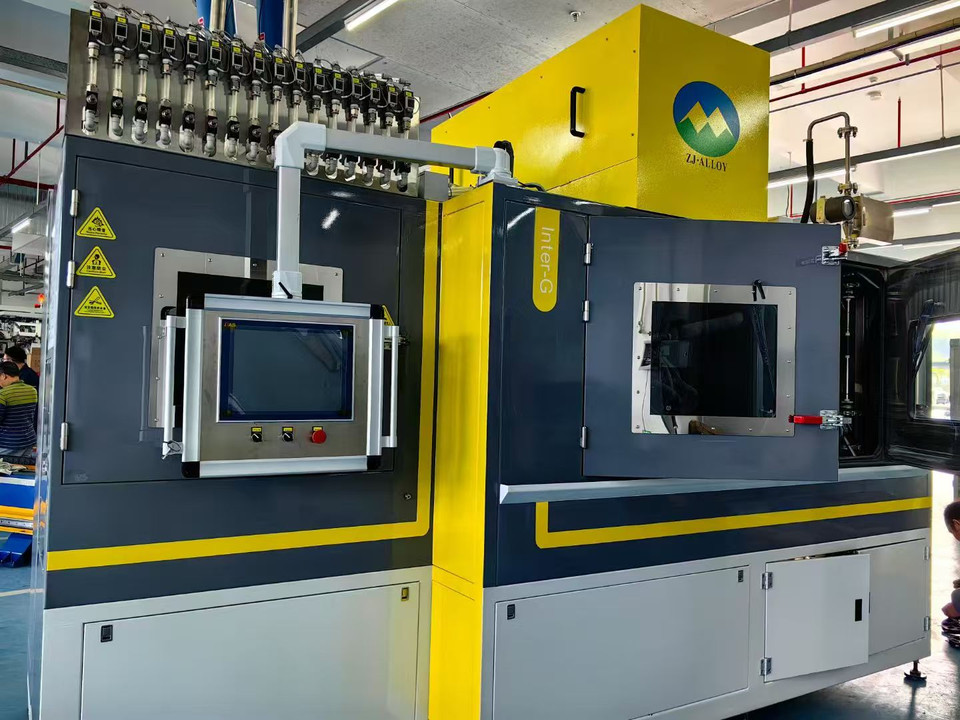
A benchtop wet blasting machine is a compact abrasive finishing cabinet designed to sit on a bench, stand, or small production workstation while delivering the same basic process family as larger wet sandblasting systems. It uses water and abrasive media in suspension, then accelerates that slurry toward the workpiece with compressed air to clean, texture, deburr, hone, or cosmetically finish the surface.
Within industrial surface treatment, it belongs to the wet blasting branch of abrasive blasting rather than to dry grit blasting, tumbling, or mechanical polishing. The benchtop format does not change the core process physics, but it does change the machine’s use case. These machines are commonly chosen where parts are small, finish requirements are sensitive, and factory space is limited.
Where a Benchtop Wet Blasting Machine Fits in the Process Family
The most useful way to classify a benchtop wet blasting machine is by function rather than by size alone. It is a precision-oriented wet blasting platform intended for small-batch work, R&D, sample development, repair cells, quality labs, tool preparation, and low-to-medium output production on smaller components.
That places it between two extremes. On one side are handheld or improvised blasting setups with high operator variability. On the other are fully automated production systems built for dedicated throughput. A benchtop wet blasting machine fills the gap by offering enclosed, repeatable surface treatment without requiring the floor space, utilities, or capital structure of a large automated line.
Core Selling Points of Benchtop Wet Blasting
The first selling point is compact precision. In many factories, the need is not high-volume blasting of large structures but controlled treatment of cutting tools, machined parts, printed parts, glass components, or cosmetic housings. A compact wet blasting cabinet makes that possible near the machining cell, inspection bench, or development station.
The second advantage is reduced airborne dust compared with dry blasting. Because the abrasive travels in a water phase, much of the free particulate is suppressed before it becomes airborne. That does not eliminate extraction requirements, but it usually makes the working environment easier to manage, especially in laboratories and enclosed toolrooms.
A third advantage is uniform surface finish. Wet blasting tends to produce a more refined and even texture because the water phase cushions impact energy. This can help on parts where aggressive dry blasting would leave excessive roughness, patchy appearance, or inconsistent micro-erosion.
A fourth advantage is process repeatability. When the slurry concentration, air pressure, nozzle condition, and operator technique are controlled, a benchtop wet blasting machine can produce highly repeatable results on small parts. This is one reason wet blasting is frequently evaluated for tool-edge preparation, small-component deburring, and appearance-critical finishing.
Why Benchtop Matters in Procurement
“Benchtop” is not just a space-saving label. It changes the economics of the process. A benchtop machine is easier to install, simpler to access for sample work, and often faster to validate for new parts than a larger automated system. It can also act as a process-development platform before production is scaled into a dedicated cabinet or line.
The limitation is equally important: a benchtop wet blasting machine is not intended to replace a high-throughput enclosure or long-workpiece line. Its strength is close-control treatment of smaller parts, shorter changeovers, and flexible experimentation with media, pressure, and nozzle technique.
How Does Benchtop Wet Blasting Machine Work
A benchtop wet blasting machine works by circulating a slurry made of water and abrasive media, feeding that slurry toward a blasting gun, accelerating it with compressed air, and directing it onto a part inside a sealed cabinet. After impact, the slurry drains back into a sump or recovery zone, where usable media and water are recirculated while broken particles, fines, and removed contaminants gradually separate out for maintenance cleaning.
Slurry System and Media Suspension
At the core of the process is the slurry loop. Abrasive media is mixed into water and kept suspended through agitation, recirculation, or pump movement. If the solids settle too much, the stream becomes inconsistent; if the concentration becomes too dense, blasting behavior can shift toward a heavier, less controllable cut.
In a compact cabinet, maintaining slurry stability is especially important because the working reservoir is smaller than in a large production system. Small variations can therefore show up quickly in finish consistency, operator feel, and visible treatment rate.
Compressed Air Acceleration Path
The slurry alone does not define the process. Compressed air supplies the acceleration needed to project the abrasive-water mixture through the nozzle and onto the surface. The actual result depends on several linked factors: pressure, nozzle size, slurry density, stand-off distance, impact angle, and time on target.
A benchtop wet blasting machine gives the operator direct control over many of these variables within an enclosed space. That is why it is often used for jobs that require careful adjustment rather than brute-force removal, such as refining a surface finish, softening an edge, or cleaning sensitive features without excessive stock loss.
Surface Interaction on Small Precision Parts
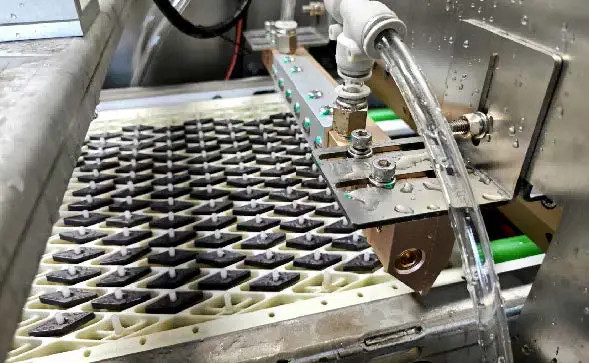
When the slurry impacts the workpiece, each abrasive particle transfers energy through a water-cushioned strike. That makes the process gentler than many dry blasting setups while still capable of removing burrs, oxides, residual powder, contamination, and minor surface irregularities. The exact finish outcome depends on media hardness, particle size distribution, substrate hardness, and exposure time.
This effect is particularly useful for small parts because small parts are often less tolerant of over-blasting. Edges can round too quickly, threads can be dulled, or visible surfaces can lose consistency if the process is too aggressive. Wet blasting gives the operator a narrower and more controllable working window.
Closed-Loop Recovery and Sedimentation
After the slurry hits the part and cabinet interior, it drains back into the machine. Larger reusable abrasive particles can be recirculated, while the system gradually accumulates fines, worn media, removed burrs, oxides, and sludge. Good recovery design matters because contamination changes the effective blasting action over time.
In higher-specification machines, sedimentation and discharge routines make maintenance more consistent. If sludge stays in circulation too long, the machine can drift away from its validated finish behavior. This is true even in a benchtop format, where users sometimes underestimate the importance of cleaning discipline.
Mist Control, Visibility, and Dust Collection
Wet blasting generates much less free dust than dry blasting, but it still produces mist and splash inside the cabinet. Visibility windows, glove ports, lighting, and extraction all affect the operator’s ability to maintain consistent technique. In precision applications, poor visibility is not just inconvenient; it directly affects angle control, dwell time, and finish uniformity.
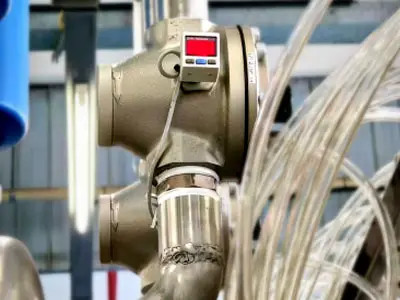
Pressure Stability and PID Logic
Some higher-end wet blasting systems use pressure-control logic to maintain a stable blasting condition during operation. In practical terms, closed-loop pressure control helps reduce variation caused by system fluctuations, wear, or load changes in the slurry circuit. Even where a benchtop unit is manual rather than automated, pressure stability remains one of the most important predictors of process repeatability.
On small precision parts, stable slurry and stable pressure matter more than maximum blasting force.
| Parameter | Typical Industrial Range or Condition | Why It Matters |
|---|---|---|
| Working pressure | Typically about 0.2-0.6 MPa, application dependent | Controls removal rate, edge effect, and finish refinement |
| Slurry concentration | Typical controlled solids ratio by weight or volume | Affects stream density, consistency, and media action |
| Abrasive particle size | Fine to medium PSD selected by substrate and target finish | Influences roughness, deburring behavior, and nozzle wear |
| Air flow demand | Dependent on nozzle diameter and set pressure | Determines compressor suitability and pressure stability |
| Media consumption | Varies with breakdown, contamination, and cleaning discipline | Shapes operating cost and finish drift over time |
| Control system | Manual controls or PLC/HMI with monitored parameters | Impacts repeatability, setup speed, and traceability |
Why Small Wet Blasting Cabinets Need Good Process Discipline
A benchtop wet blasting machine may look simpler than a large enclosed system, but the same process principles still apply. If the operator changes stand-off distance, uses worn media too long, or runs with poor visibility, the result will drift. That is why buyers should treat benchtop wet blasting as a controlled industrial process rather than as an informal shop tool.
Benchtop Wet Blasting Machine vs Dry Blasting vs Other Methods
A benchtop wet blasting machine competes most often with small dry blasting cabinets, shot peening systems, vibratory finishing, and sometimes manual polishing. These methods overlap in some applications, but they do not solve the same problem in the same way.
| Comparison Point | Benchtop Wet Blasting Machine | Dry Blasting | Shot Peening | Vibratory Finishing |
|---|---|---|---|---|
| Airborne particulate | Low free dust; mist extraction required | Higher dust generation and filtration demand | Process-specific containment and media control | Lower dust, but compounds and wastewater may apply |
| Finish character | Fine, even, matte to satin, application dependent | More aggressive, often rougher surface action | Functional impact treatment more than cosmetic finish | Generalized smoothing and edge softening |
| Media embedding risk | Lower on some soft or coated surfaces | Higher risk on sensitive substrates | Different media objective and process control | Not a directed impact process |
| Precision on local areas | Good manual control on small targeted features | Possible, but often less clean and more operator dependent | High within peening setup parameters | Limited selectivity on isolated features |
| Repeatability | Good to high with stable setup and trained operator | Often more variable in manual practice | High in dedicated peening applications | Good batch uniformity, lower directional control |
| Best use case | Small precision parts and finish-sensitive work | Fast cleaning and heavier removal | Fatigue-related surface conditioning | Bulk finishing of many small parts |
Benchtop Wet Blasting vs Small Dry Blasting Cabinets
Dry blasting cabinets remain useful when aggressive cleaning speed matters more than finish finesse. They are common in rust removal, heavier descaling, and rougher preparation tasks. A benchtop wet blasting machine becomes more attractive when the part is smaller, the finish target is tighter, and the user wants less free-dust generation around the workstation.
Benchtop Wet Blasting vs Shot Peening
Shot peening should not be treated as a simple substitute for wet blasting. Under ASTM B851 peening terminology, peening is associated with coverage, intensity, and the intentional development of compressive surface effects. By contrast, a benchtop wet blasting machine is usually selected for deburring, finish control, cosmetic texture, light cleaning, or edge preparation rather than for fatigue-life engineering.
Benchtop Wet Blasting vs Vibratory Finishing
Vibratory finishing is efficient when a large number of small parts can be processed together without damage or feature interference. Its weakness appears when the operator needs directional treatment, local control, or selective attention to edges, pockets, channels, or appearance faces. A benchtop wet blasting machine is better suited to those targeted applications because the operator can control angle, distance, and dwell on specific areas.
Process Definitions and Surface-Preparation Context
In the broader family of abrasive blasting definitions, wet blasting sits between aggressive dry cleaning and gentler finishing methods. For users comparing processes before coating, corrosion protection, or appearance finishing, the wider surface-preparation framework discussed by AMPP surface preparation guidance is also useful, because method selection should always follow the required substrate condition and downstream performance target.
Key Specifications to Evaluate Before Buying
The most common mistake in buying a benchtop wet blasting machine is to focus only on external dimensions. The real decision should start with the part, the finish specification, and the expected production rhythm. A small cabinet can still be the wrong machine if its pressure range, visibility, or recovery loop cannot hold the required result.
Blasting Pressure Range and Stability
Pressure range should be matched to the substrate and target outcome. Precision deburring, edge preparation, and cosmetic finishing generally benefit from controllable low-to-medium pressure rather than from maximum impact force. Ask whether the machine can maintain a stable usable pressure under actual working conditions instead of only showing a nominal maximum on paper.
Nozzle Access and Working Envelope
A benchtop cabinet can be compact but still inefficient if the operator cannot reach the part from the right angle. Evaluate internal chamber dimensions, glove ergonomics, turntable or fixture options, door opening size, and whether the nozzle can maintain a practical stand-off distance on the largest intended part.
Visibility, Lighting, and Window Management
Visibility is often underestimated at the quotation stage. A machine that fogs quickly or has poor lighting will reduce operator control and process repeatability. Good internal lighting, practical mist extraction, and easy window maintenance are essential for appearance-critical or edge-sensitive parts.
Slurry Management and Waste-Sand Handling
Ask how the machine manages slurry mixing, settling, cleaning, and sludge removal. Even a small cabinet needs a disciplined recovery strategy. If sediment removal is awkward, operators tend to delay maintenance, and the surface finish begins to drift without obvious warning.
HMI, Recipe Control, and Repeat Setup
Some benchtop machines are deliberately simple, which can be appropriate in prototype or repair settings. Others benefit from recipe-based controls, especially when several operators or recurring part families are involved. If repeatability matters, documented settings for pressure, media, nozzle type, and processing time are more important than the cabinet’s appearance.
Utilities, Safety, and Plant Fit
Before purchase, confirm compressor capacity, water management, electrical supply, drainage, and service access. Safety also matters in small equipment: door interlocks, emergency stops, glove integrity, enclosure sealing, and splash containment should all be reviewed. Compact size should not be mistaken for low process risk.
Applications Across Industries
A benchtop wet blasting machine is most valuable where part size is modest but finish sensitivity is high. That includes not only industrial metal parts, but also carbide tools, AM components, decorative glass, and consumer-device housings.
| Application Type | Target Industry | Workpiece Example | Process Benefit |
|---|---|---|---|
| Edge honing of cutting tools | Carbide tooling | Inserts, end mills, drills | Controlled edge preparation and more consistent geometry |
| Burr removing of metal parts | Precision machining and stamping | Small valve parts, connectors, brackets | Selective deburring without heavy stock removal |
| Scale removal from forgings or bars | Metal processing and heat-treated parts | Small forgings, test coupons, short bar sections | Cleaning with less free dust than dry blasting |
| Pretreatment before coating | Fabrication, electronics, and component finishing | Housings, brackets, small panels | More uniform substrate before coating |
| AM post-processing | Additive manufacturing | Metal printed prototypes and short-run components | Powder-remnant removal and finish equalization |
| Peening and conditioning | Functional component finishing | Small metal mechanical parts | Directed treatment on specific areas |
| Glass frosting | Decorative and technical glass | Covers, windows, display panels | Even matte texture and controlled frosting |
| 3C device finishing | Consumer electronics and hardware | Casings, frames, shells | Cosmetic smoothing and tactile consistency |
Cutting Tools and Small Precision Edges
One of the clearest use cases for a benchtop wet blasting machine is tool-edge preparation on small carbide parts. In edge honing of cutting tools, process control matters because even slight variation in edge condition can affect coating behavior and tool performance.
Deburring of Small Machined Parts
Benchtop wet blasting is also effective for recurring small-part deburring where manual hand finishing is too slow or inconsistent. The process can reduce minor burrs on holes, transitions, and machined edges while keeping surface damage limited. This aligns naturally with burr removing of metal parts when the user needs more control than bulk finishing can provide.
Pretreatment and Appearance-Sensitive Finishing
Small housings, brackets, and visible parts often need surface conditioning before paint, coating, or further assembly. In those cases, coating pretreatment wet blasting can create a more uniform starting surface than inconsistent manual abrasion or patchy dry blasting.
Additive Manufacturing, Glass, and 3C Components
Additive-manufactured parts benefit from the process because internal corners and visible outer surfaces often need gentle equalization rather than aggressive stock removal. Glass and 3C parts, meanwhile, value uniformity and cosmetic control. A benchtop wet blasting machine can serve these sectors well because it offers targeted treatment on small, high-value parts where handling and visual consistency are critical.
Equipment Selection Guide
Benchtop wet blasting is only one point on a wider equipment spectrum. Some buyers begin with a benchtop platform for trials and later migrate to a dedicated cabinet or automated production configuration once the process is validated.
| Configuration / Model Tier | Target Production Scale | Workpiece Size Range | Precision Level | Recommended Applications |
|---|---|---|---|---|
| Compact benchtop lab unit | R&D and sample work | Very small parts | High | Media screening, finish trials, prototype evaluation |
| Benchtop production cabinet | Low-volume recurring work | Small parts | High | Tool prep, cosmetic finishing, small-part deburring |
| Flexible R&D robot cell | Application development | Small to medium mixed parts | Very high | Path validation and multi-part process proofing |
| Standard single-chamber cabinet | Batch production | Small to medium parts | Medium to high | Repeated wet blasting of regular part families |
| Single-piece dedicated unit | Repetitive part flow | Small to medium dedicated parts | High | Stable one-part-at-a-time processing |
| Complex-shape multi-axis system | Geometry-intensive production | Small to medium complex parts | Very high | Contour-following finish and selective treatment |
| Plate-part dedicated system | Repeated flat-part processing | Plate and sheet parts | High | Uniform treatment on broad flat surfaces |
| Double-chamber production system | Higher recurring volume | Small to medium parts | High | Better loading efficiency and line utilization |
When a Benchtop Wet Blasting Machine Is Enough
A benchtop unit is usually enough when the part mix is small, the batch size is moderate, and the work requires operator control rather than robotic automation. It is often the right choice for tooling departments, development labs, prototype centers, maintenance environments, and specialized finishing cells.
When to Move Beyond Benchtop Equipment
If the workload grows into longer cycles, larger parts, more complex geometry, or stricter takt time, a larger cabinet often becomes more economical than pushing a benchtop unit beyond its intended role. A flexible R&D robot wet blasting system can bridge that stage when process development must continue across multiple shapes before a dedicated line is specified.
For recurring batch production, a single-chamber wet blasting cabinet may be a more suitable next step. Where one component dominates and individual processing logic is preferred, a single-piece blasting machine can be easier to optimize for workflow, fixture repeatability, and inspection control.
Cost, Lead Time and ROI Considerations
The cost of a benchtop wet blasting machine is driven less by overall size than by process quality. Two machines with similar footprints can differ materially in price if one has better slurry control, stronger mist extraction, more durable internals, improved visibility, or more disciplined process controls.
Main Price Drivers
Important cost drivers include cabinet construction, nozzle and gun assembly, pump design, internal lining materials, lighting, viewing system, extraction quality, slurry agitation method, controls level, and ease of maintenance access. If the machine is expected to support validated recurring work rather than occasional sample blasting, these details matter more than a low entry quote.
Consumables also shape the real operating cost. Abrasive breakdown rate, nozzle wear, window replacement, sludge removal effort, and cleaning time all affect the total expense of ownership. A cheaper cabinet can become expensive if it is hard to keep clean or if process drift forces extra inspection and rework.
Typical Lead-Time Logic
Lead time is generally shorter for standard benchtop formats than for customized robotic or application-specific systems. Even so, buyers should allow time for sample evaluation, abrasive selection, internal approval, possible fixture discussion, production scheduling, shipment, installation, and operator training.
Where the part is technically demanding, process validation may take longer than machine assembly. This is common for carbide tools, cosmetic components, or AM parts where the finish target is narrow and the acceptable variation band is small.
ROI Calculation Framework
The most useful ROI calculation compares the benchtop wet blasting machine against the current finishing method, not against an abstract ideal. If the alternative is labor-intensive manual deburring, hand polishing, or inconsistent dry blasting, the gains may come from reduced rework, faster setup, lower scrap, more stable coating pretreatment, or less operator variability.
For small high-value parts, the return often comes from finish consistency rather than headline throughput. A benchtop unit can pay back by making a delicate process more predictable, which protects downstream coating, assembly fit, cutting performance, or cosmetic acceptance.
Where ROI Is Strongest
ROI tends to be strongest where the part is small, expensive, and sensitive to finishing variation. Cutting tools, printed metal components, visible housings, and burr-critical machined parts fit that profile well. In those environments, moving from informal manual finishing to a documented wet blasting process can reduce quality escapes more effectively than simply increasing production speed.
Why Choose DasiAuto?
Established in 2012, DasiAuto develops and manufactures wet blasting equipment for industrial surface treatment. The company brings together equipment engineering, abrasive media, and application development, as described in About DasiAuto.
Application testing and process development help evaluate abrasive media and treatment settings before the equipment configuration is defined. Equipment engineering can bring together the blasting system, fixtures, automation, and part handling around the application.
Suitability for a particular material, geometry, finish, or dimensional requirement needs to be established through representative sample testing. DasiAuto supports installation, operator training, and ongoing technical support through the production workflow.
FAQ
Is a Benchtop Wet Blasting Machine Suitable for Production, or Only for Laboratory Work?
It can be suitable for both, depending on the part size, batch frequency, and finish requirement. Many benchtop systems are ideal for R&D, sample approval, and toolroom work, but they can also support recurring low-volume production when the parts are small and the process window is well defined.
What Kinds of Parts Are Best Matched to a Benchtop Wet Blasting Machine?
The best candidates are small, relatively high-value parts that need controlled surface treatment rather than aggressive bulk cleaning. Typical examples include carbide tools, machined components with burr-sensitive edges, additive-manufactured samples, glass pieces, and cosmetic metal housings.
Do Buyers Need Sample Testing Before Selecting a Benchtop Wet Blasting Machine?
Yes, sample testing is strongly recommended when the target involves edge geometry, coating pretreatment, cosmetic appearance, or powder-remnant removal. Trials help confirm media grade, pressure window, nozzle setup, cycle time, and whether a benchtop format can reliably meet the required result.
What Utilities and Installation Conditions Should Be Checked in Advance?
The buyer should confirm compressed air capacity, electrical supply, water handling, drainage, bench or stand load capacity, and enough service clearance for cleaning and maintenance. It is also wise to check extraction arrangements, because wet blasting reduces dust but still requires management of mist and splash.
What Spare Parts and Consumables Are Usually Needed for Ongoing Operation?
Common wear items include nozzles, hoses, seals, window protection components, and pump-related parts, along with the selected abrasive media. Users should also plan for routine slurry cleaning and sludge disposal, because process consistency depends on keeping contamination from building up in the loop.
How Should ROI Be Judged for a Benchtop Wet Blasting Machine?
ROI should be evaluated against the existing manual or inconsistent finishing process, including labor time, rework, scrap, and downstream quality effects. If the machine stabilizes deburring, edge preparation, cosmetic finish, or coating pretreatment on small high-value parts, the return is often driven by reduced variation as much as by direct labor savings.