
Quick Answer
For manufacturers that need stable finishes at scale, automated wet blasting equipment is usually the best fit when part quality depends on repeatable pressure, controlled nozzle paths, and lower airborne dust than dry blasting. It is especially effective for edge honing, deburring, coating pretreatment, additive-manufactured parts, and cosmetic surface finishing. The right system is chosen by matching part geometry, takt time, motion precision, slurry recovery design, and recipe control to the actual production task rather than by comparing cabinet size alone.
| Core Factor | Typical Conclusion | Why It Matters |
|---|---|---|
| Process type | Automated wet blasting / slurry blasting | Supports repeatable directional finishing on complex parts |
| Pressure band | Typically low-to-medium industrial blasting pressure | Helps balance material removal with finish control |
| Motion control | Servo, robotic, or dedicated handling automation | Determines coverage consistency and cycle stability |
| Dust behavior | Low free dust; mist extraction still required | Improves housekeeping compared with dry blasting |
| Primary uses | Deburring, edge honing, pretreatment, AM finishing | Matches high-value precision surface treatment tasks |
| Lead-time band | Standard automation faster; custom systems longer | Affects launch timing and validation planning |
What Is Automated Wet Blasting Equipment
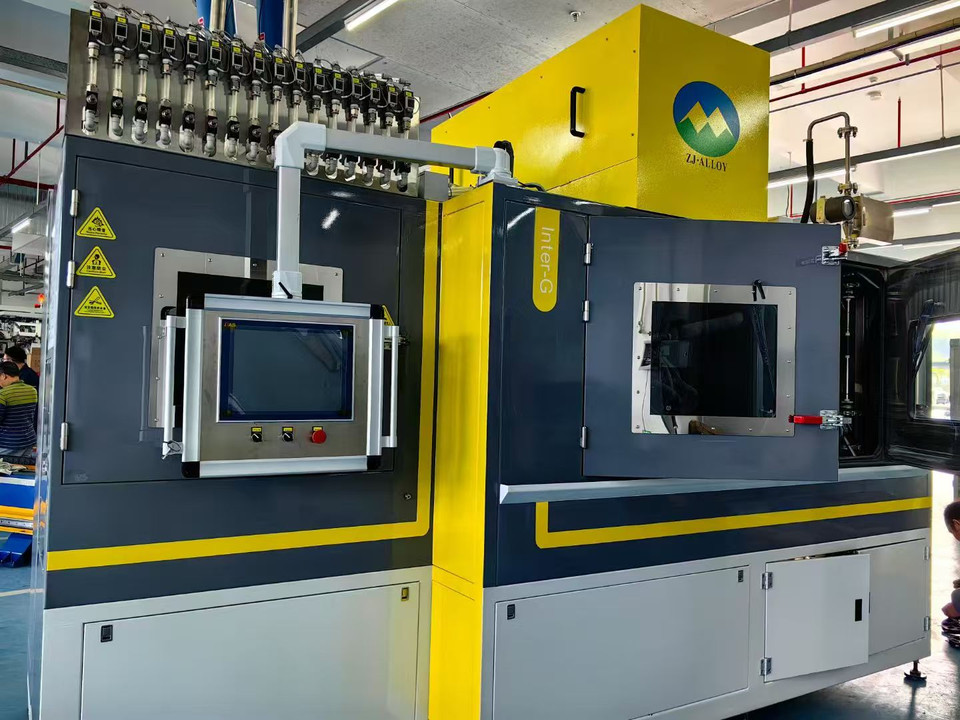
Automated wet blasting equipment is a machine system that uses water-suspended abrasive media, compressed air, and programmed motion or handling to treat workpiece surfaces with minimal reliance on manual blasting technique. It belongs to the broader abrasive blasting process family, but differs from conventional dry blasting because the abrasive is carried in a slurry rather than in a dry stream.
In industrial practice, the word “automated” covers a range of architectures. It may refer to servo-controlled nozzle movement, programmable workpiece rotation, robotic loading, fixed-cycle blasting of one part at a time, or multi-station production cells with chamber-to-chamber part transfer. The common factor is that the machine controls more of the process than the operator does.

Where Automated Wet Blasting Sits in the Surface Treatment Process Family
Surface treatment buyers usually compare wet blasting with dry blasting, shot peening, vibratory finishing, and hand deburring. Automated wet blasting occupies the middle ground between aggressive cleaning and precision finishing. It is directional like blasting, but gentler and more finish-oriented than many dry grit processes.
That makes it relevant when the target is not just contaminant removal. Many production lines need a process that can deburr edges, condition surfaces before coating, refine the appearance of visible parts, or create a controlled edge radius on carbide tools. Automated wet blasting is often selected when those results must be achieved consistently across repeated cycles.
Core Selling Points of Automated Wet Sandblasting
The main technical advantage is process repeatability. When pressure, slurry concentration, nozzle position, angle, and cycle time are controlled by the system, the variation normally caused by manual blasting technique is reduced. This matters in any application where surface finish, burr removal, or edge preparation must stay within a defined window.
Another major advantage is low free dust relative to dry abrasive blasting. Because the abrasive is suspended in water, the impact zone produces less airborne particulate, even though enclosure ventilation and mist control are still required. In many factories, that supports cleaner surrounding areas and easier process segregation.
Automated wet blasting can also reduce the risk of no media embedding on certain sensitive surfaces because the water film moderates impact. In addition, the slurry impact pattern tends to produce finer and more uniform cosmetic results than more aggressive dry processes, especially on machined, coated, glass, or 3C-related surfaces.
Why Automation Changes the Buying Decision
A manual wet blasting cabinet and an automated wet blasting cell may share the same process principle, but they do not create the same production outcome. Once motion is servo-driven and recipes are stored digitally, the machine becomes part of the quality-control chain rather than only a finishing station.
That changes what the buyer should evaluate. Instead of focusing only on nozzle power, the procurement team must also assess motion repeatability, fixture consistency, closed-loop control, sludge handling, visibility, maintenance access, and the ability to reproduce the same result across shifts and operators.
How Does Automated Wet Blasting Equipment Work
Automated wet blasting equipment works by mixing abrasive media with water into a slurry, circulating that slurry to a blast nozzle, accelerating it with compressed air, directing it along a programmed path onto the part surface, then recovering and recirculating the spent slurry through a closed-loop system. The automation layer controls how, where, and how long the stream acts on the workpiece.
Slurry System: Water and Abrasive in Controlled Suspension
The process begins in a slurry tank or sump where abrasive particles are mixed with water and kept suspended through agitation or circulation. The objective is not merely to wet the media, but to hold it within a controlled concentration band so that the blast stream behaves consistently over time.
If the slurry becomes too dilute, finishing action drops and the cycle may drift longer. If it becomes too concentrated, line wear, nozzle instability, and pump load rise. On automated equipment, that variability undermines the value of stored programs, because path precision cannot compensate for an unstable slurry condition.
Compressed Air Acceleration and Blast Delivery
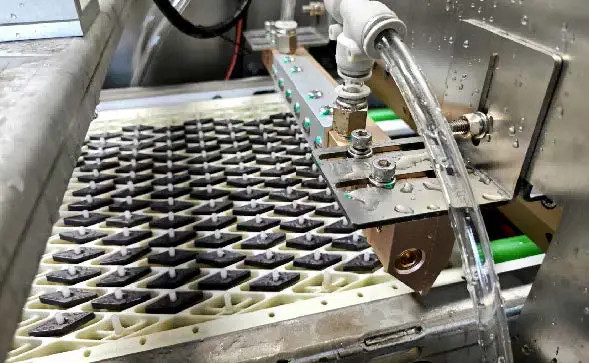
The slurry is pumped to the blast gun or nozzle assembly and then accelerated by compressed air. At that point, the finishing result depends on pressure, nozzle geometry, stand-off distance, impact angle, dwell time, and traverse speed. Those variables are present in both manual and automated systems, but automation keeps them within narrower limits.
For example, a servo-axis system may repeat the same pass sequence over cutting-tool edges, internal channels, or complex contours. A dedicated single-piece machine may present the same part to the nozzle in the same orientation every cycle. On more advanced systems, robotic or indexed handling reduces the exposure of result quality to operator positioning.
Closed-Loop Recovery, Sedimentation, and Sludge Management
After the slurry strikes the surface, the spent mixture drains back into the machine carrying fragmented abrasive, removed material, fines, and water. A well-designed recovery loop separates reusable slurry from settled waste and supports continued circulation without constant manual correction.
This part of the machine often determines long-run stability. If broken media, fines, and removed substrate remain suspended indefinitely, the stream can gradually change character, which affects finish, removal rate, and edge results. Automatic sedimentation, one-click discharge, and routine slurry housekeeping therefore matter as much as the blast gun itself.
Dust Collection, Water Mist Control, and Visibility
Wet blasting suppresses dry dust, but it still generates moisture-laden mist inside the working enclosure. Automated systems therefore need extraction to keep windows, internal cameras, and inspection points usable during production. Mist control is also important for maintaining a safer, cleaner operating environment around access doors and service areas.
Why PID Pressure Control Matters
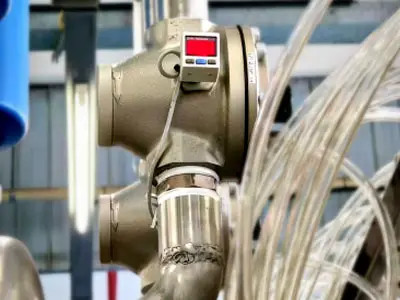
The practical value of automation increases when pressure control is closed-loop rather than approximate. In systems using closed-loop slurry control, PID logic can help maintain a more stable blasting pressure during long production runs, even as hose condition, nozzle wear, or slurry load changes gradually. That is especially useful when the process window is narrow and the part family is sensitive to finish drift.
In automated wet blasting, stable slurry condition usually matters more than peak pressure.
| Parameter | Typical Industrial Range or Condition | Why It Should Be Evaluated |
|---|---|---|
| Working pressure | Typically about 0.2-0.7 MPa, application dependent | Governs removal rate, edge effect, and finish character |
| Slurry concentration | Typical controlled solids ratio by weight or volume | Influences stream density, consistency, and pump loading |
| Abrasive particle size | Fine to medium PSD selected by application | Affects roughness, deburring behavior, and wear rate |
| Air flow demand | Dependent on nozzle size, pressure, and duty cycle | Determines compressor sizing and process stability |
| Media consumption | Varies with breakdown, contamination, and cleaning schedule | Impacts consumable cost and maintenance frequency |
| Control architecture | PLC/HMI with optional PID pressure logic | Supports recipe storage, alarms, traceability, and repeat setup |
Automated Motion as a Process Variable
Once blasting is automated, movement becomes part of the finishing recipe. Traverse speed, indexing sequence, dwell, and reorientation all influence whether the part receives selective deburring, even frosting, or edge conditioning. This is why automated wet blasting equipment should be evaluated as a complete system rather than as a pump plus cabinet.
Automated Wet Blasting Equipment vs Dry Blasting vs Other Methods
Buyers often start by comparing automated wet blasting to manual dry blasting because both involve propelled abrasive media. In reality, the more useful comparison is between different finishing philosophies: directional wet blasting, directional dry blasting, functional peening, and bulk finishing. Each has a valid place in production, but they solve different manufacturing problems.
| Comparison Point | Automated Wet Blasting | Dry Blasting | Shot Peening | Vibratory Finishing |
|---|---|---|---|---|
| Airborne particulate | Low free dust; mist extraction required | Higher dust load and larger collection burden | Usually enclosed with dedicated media control | Low dust, but compound and wastewater handling may apply |
| Finish character | Fine, uniform, matte to satin, process-dependent | More aggressive and often less cushioned | Functional compressive treatment, not mainly cosmetic | Bulk smoothing and generalized edge softening |
| Media embedding risk | Lower on some sensitive surfaces | Higher on softer materials or coatings | Different impact purpose and media regime | Not a nozzle-driven impact process |
| Localized control | High with programmed nozzle path | Moderate to high, often operator dependent | Controlled by coverage and intensity rules | Lower selectivity on isolated features |
| Repeatability | High when motion and slurry are controlled | Often lower in manual operation | High in dedicated peening systems | Good in bulk batches, weaker directionally |
| Environmental profile | Slurry and sludge management required | Dry grit, dust, and filter handling required | Specialized media verification and handling | Wastewater and compound disposal considerations |
Automated Wet Blasting vs Dry Abrasive Blasting
Dry blasting remains effective for heavy rust, large-scale cleaning, and aggressive surface removal where finish sensitivity is secondary. Automated wet blasting is more often selected when the output must be refined, directional, and repeatable, especially on smaller or more complex parts where manual inconsistency creates scrap risk.
Automated Wet Blasting vs Shot Peening
Shot peening is not simply “harder blasting.” Under ASTM B851 peening terminology, the process is defined around functional surface treatment concepts such as intensity and coverage rather than only visual finish. A buyer should therefore choose peening when fatigue-related compressive effects are required, and wet blasting when the main target is finish conditioning, burr reduction, or controlled edge treatment.
Automated Wet Blasting vs Vibratory Finishing
Vibratory finishing is efficient for large quantities of small components that can tolerate generalized contact and batch processing. Its limitations appear when the manufacturer needs directional treatment, local control, protection of critical features, or finishing inside geometries that require a controlled nozzle approach. In those cases, automated wet blasting usually provides better selectivity.
Key Specifications to Evaluate Before Buying
Buying automated wet blasting equipment should begin with the process result, not with the cabinet drawing. A system that looks similar on paper can perform very differently depending on how its pressure control, motion control, slurry loop, and waste management are engineered.
Blasting Pressure and Pressure Stability
Ask for the usable pressure range under production load, not only the maximum nameplate figure. Many precision finishing processes operate in moderate pressure windows, and their real requirement is stability over a full shift rather than the ability to reach a high peak setting.
Motion Accuracy and Path Repeatability
For edge honing, selective deburring, or finishing on complex geometries, motion control is central. Servo-driven X/Y/Z linkage, repeatable fixture location, and stable nozzle orientation matter more than oversized enclosures. If the supplier specifies 0.02 mm control accuracy, buyers should also ask how that value is achieved in actual fixtured production, not only in axis theory.
Throughput, Cycle Time, and Changeover
Cycle time should include loading, positioning, recipe call-up, blasting, drain-back, unloading, and inspection. Automated equipment can improve throughput not only by blasting faster, but by reducing dead time between parts and reducing rework from inconsistent finishing.
Slurry Recovery and Waste-Sand Handling
A buyer should review sump design, agitation method, return flow, sedimentation arrangement, and sludge discharge routine. The more stable the slurry loop, the less frequently the process drifts or requires manual correction, which directly affects labor cost and surface consistency.
HMI, Recipes, and Permission Control
For mixed-part production, the HMI should allow operators to call up qualified process recipes without freely changing protected parameters. Hierarchical permissions, alarm records, maintenance prompts, and trend visibility are useful because they reduce setup variation between shifts and support troubleshooting.
Footprint, Utilities, and Maintenance Access
Compressed air demand, water handling, drainage, electrical load, and service clearance should be confirmed before layout approval. Automated wet blasting systems often fail during launch not because the blasting principle is wrong, but because plant utilities or maintenance access were underestimated.
Safety, Interlocks, and Enclosure Design
Even though wet blasting lowers free dust, it still requires enclosure safety, emergency stops, access-door interlocks, mist extraction, and logic for abnormal conditions such as blocked nozzles or air-pressure loss. When automation is added, safe separation between moving axes, handling devices, and operator access becomes even more important.
Automation Depth and Application Fit
Not every job needs a robot cell. Some part families are better served by a single-piece machine, some by a standard chamber with servo motion, and others by a double-chamber or dedicated geometry line. The correct level of automation is the one that matches part mix, quality window, and daily throughput without adding unnecessary complexity.
Applications Across Industries
Automated wet blasting is used across multiple industries because it combines directional abrasive action with cleaner handling and programmable consistency. The same process family can be configured for cutting tools, stampings, forged parts, additive-manufactured components, glass, and appearance-critical housings.
| Application Type | Target Industry | Workpiece Example | Process Benefit |
|---|---|---|---|
| Edge honing of cutting tools | Carbide tooling | Inserts, drills, end mills | Controlled K-factor preparation and edge uniformity |
| Burr removing of metal parts | Precision machining and stamping | Brackets, housings, connectors | Selective burr reduction with repeatable coverage |
| Scale removal from forgings or bars | Steel processing | Forged blanks, rods, bars | Surface cleaning with lower free-dust burden |
| Pretreatment before coating | Fabrication and coating lines | Panels, frames, housings | More uniform substrate condition before paint or coating |
| AM post-processing | Additive manufacturing | Metal printed brackets, channels, lattices | Powder residue removal and surface refinement |
| Peening and conditioning | Mechanical components | Functional metal parts | Directed surface conditioning on selected zones |
| Glass frosting | Decorative and technical glass | Covers, display glass, panels | Even matte appearance and cosmetic consistency |
| 3C device finishing | Electronics and consumer hardware | Casings, frames, shells | Smooth tactile finish and visual uniformity |
Automated Wet Blasting for Cutting Tools
One of the strongest use cases is edge honing of cutting tools, where the surface-treatment objective is not simple cleaning but controlled edge preparation before coating or service. In that application, automated motion and stable slurry pressure help reduce variation from insert to insert or tool to tool.
Selective Deburring of Metal Components
Small burrs on machined, drilled, or stamped parts often require directional treatment rather than bulk tumbling. For many plants, burr removing of metal parts becomes more repeatable when the nozzle path, angle, and dwell are automated instead of left entirely to manual judgment.
Coating Pretreatment and Functional Surface Preparation
Surface preparation before paint or functional coating often requires a clean and uniform substrate rather than maximum roughness. In these cases, coating pretreatment wet blasting can provide a consistent pre-coat surface while reducing the free-dust issues often associated with dry blasting stations. Surface-preparation expectations in coated systems are also shaped by organizations such as AMPP surface preparation guidance.
AM Parts, Glass, and 3C Appearance Surfaces
Additive-manufactured parts may need residual powder removal and finish equalization on accessible surfaces. Glass and 3C housings, meanwhile, place a premium on even texture and cosmetic repeatability. Automated wet blasting is useful in these categories because it combines controlled abrasive action with a gentler finish signature than many dry methods.
Equipment Selection Guide
The correct automated wet blasting configuration depends on part geometry, production volume, acceptable cycle time, and finish sensitivity. In practice, buyers should choose the simplest machine that can repeatedly hold the required quality window.
| Configuration / Model Tier | Target Production Scale | Workpiece Size Range | Precision Level | Recommended Applications |
|---|---|---|---|---|
| R&D robot-type cell | Sample testing and process development | Small to medium mixed parts | Very high | Media trials, path development, process validation |
| Compact batch cabinet | Low-volume flexible production | Small parts | Medium | Job-shop work, maintenance finishing, rework |
| Standard single-chamber cabinet | Recurring batch production | Small to medium parts | Medium to high | General production wet blasting |
| Dedicated single-piece machine | Stable repetitive production | Small to medium dedicated parts | High | Controlled individual-part finishing |
| Servo multi-axis complex-part system | Precision processing of intricate geometry | Small to medium complex parts | Very high | Edge honing, selective deburring, targeted coverage |
| Plate-part dedicated machine | Repeat processing of flat components | Plate and sheet parts | High | Uniform treatment of broad flat surfaces |
| Round-rod processing line | Semi-continuous cylindrical production | Long rods, shafts, bars | Medium to high | Surface conditioning of rod-like workpieces |
| Double-chamber production system | Higher-volume recurring production | Small to medium parts | High | Reduced idle time and better line utilization |
R&D and Process-Proofing Configurations
When a manufacturer is still deciding on media grade, blast path, or fixture strategy, a flexible development platform is often the right starting point. An R&D robot blasting cell makes sense for sample testing, mixed geometries, and path validation before committing to a dedicated production layout.
Standard Production Machines
For many part families, a standard single-chamber production cabinet offers the best balance between automation, manageable footprint, and batch flexibility. It is commonly suitable when the part mix is moderate and the process window is established.
A dedicated single-piece system becomes more attractive when one workpiece dominates the production schedule and loading discipline is central to both cycle time and quality control. In those cases, dedicated automation can reduce changeover variability and simplify acceptance criteria.
Complex Geometry and High-Throughput Options
Parts with recesses, angled faces, local burrs, or multiple critical treatment zones often justify a servo multi-axis or complex-shape platform. Geometry-specific lines for rods, plates, or other recurring forms can further reduce unnecessary motion and improve handling efficiency.
At higher recurring volumes, a double-chamber wet blasting system can reduce non-productive time by separating loading from blasting more effectively. The gain is not only faster cycling, but also better predictability in operator rhythm and fixture utilization.
Cost, Lead Time and ROI Considerations
The cost of automated wet blasting equipment is mainly driven by engineering content, not by the basic fact that it is a blasting machine. Two systems with similar chamber sizes can differ sharply in price if one adds servo axes, recipe management, integrated handling, better sludge management, or validated application tooling.
Main Price Drivers
Important price drivers include enclosure size, motion architecture, nozzle count, control hardware, recovery-loop design, fixture complexity, extraction capacity, and waste-sand handling. A system intended for precision edge honing or cosmetic finishing is usually more demanding than one intended for rough cleaning because the process window is narrower and the motion strategy must be more controlled.
Consumables strategy also influences effective cost. Abrasive wear rate, contamination rate, hose and nozzle replacement, pump maintenance, water management, and sludge removal all affect ongoing operating expense. Buyers should therefore separate acquisition price from lifetime process cost when comparing quotations.
Typical Lead-Time Bands
Lead time is typically shortest for standard chambers and longer for configured automation cells or dedicated lines. A realistic project schedule should include sample testing, fixture review, machine design, manufacturing, internal inspection, shipment, installation, commissioning, training, and process acceptance.
For highly specific applications, the engineering cycle can be as important as fabrication time. That is especially true when the machine must run multiple part numbers, achieve a defined edge condition, or integrate with upstream and downstream process stations.
ROI Logic for Automated Wet Blasting
The strongest return usually comes from taking a variable, operator-dependent finishing task and converting it into a controlled production step. Labor reduction is one part of the equation, but it is not the only one. Other ROI contributors include reduced rework, fewer missed burrs, more stable edge quality, better coating adhesion consistency, and lower scrap on valuable parts.
For tooling and precision components, a small reduction in process variation may be worth more than an increase in raw throughput. If a machine turns finishing from an operator skill issue into a recipe-controlled operation, the business case often becomes easier to defend.
Where ROI Is Usually Highest
ROI is commonly strongest on high-value or quality-sensitive parts: carbide cutting tools, intricate machined components, additive-manufactured parts, visible housings, and pre-coating parts with strict downstream yield requirements. In these segments, consistency has a measurable economic effect because defects tend to generate rework or scrap costs that are high relative to the finishing step itself.
Common Buying Mistakes
One frequent mistake is focusing only on purchase price while underestimating utilities, maintenance access, and consumables behavior. Another is specifying “automation” without defining what must actually be automated: blasting path, loading, recipe selection, waste handling, or inspection support. The better approach is to evaluate total ownership cost in relation to the required surface result and daily production rhythm.
Why Choose DasiAuto?
Established in 2012, DasiAuto develops and manufactures wet blasting equipment for industrial surface treatment. The company brings together equipment engineering, abrasive media, and application development, as described in About DasiAuto.
Application testing and process development help evaluate abrasive media and treatment settings before the equipment configuration is defined. Equipment engineering can bring together the blasting system, fixtures, automation, and part handling around the application.
Suitability for a particular material, geometry, finish, or dimensional requirement needs to be established through representative sample testing. DasiAuto supports installation, operator training, and ongoing technical support through the production workflow.
FAQ
Is There Usually an MOQ for Automated Wet Blasting Equipment?
For industrial equipment, the practical MOQ is typically one machine rather than a bulk quantity. What matters more is whether the order is for a standard automated unit, a dedicated geometry machine, or a custom-engineered production cell with validated fixtures and recipes.
Should Buyers Request Sample Testing Before Ordering an Automated System?
Yes, especially for edge honing, selective deburring, cosmetic finishing, and AM post-processing. Sample testing helps confirm abrasive grade, slurry condition, cycle logic, nozzle path, and whether the required finish can be achieved on a standard platform or needs custom motion and fixturing.
What Should Be Clarified Before Installation and Commissioning?
Buyers should confirm compressed air demand, power supply, drainage, floor layout, maintenance clearance, and acceptance criteria before shipment. For automated cells, commissioning should also cover recipe setup, axis verification, fixture repeatability, and safe interlock testing under production conditions.
How Important Is Operator Training on an Automated Wet Blasting Line?
It remains important because automation reduces manual variability but does not remove the need for process discipline. Operators and maintenance staff should understand slurry concentration control, nozzle wear, sediment removal, alarm response, safe restart procedures, and the limits of recipe adjustment.
What Spare Parts and After-Sales Items Should Be Planned From the Start?
A practical startup package usually includes wear parts such as nozzles, hoses, seals, filters, and pump-related components, plus guidance on abrasive replenishment and sludge management. Buyers should also ask how process optimization support is handled after installation if the part mix expands or finish targets change.
How Should ROI Be Judged for Automated Wet Blasting Equipment?
The clearest method is to compare the proposed system against the current cost of manual finishing labor, inconsistent burr removal, scrap, rework, and unstable surface quality. If the equipment converts a skill-dependent operation into a controlled and repeatable process on valuable parts, the ROI case is usually much stronger.