
Quick Answer
Pretreatment before CVD coating improves tool life by creating a clean, stable, and repeatable substrate before the coating is deposited at high temperature. In wet blasting, a water-abrasive slurry is accelerated by compressed air to remove surface contamination, weak edge fragments, and inconsistent grinding residue while refining the surface condition. For carbide tools, dies, molds, wear parts, and precision metal components, that usually means stronger coating support, lower risk of premature chipping or flaking, and more consistent batch-to-batch coating performance.
| Core Factor | Typical Conclusion |
|---|---|
| Process type | Wet blasting / slurry blasting pretreatment |
| Pressure band | Typically low-to-medium pressure for precision conditioning |
| Main objective | Clean substrate, controlled texture, stable edge condition |
| Dust condition | Very low airborne dust compared with dry blasting |
| Typical parts | Carbide inserts, drills, punches, molds, wear components |
| Typical supply mode | Standard cabinets generally ship faster than customized automated cells |

What Is Pretreatment Before CVD Coating
Pretreatment before CVD coating is the controlled surface-preparation stage performed after grinding, machining, polishing, sintering, or heat-related processing and before chemical vapor deposition. Its job is to place the substrate in a condition that can withstand the thermal and mechanical demands of the CVD process while supporting reliable coating adhesion. In practice, that means removing residual contamination, equalizing the outer surface, and eliminating weak micro-features that may become failure initiation points after coating.
CVD coatings are commonly applied to cutting tools, wear parts, and forming components that operate under high temperature, friction, and compressive load. Because these coatings are functional rather than merely decorative, the underlying substrate condition matters directly to performance. If the pre-coating surface includes smeared binder, loose oxides, fragile burrs, or unstable edge remnants, the coating can inherit those defects rather than correct them.
Where Wet Blasting Fits in the Surface Treatment Family
Wet blasting belongs to the precision end of the abrasive surface-treatment family. Instead of using only dry particles, it suspends abrasive media in water and propels the slurry toward the workpiece with compressed air. The water phase suppresses dust, cushions the impact, and supports a more even and controllable interaction with the surface.
For pretreatment before CVD coating, that matters because the goal is usually not heavy stock removal. It is controlled micro-conditioning. The process must clean and refine the substrate without damaging critical geometry or creating an overly aggressive surface that behaves unpredictably during deposition.
Why Pretreatment Before CVD Coating Is More Than Cleaning
A degreased part is not necessarily a coating-ready part. CVD performance depends on more than visible cleanliness, especially for tools and wear components whose functional edges and load-bearing surfaces must remain stable under thermal cycling and contact stress. A surface can look acceptable while still carrying grinding smear, weak edge fragments, embedded fines from previous operations, or local texture variation that affects coating behavior.
That is why pretreatment before CVD coating should be understood as engineered surface conditioning rather than basic washing. It combines contamination removal with geometry-sensitive refinement. On carbide tooling, it often overlaps with K-factor control and edge stabilization; on dies, inserts, or wear sleeves, it is more about generating a uniform, reliable substrate state.
Core Advantages of Wet Blasting for CVD Pretreatment
The most important advantage is process controllability. Because abrasive is carried in a liquid phase, the surface action is generally finer and more uniform than in many dry-blasting scenarios. The second advantage is reduced airborne dust, which improves housekeeping and supports cleaner production conditions around precision finishing lines.
A third advantage is lower risk of uncontrolled surface damage on sensitive or high-value parts. The fourth is repeatability when pressure, slurry concentration, nozzle condition, and part presentation are managed as a process window rather than left to operator feel. In production settings, surface repeatability is often the difference between a successful coating program and a costly troubleshooting loop.
Typical Surface Goals Before CVD Deposition
The required end state varies by part family. Some applications prioritize controlled edge rounding to reduce edge fragility before coating. Others prioritize a clean, even matte surface with minimal residual contamination. Some require selective deburring so that burr remnants do not lift or fracture during service.
For carbide tools, wet blasting is frequently paired with edge honing of cutting tools because edge geometry and coating support are linked. For broader coating-preparation work on engineered parts, the same process family can also be applied as coating pretreatment wet blasting when the target is a more consistent substrate ahead of downstream film or conversion processes.
How Does Pretreatment Before CVD Coating Work
Pretreatment before CVD coating works through a controlled blasting loop in which water, abrasive, air pressure, part handling, and slurry recovery are all managed together. The mechanism is simple in principle but highly sensitive in practice. Each variable affects how the surface is cleaned, how edges respond, and how stable the pre-coating condition remains across a full production run.
Slurry Preparation and Abrasive Suspension
The process starts with a mixing tank or circulating reservoir where water and abrasive are combined into a slurry. The concentration must be stable enough that each part receives similar impact conditions. If the abrasive settles too much or the solids concentration drifts during operation, the pretreatment result can shift from part to part.
For CVD-related applications, fine or medium-fine abrasive grades are often preferred because they provide more controlled surface action. A very coarse abrasive can remove material quickly, but it may also over-roughen the substrate or alter an edge beyond the intended window. Since CVD-coated parts are often used in demanding contact conditions, over-processing at the pretreatment stage can be just as harmful as under-processing.
Compressed Air Acceleration and Nozzle Delivery
Once the slurry is conditioned, it is delivered through hoses to the blasting nozzle. Compressed air accelerates the slurry stream and directs it onto the workpiece at a defined angle, distance, and dwell time. These variables determine the local energy delivered to the surface and therefore the balance between cleaning, texture development, and edge modification.
Nozzle wear also matters. As an orifice enlarges, the blast pattern and actual process energy can drift away from the original qualified state. That is why a serious pretreatment process always treats consumable wear as part of process control rather than as a purely maintenance issue.
Workholding, Exposure Geometry, and Motion Control
The part must be presented to the slurry stream consistently. For simple parts, that may mean a fixed nest and a known nozzle angle. For tools, inserts, fluted cutters, pockets, or asymmetric components, repeatable exposure may require indexed rotation or programmed nozzle travel across several axes.
Where the process window is narrow, machine motion becomes part of the coating-quality equation. If one edge receives longer exposure than another, the resulting edge radius and substrate texture may vary enough to influence how the CVD layer behaves in service. This is why equipment with verified motion control is favored in precision toolmaking and similar applications.
Closed-Loop Slurry Recovery and Sedimentation
After striking the surface, the slurry falls into the recovery system carrying spent abrasive, fines, removed contamination, and sludge. That material cannot simply recirculate forever without consequences. As the contamination load rises, the slurry becomes less predictable and the pretreatment result drifts.
A well-designed system therefore includes circulation, sedimentation, and controlled discharge. These functions help remove accumulated waste and keep the slurry closer to its intended working condition. On production equipment, this closed loop is not a convenience feature; it is one of the foundations of repeatable pretreatment before CVD coating.
Mist Management and Chamber Control
Wet blasting reduces dust, but it creates internal mist. Enclosure sealing, visibility, drainage behavior, and mist extraction all affect usable uptime. If visibility collapses quickly or chamber drainage is poor, inspection becomes slower and maintenance discipline often deteriorates.
That is why industrial systems frequently include mist-reduction and dust-collection arrangements designed for wet conditions. The purpose is not only operator comfort but also process stability, since poor visibility can increase setup errors, loading mistakes, and unrecognized nozzle problems.
Pressure Feedback and Recipe Discipline
A process intended for CVD pretreatment should not depend entirely on operator habit. Stable pressure control and recipe storage convert a manual finishing method into a documented manufacturing process. When validated settings can be stored and recalled, the same part family can be run repeatedly with less variation.
This is where PID closed-loop pressure control becomes important. Rather than treating blast pressure as an approximate setting, the system continuously regulates it toward the target value, reducing drift and supporting more consistent substrate preparation from lot to lot.
In high-performance coating systems, small substrate inconsistencies often create larger downstream performance differences than operators expect.
| Process Parameter | Typical Range or Practice | Why It Matters |
|---|---|---|
| Working pressure | Typically about 0.15-0.50 MPa for precision pretreatment | Controls cleaning intensity, surface refinement, and edge response |
| Slurry concentration | Usually maintained in a controlled low-to-medium solids band | Influences process consistency and finish uniformity |
| Abrasive particle size | Fine to medium-fine grades are typical | Affects texture, removal rate, and risk of over-processing |
| Air flow and nozzle condition | Verified through maintenance and recipe checks | Actual process energy changes as nozzles wear |
| Stand-off distance and impingement angle | Fixed by fixture or motion program | Determines local impact density and directional effect |
| Media consumption rate | Depends on breakdown, contamination, and duty cycle | Affects cost and long-run process stability |
| Control system | PLC/HMI with stored recipes and feedback control is typical | Improves traceability and repeatability |
Pretreatment Before CVD Coating vs Dry Blasting vs Other Methods
Pretreatment before CVD coating can be performed by several mechanical finishing routes, but the methods are not interchangeable. The best choice depends on whether the application prioritizes coating support, precise edge conditioning, low dust, large-volume deburring, or stress engineering. Wet blasting is often selected because it strikes a practical balance between cleanliness, controllability, and substrate sensitivity.
Wet Blasting vs Dry Blasting for Coating Readiness
Dry blasting can be effective for heavy cleaning, oxide removal, and aggressive texturing. However, when the objective is a tightly controlled pre-coating surface for carbide tools or other precision parts, dry blasting may create a harsher and more variable surface state unless the process is very carefully controlled. Airborne dust load is also much higher, which can complicate both environmental management and chamber cleanliness.
Wet blasting is usually favored when the substrate must remain uniform and geometry-sensitive. The water phase reduces dust and softens impact severity, helping create a finer and more consistent finish. General abrasive blasting process terminology provides the broad context, but CVD pretreatment typically requires more nuance than generic blasting descriptions suggest.
Comparison With Shot Peening and Vibratory Finishing
Shot peening serves a different primary function. Its main purpose is to induce compressive residual stress for fatigue-related performance rather than to optimize a coating-ready substrate. It can be useful in some engineering routes, but its logic is different from the logic of pre-coating conditioning, as reflected in the broader ASTM shot peening framework.
Vibratory or drag finishing can be effective for bulk deburring and smoothing, especially in high-mix mechanical finishing environments. Yet those methods are often less selective and less directional than wet blasting, particularly on complex cutting geometry or features that require controlled line-of-sight exposure. For many coating programs, the question is not whether these methods work in general, but whether they produce the specific substrate state the CVD film requires.
| Evaluation Dimension | Wet Blasting Pretreatment | Dry Blasting | Shot Peening | Vibratory / Drag Finishing |
|---|---|---|---|---|
| Main process objective | Clean, refine, and stabilize coating substrate | Clean or roughen with dry media | Introduce compressive stress and peened texture | Deburr and smooth by mass contact |
| Airborne dust | Low | High unless extraction is extensive | Moderate in enclosed systems | Low airborne dust, but media and compound management is required |
| Surface finish character | Fine, even matte finish is typical | Often rougher and more aggressive | Functional peened texture | Broad smoothing effect |
| Media embedding risk | Lower on many sensitive surfaces | Higher on some substrates | Depends on media and material | Different mechanism; indirect comparison |
| Suitability for CVD pretreatment | Strong | Selective | Indirect | Selective |
| Precision edge control | High with fixtures and recipe control | Moderate | Limited for edge honing | Moderate, often less directional |
| Environmental management | Slurry, mist, and sludge handling | Heavy dust-collection burden | Dry media containment | Media, compound, and wastewater handling |
Key Specifications to Evaluate Before Buying
The right equipment specification begins with the coating application, not with the machine brochure. A buyer evaluating pretreatment before CVD coating should first define substrate material, geometry sensitivity, production volume, coating type, and the defects that need to be eliminated. Those inputs determine whether the process should prioritize edge preparation, uniform matte conditioning, burr removal, or a combination of all three.
Pressure Window and Stability
The key question is not maximum pressure but usable pressure stability. Most CVD pretreatment work happens in a controlled low-to-medium range where small shifts can affect edge form and texture. Buyers should ask how pressure is monitored, how control drift is corrected, and whether validated settings can be locked into stored recipes.
Motion Precision and Fixture Logic
For simple parts, a fixed nozzle and stable nest may be enough. For fluted tools, slots, recessed faces, pockets, and multi-surface parts, the machine may need indexed handling or servo-driven movement. If the exposure pattern changes from one cycle to the next, coating behavior can change as well.
Where high precision matters, servo X/Y/Z linkage should be evaluated together with workholding repeatability. Claimed axis precision has little value if the part location itself is inconsistent.
Throughput, Changeover, and Real Productivity
Procurement teams often focus on nominal cycle time, but real throughput includes loading, unloading, fixture change, recipe recall, slurry stabilization, nozzle inspection, and in-process verification. A machine that is slightly slower in pure blast time can still deliver better daily output if setup is simpler and repeatability is higher.
This is particularly important in mixed-product production. High-mix environments benefit from intuitive HMI workflows and recipe traceability, while dedicated lines may benefit more from simplified, locked operating modes.
Chamber Layout, Utilities, and Maintenance Access
Workspace dimensions should reflect both the part envelope and the way the operator or automation system actually loads the part. A compact footprint can be attractive, but not if it creates poor service access around pumps, hoses, nozzles, sediment zones, or doors.
Utilities should be reviewed early in the project. Wet blasting systems typically require stable compressed air, suitable electrical supply, water management planning, drainage provisions, and a defined approach to sludge disposal and spent-media handling.
Slurry Management and Waste Handling
Slurry management is part of product quality, not just housekeeping. A system that cannot maintain concentration, separate fines effectively, or discharge accumulated waste predictably is harder to validate for precision coating pretreatment. Automated or simplified sediment discharge routines can materially improve process discipline in production.
HMI Control, Safety, and Documentation
Recipe storage, permission hierarchy, alarm history, and maintenance prompts matter because pretreatment before CVD coating is often linked to downstream quality accountability. Plants with formal quality systems frequently evaluate how machine controls align with the wider ISO 9001 quality management standard and internal traceability requirements. Safety review should cover interlocks, emergency stops, enclosure integrity, mist management, and operator ergonomics.
Applications Across Industries
Pretreatment before CVD coating is most closely associated with carbide cutting tools, but the process is relevant anywhere a functional high-temperature coating relies on a stable substrate. That includes tooling, wear parts, metal-forming components, and some advanced manufacturing applications where surface consistency drives performance more than appearance alone.
The same wet blasting principles also translate well across adjacent industrial tasks. By changing abrasive grade, slurry concentration, exposure time, and fixturing logic, one equipment platform can often support edge conditioning, selective deburring, descaling, or pre-coating surface equalization. That flexibility is why wet blasting appears in both specialized tool rooms and broader metal-finishing operations.
Where burr elimination is part of the substrate-preparation problem, wet blasting can overlap with burr removing of metal parts before the coating stage. In facilities working under controlled industrial finishing programs, process planning may also reference broader protective coating surface preparation guidance when defining documentation and cleanliness expectations.
| Application Type | Target Industry | Workpiece Example | Process Benefit |
|---|---|---|---|
| Edge preparation before CVD | Cutting tool manufacturing | Carbide inserts, drills, end mills | Supports adhesion and reduces weak-edge chipping risk |
| Burr removal before coating | Precision machining and stamping | Small machined or stamped metal parts | Removes unstable burrs that can disturb coating continuity |
| Surface preparation of molds and dies | Tooling and moldmaking | Dies, punches, forming inserts | Creates a more uniform substrate before hard functional films |
| Pretreatment before wear coating | Mechanical engineering | Sleeves, seats, wear pads | Improves substrate stability for hard protective layers |
| AM part post-processing | Additive manufacturing | 3D-printed metal components | Cleans loose particles and equalizes surface condition |
| Scale removal from bars or forgings | Forging and steel processing | Forged parts, bar stock | Removes residual scale before further finishing or coating |
| Medical or precision hardware finishing | Precision component manufacturing | Stainless or carbide precision parts | Improves consistency before technical coating steps |
| 3C and fine metal finishing | Consumer electronics supply chain | Small precision metal housings | Produces a uniform base surface for controlled finishing |
Equipment Selection Guide
Selecting the right platform for pretreatment before CVD coating depends on production scale, part complexity, precision needs, and how much flexibility the plant requires. A development lab generally needs a wide operating window for process exploration, while a mature production line needs robust repeatability and maintenance discipline. Buyers should therefore match the platform to the process stage, not just to current output volume.
From Feasibility Trials to Qualified Production
In the early stages, engineers often need to compare abrasive grades, pressure windows, edge responses, and exposure paths before finalizing the process. A flexible robot-assisted R&D blasting cell can help at this stage because it supports sample testing across varied part geometries and short trial runs.
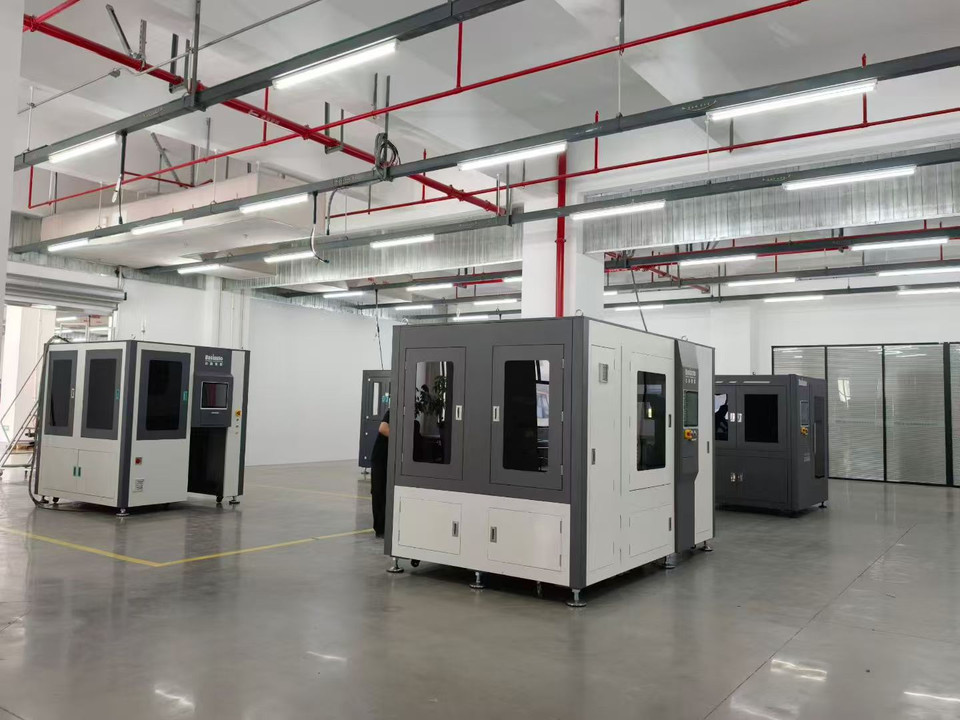
Once the process is stabilized, many manufacturers move to simpler production-focused configurations. For standard batch work, a single-chamber wet blasting cabinet is often a practical baseline. If loading time begins to dominate the cycle, a double-chamber blasting system can improve utilization by allowing one chamber to be loaded while the other is processing.
Eight Common Configuration Paths
The matrix below outlines eight common equipment routes used in wet blasting operations related to coating pretreatment and adjacent precision finishing tasks. It is a selection framework rather than a guarantee of outcome, because final results still depend on abrasive choice, nozzle condition, workholding, and recipe validation.
| Configuration / Model Tier | Target Production Scale | Workpiece Size Range | Precision Level | Recommended Applications |
|---|---|---|---|---|
| 1. Bench development unit | Feasibility trials and coupon testing | Very small samples | Moderate | Early process screening |
| 2. Flexible R&D robot cell | Pilot testing and mixed sample work | Small precision components | High | Recipe development and geometry trials |
| 3. Manual high-mix cabinet | Small-batch production | Small to medium parts | Moderate | Frequent changeovers and varied SKUs |
| 4. Standard single-chamber cabinet | Routine batch production | Small to medium precision parts | High | Stable pre-coating workflows |
| 5. Single-piece controlled-flow machine | Medium-volume one-by-one processing | High-value discrete parts | High | Traceable individual-part finishing |
| 6. Servo multi-axis precision cell | Complex geometry production | Parts with pockets, flutes, or multiple critical faces | Very high | Directional surface conditioning |
| 7. Double-chamber utilization system | Higher-volume repetitive output | Recurrent part families | High | Continuous loading with reduced idle time |
| 8. Integrated custom finishing line | Dedicated industrial workflow | Application-specific sizes | High to very high | Linked pretreatment and downstream finishing |
Cost, Lead Time and ROI Considerations
Capital cost in this segment is driven less by enclosure size alone than by the level of process control built into the equipment. A basic cabinet for rough cleaning may be comparatively simple, but pretreatment before CVD coating often requires tighter pressure control, more stable slurry management, more accurate motion, stronger HMI logic, and better mist handling. Those features add cost, yet they are also what make the process repeatable enough for engineered coating programs.
Automation level is one of the clearest price drivers. Manual loading and fixed-nozzle arrangements reduce system complexity, but they also increase reliance on operator consistency and can limit coverage control on difficult geometries. Servo motion, indexed handling, programmable recipes, and integrated waste-sedimentation functions generally increase the purchase price while reducing process variability and operator dependence.
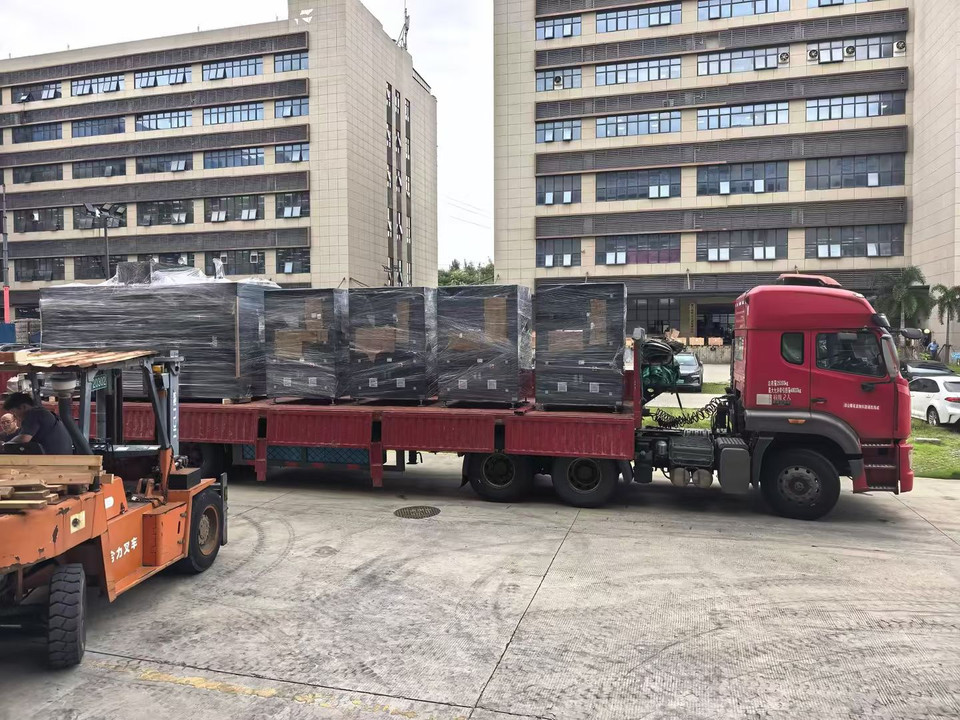
Lead time usually follows the same logic. A standard cabinet with proven utilities and limited customization often falls into a shorter planning band, while an application-specific system may need additional time for fixture design, sample validation, control programming, and factory testing. Buyers should therefore treat delivery windows as typical estimates until the process scope and part family are frozen.
Return on investment is best assessed through several layers rather than through labor alone. One layer is the reduction of manual touch-up, inconsistent hand deburring, and repeated cleaning steps before coating. Another is the reduction of rework and scrap caused by unstable substrate conditions entering the CVD process.
A third ROI layer is component performance. If better pretreatment reduces random edge failure, poor adhesion, or inconsistent coating support, the improvement shows up in tool life, process stability, and customer claims. On high-value tooling or wear parts, even small improvements in consistency can outweigh differences in machine purchase price over time.
Operating cost also deserves careful review. Abrasive replenishment, nozzle wear, pump maintenance, seals, mist-control components, water handling, and sludge disposal all contribute to true cost per part. In precision pretreatment, a lower-priced machine can become more expensive overall if it requires frequent intervention to keep the process inside the validated window.
Why Choose DasiAuto?
Established in 2012, DasiAuto develops and manufactures wet blasting equipment for industrial surface treatment. The company brings together equipment engineering, abrasive media, and application development, as described in About DasiAuto.
Application testing and process development help evaluate abrasive media and treatment settings before the equipment configuration is defined. Equipment engineering can bring together the blasting system, fixtures, automation, and part handling around the application.
Suitability for a particular material, geometry, finish, or dimensional requirement needs to be established through representative sample testing. DasiAuto supports installation, operator training, and ongoing technical support through the production workflow.
FAQ
Do I Need Sample Testing Before Ordering Equipment for Pretreatment Before CVD Coating?
In most cases, yes. Sample testing helps confirm whether the abrasive grade, pressure window, fixture approach, and cycle time can produce the required substrate condition without over-rounding edges or leaving residual defects. It is particularly valuable when the parts are high-value carbide tools or when several geometries share the same line.
Can One Wet Blasting Machine Handle Both Edge Honing and General Pre-Coating Surface Conditioning?
Often it can, but only when the process is separated through dedicated recipes, fixtures, and maintenance controls. Edge honing and general pretreatment may use the same machine class, yet they do not always share the same abrasive, pressure range, or exposure strategy. The more critical the part geometry, the more important that process separation becomes.
What Information Should a Buyer Provide When Requesting a Quotation?
Useful inputs include part drawings, substrate material, current upstream process, target CVD coating, production volume, cycle-time expectations, and the main defect modes being addressed. Photos of edge chipping, coating flaking, burr retention, or inconsistent post-coating appearance can also help define the right process route.
How Long Do Installation and Commissioning Usually Take?
That depends on whether the machine is a standard configuration or a customized system with dedicated fixtures and process development work. Standard cabinets are generally faster to install and bring online, while more specialized cells may require extended commissioning for recipe validation and operator qualification.
What Consumables and Maintenance Items Matter Most in Daily Operation?
The key recurring items are abrasive media, nozzles, hoses, seals, pumps, mist-control components, and sludge-handling parts. In a precision pretreatment process, any consumable that changes blast pattern, slurry concentration, or effective pressure should be inspected according to a defined maintenance interval rather than only after defects appear.
How Should After-Sales Support Be Evaluated for a CVD Pretreatment Project?
After-sales support should be evaluated by its effect on process continuity, not only by repair response time. The most useful support typically includes spare-parts planning, abrasive resupply, operator retraining, and assistance with revalidating process recipes when part geometry, substrate, or coating specifications change.