
Quick Answer
Carbide tool treatment before CVD coating extends tool life by preparing the substrate so the coating is deposited on a clean, uniform, and mechanically stable cutting edge rather than on grinding residue, weak micro-chips, or inconsistent surface texture. In wet blasting, water and fine abrasive are mixed into a slurry and accelerated by compressed air to condition the carbide surface with controlled intensity. For inserts, drills, end mills, and wear tools, that usually improves coating support, reduces early edge failure, and makes CVD results more repeatable across production batches.
| Core Factor | Typical Conclusion |
|---|---|
| Process type | Wet blasting / slurry blasting pretreatment |
| Pressure band | Typically low-to-medium pressure for precision carbide conditioning |
| Main objective | Clean substrate, stabilize edge, refine surface texture |
| Dust condition | Very low airborne dust compared with dry blasting |
| Typical parts | Carbide inserts, drills, end mills, punches, dies |
| Typical supply mode | Standard batch cabinets usually ship faster than custom automated cells |
What Is Carbide Tool Treatment Before CVD Coating
Carbide tool treatment before CVD coating is the controlled surface-preparation stage carried out after grinding, edge shaping, sintering-related finishing, or other upstream toolmaking steps and before chemical vapor deposition. Its job is to prepare the cemented carbide substrate so the coating grows on a surface that is clean, uniform, and free of unstable defects. In tool manufacturing, this treatment is not just a cosmetic step; it directly influences edge integrity, coating adhesion behavior, and consistency in cutting performance.
CVD coatings are commonly used on carbide tools because they can deliver wear resistance, thermal protection, and improved performance in demanding cutting environments. But the coating cannot compensate for a weak substrate condition. If the tool surface still contains smeared binder, grinding debris, edge burrs, micro-chipping, or local texture variation, those defects can become initiation points for coating failure or accelerated wear during use.
Where Wet Blasting Fits in Carbide Surface Treatment
Within the broader family of abrasive surface treatment, wet blasting is one of the most suitable routes for carbide tool preparation when the process must balance cleaning, edge conditioning, and repeatability. Instead of blasting dry media alone, the system suspends fine abrasive in water and propels the slurry toward the tool with compressed air. The water phase suppresses dust, cushions abrasive impact, and usually produces a finer, more uniform surface action than many dry processes.
That matters for carbide because the tool edge is a functional geometry, not just a boundary line. A small change in cutting-edge stability can influence coating behavior, cutting load distribution, and eventual wear pattern. In that sense, carbide tool treatment before CVD coating is best understood as engineered micro-conditioning rather than basic cleaning.
Why This Step Matters for Edge Integrity
Carbide tools often leave earlier processes with local inconsistencies that are too small to see easily but large enough to affect coating performance. A tool may look acceptable visually while still carrying a fragile micro-edge, loose grinding fines, or surface smear left by wheel interaction. If the CVD layer is applied over those conditions, the finished tool may show random early failures that are difficult to diagnose later.
This is why many toolmakers integrate pre-coating blasting with controlled edge preparation. A properly tuned process can reduce weak edge fragments, smooth out local irregularity, and support more consistent coating buildup at the cutting zone. The result is not simply a cleaner tool, but a more stable platform for the deposition stage.
Core Benefits of Wet Blasting for Carbide Tools
The first advantage is finer process control. Wet blasting can be tuned to remove contamination and condition the edge without excessive aggression. The second is lower dust generation, which supports a cleaner process environment and better housekeeping around precision tool finishing.
A third advantage is lower risk of uncontrolled local attack compared with harsher blasting routes. The fourth is repeatability when pressure, slurry concentration, nozzle condition, and fixture position are validated and held inside a process window. In carbide tooling, wet blasting is often selected because it can support both edge preparation and pre-coating cleanliness in one controlled surface-treatment route.
Carbide Tool Treatment Before CVD Coating vs General Pretreatment
General coating pretreatment may focus mainly on cleanliness and uniform matte texture. Carbide tool treatment before CVD coating has a narrower and more demanding target: the cutting edge must remain functionally correct while the substrate is cleaned and stabilized. That means process design usually pays closer attention to dwell time, nozzle angle, abrasive size, and edge response than in broader pretreatment applications.
For tool manufacturers, this often overlaps with edge honing of cutting tools. The pre-coating step may therefore serve both as surface cleaning and as a final edge-conditioning stage before the tool enters the CVD line.
How Does Carbide Tool Treatment Before CVD Coating Work
Carbide tool treatment before CVD coating works by circulating a controlled slurry of water and abrasive through a blasting system and directing it onto the carbide tool at a defined pressure, angle, and exposure time. The mechanism is straightforward, but the process result depends on tight control of slurry behavior, nozzle delivery, part presentation, and waste recovery. Small changes in any of those variables can shift the final edge condition and therefore the way the CVD layer performs in service.
Slurry Preparation for Carbide Substrates
The process begins in a mixing tank or reservoir where water and selected abrasive are combined into a slurry. The concentration must stay stable enough that every tool in the batch sees essentially the same abrasive loading. If the abrasive settles excessively or solids concentration drifts during operation, the surface result will also drift.
For carbide tools, finer abrasive grades are commonly preferred because they give better control over micro-texture and edge response. Coarser media can remove material faster, but they also raise the risk of over-rounding, uneven attack, or a surface condition that is too aggressive for the intended coating strategy.
Compressed Air Acceleration and Nozzle Path
Once prepared, the slurry is delivered through hoses to the blasting nozzle. Compressed air accelerates the slurry stream and projects it onto the tool surface. Pressure, nozzle size, impact angle, stand-off distance, and traverse speed together determine the effective energy delivered to the edge and rake or flank surfaces.
This is where process sensitivity becomes obvious. A change that seems minor in setup terms can materially change the edge radius, surface texture, or removal rate. For that reason, carbide tool treatment before CVD coating usually depends on qualified nozzle geometry and disciplined change control.
Workholding and Edge Exposure Control
Carbide tools are rarely simple flat parts. Inserts, drills, end mills, reamers, and form tools all present different edge orientations, flute access challenges, and surface priorities. Consistent workholding is therefore essential.
A standard nest may be sufficient for simple inserts, while rotary indexing or programmed motion may be needed for more complex cutters. If the edge is not presented consistently to the blast stream, one side may be over-processed while another remains under-conditioned, which can later appear as inconsistent tool wear or uneven coating support.
Closed-Loop Recovery and Sedimentation
After impact, the slurry falls into the recovery circuit carrying removed fines, degraded abrasive, and carbide-related sludge. That mixture cannot recirculate indefinitely without changing process behavior. As contamination builds, the slurry becomes less predictable and the pretreatment result becomes harder to keep stable.
A closed-loop system therefore includes circulation, sedimentation, and controlled discharge so waste material can be separated from the active slurry. On precision carbide work, this loop is not secondary equipment; it is part of the actual process capability.
Mist Control and Chamber Stability
Wet blasting suppresses dry dust, but it generates mist inside the enclosure. Chamber sealing, mist extraction, and viewing-window management all affect daily usability. Clear visibility helps the operator confirm spray pattern, part orientation, and slurry behavior during setup and verification.
For this reason, industrial carbide pretreatment systems often include dust-collection or mist-reduction features adapted to wet conditions. These features help protect process consistency as much as workplace cleanliness.
Pressure Feedback and Recipe-Based Control
Carbide tool manufacturers usually need more than a manual “best effort” process. Validated blasting conditions must be repeatable from one lot to the next, especially when tool geometry and coating performance are tightly specified. Recipe-based control makes that possible.
This is why PID closed-loop pressure control is important in precision wet blasting. It helps maintain constant blasting pressure despite fluctuations in supply or operating conditions, reducing drift and making carbide tool treatment before CVD coating more stable across long production runs.
For coated carbide tools, edge stability before deposition often matters as much as the coating chemistry itself.
| Process Parameter | Typical Range or Practice | Why It Matters |
|---|---|---|
| Working pressure | Typically about 0.15-0.45 MPa for carbide edge conditioning | Controls cleaning intensity, edge effect, and texture development |
| Slurry concentration | Usually maintained in a controlled low-to-medium solids range | Influences repeatability and uniformity |
| Abrasive particle size | Fine grades are typical for carbide tool pretreatment | Affects micro-finish and risk of excessive edge change |
| Air flow and nozzle condition | Verified through maintenance and recipe validation | Worn nozzles change actual process energy |
| Stand-off distance and impact angle | Fixed by fixture or motion program | Governs local coverage and directional action |
| Media consumption rate | Depends on abrasive breakdown and contamination load | Affects cost and process consistency |
| Control method | PLC/HMI with stored recipes and feedback control is typical | Improves traceability and batch repeatability |
Carbide Tool Treatment Before CVD Coating vs Dry Blasting vs Other Methods
Carbide tool treatment before CVD coating can be performed by several finishing methods, but they do not create the same substrate condition or the same level of control. Wet blasting is usually compared with dry blasting, shot peening, and vibratory or drag finishing because all of them change the outer surface by mechanical action. The correct choice depends on whether the goal is edge stabilization, coating support, bulk deburring, or stress engineering.
Wet Blasting vs Dry Blasting for Carbide Edge Preparation
Dry blasting can be effective where stronger surface attack or heavier cleaning is required. However, for carbide tool treatment before CVD coating, the process window is often narrow. Tool edges need controlled conditioning rather than aggressive erosion, and the surface entering the CVD chamber should be consistent rather than simply roughened.
Wet blasting generally offers a finer and more even interaction with the tool surface because the water phase cushions abrasive impact. It also generates much less airborne dust. In precision toolmaking, that combination usually makes process validation easier than with dry blasting. Broad abrasive blasting terminology helps frame the comparison, but carbide pre-coating work usually demands more detail than generic blasting definitions.
Where Shot Peening and Vibratory Finishing Fit
Shot peening has a different primary purpose. Its typical objective is to introduce compressive residual stress rather than to prepare a carbide cutting edge for CVD deposition. That makes it useful in some mechanical-engineering contexts, but less directly aligned with pre-coating tool conditioning, even when referenced within the wider shot peening technical background.
Vibratory or drag finishing can remove burrs and smooth surfaces effectively, especially on higher-volume part families. Yet those methods are often less selective and less directional than wet blasting on cutting geometries. For carbide tools with specific rake, flank, and edge targets, wet blasting usually provides better control over where and how the surface is modified.
| Evaluation Dimension | Wet Blasting Pretreatment | Dry Blasting | Shot Peening | Vibratory / Drag Finishing |
|---|---|---|---|---|
| Main process objective | Clean, refine, and stabilize carbide substrate | Clean or roughen with dry media | Introduce compressive stress | Deburr and smooth by bulk contact |
| Airborne dust | Low | High unless extraction is extensive | Moderate in enclosed systems | Low airborne dust, but media/compound handling is required |
| Surface finish character | Fine, even matte finish is typical | Often rougher and less cushioned | Peened functional texture | Broad smoothing effect |
| Edge control on carbide tools | High with validated fixtures and recipes | Moderate | Limited for cutting-edge preparation | Moderate, often less directional |
| Suitability before CVD | Strong | Selective | Indirect | Selective |
| Media embedding risk | Lower on many sensitive surfaces | Higher on some substrates | Depends on media and part material | Different mechanism; indirect comparison |
| Environmental management | Slurry, mist, and sludge handling | Heavy dust-collection burden | Dry media containment | Media, compound, and wastewater handling |
Key Specifications to Evaluate Before Buying
Buying equipment for carbide tool treatment before CVD coating starts with defining the tool family, not with comparing cabinet sizes. Inserts, drills, end mills, form tools, and wear components all have different exposure needs. A machine that works for simple flat inserts may not be appropriate for fluted cutters or complex geometry tools.
Pressure Stability Matters More Than Peak Pressure
For carbide pretreatment, the useful pressure window is usually more important than the machine’s maximum rating. The equipment must hold a stable low-to-medium blasting range so that cleaning and edge conditioning stay repeatable. Procurement teams should ask how pressure is measured, how drift is corrected, and how validated settings are protected from unplanned operator changes.
Motion Precision and Part Presentation
Many carbide tools require controlled exposure at several faces or along complex cutting geometry. That makes axis control, indexing, and fixture repeatability central to the specification. Equipment advertised as precise is only truly precise if the part is located in the same way every cycle.
Where geometry is complex, servo X/Y/Z linkage should be evaluated together with fixture discipline and nozzle-path repeatability. Motion capability affects not only automation but also surface uniformity, edge conditioning accuracy, and recipe transferability between batches.
Throughput, Cycle Time, and Changeover
Cycle time on paper does not equal plant throughput. Buyers should evaluate loading and unloading, recipe selection, fixture exchange, nozzle inspection, slurry stabilization, and in-process checks. A slightly slower machine can still produce more qualified tools per shift if it is easier to keep inside the validated process window.
This point becomes critical in high-mix tool production. Shops producing many geometries need quick changeover and reliable recipe recall, while long-run insert production may prioritize simplified workflows and robust uptime.
Footprint, Utilities, and Maintenance Access
Footprint planning should include the blasting cabinet, slurry tank, service clearance, compressed-air routing, mist extraction, and sludge-removal access. A compact cell may look attractive, but poor maintenance access can increase downtime and make process discipline harder to sustain.
Utilities typically include electrical supply, stable compressed air, water management, and a defined path for handling sludge and spent abrasive. These practical issues affect real operating cost and should be reviewed early rather than after installation.
Slurry Management, HMI, and Safety Features
The quality of the slurry loop often separates industrial pretreatment equipment from general-purpose blasting equipment. Buyers should review how the system maintains slurry concentration, separates waste, and simplifies sediment discharge. HMI features such as recipe storage, permission hierarchy, and maintenance prompts also matter because they reduce operator-dependent variation.
Safety review should include door interlocks, emergency stop design, enclosure sealing, splash containment, visibility, and service isolation. Plants with formal production systems often also check whether the equipment aligns with their broader quality management framework for traceability and controlled process execution.
Applications Across Industries
Although the keyword centers on carbide tooling, the same wet blasting logic applies across multiple precision-manufacturing sectors. Any part that depends on a stable substrate before a hard functional coating can benefit from controlled surface conditioning. That includes wear components, dies, forming tools, medical hardware, and advanced manufactured metal parts.
The reason is simple: pre-coating defects are rarely isolated to one industry. Weak burrs, smeared material, local texture variation, and unstable edge fragments can undermine coating behavior in cutting, forming, sliding, or wear applications alike. Wet blasting is valuable because it can be tuned from delicate edge preparation to broader pre-coating equalization without changing the core process family.
Where the priority is general deburring before coating, wet blasting can overlap with burr removing of metal parts. Where the requirement is broader industrial surface readiness, related methods may also sit within a larger protective coating preparation practice defined by plant-specific quality procedures.
| Application Type | Target Industry | Workpiece Example | Process Benefit |
|---|---|---|---|
| Edge preparation before CVD | Cutting tool manufacturing | Carbide inserts, drills, end mills | Supports adhesion and reduces weak-edge failure risk |
| Burr removal before coating | Precision machining and stamping | Small carbide or metal components | Removes unstable burrs that can disturb coating continuity |
| Mold and die pre-coating treatment | Tooling and moldmaking | Forming inserts, punches, dies | Creates a more uniform substrate before hard films |
| Wear-part conditioning | Mechanical engineering | Sleeves, seats, guide parts | Improves substrate stability for wear-resistant coatings |
| AM metal post-processing | Additive manufacturing | 3D-printed metal tooling inserts | Cleans loose particles and equalizes surface condition |
| Scale removal before finishing | Forging and bar processing | Forged parts or bars requiring later coating | Removes residual scale before downstream treatment |
| Medical or precision hardware treatment | Precision component manufacturing | Carbide or stainless technical parts | Improves consistency before functional coating steps |
| Fine cosmetic metal finishing | 3C and hardware supply chain | Precision metal housings and fittings | Produces an even base surface for controlled finishing |
Equipment Selection Guide
Selecting a platform for carbide tool treatment before CVD coating depends on the balance between geometry complexity, production scale, and required precision. Early-stage process development usually needs flexibility, while qualified mass production needs stability and simpler execution. The best equipment choice is therefore the one that matches the maturity of the process as well as the part family.
R&D, Sampling, and Validation
During development, engineers typically need to test abrasive grades, edge responses, fixture options, and blasting paths before fixing the production recipe. A flexible R&D robot wet blasting cell is well suited to that stage because it supports small batches, mixed geometries, and iterative sample verification.
Standard Production and Higher Throughput
Once the process window is validated, many manufacturers move toward simpler production hardware with stronger repeatability. For batch pretreatment of carbide tools, a single-chamber production cabinet is often a practical baseline. If output demand increases and loading time begins to limit capacity, a double-chamber wet blasting system can improve utilization by separating processing time from handling time.
Eight Typical Configuration Paths
The matrix below summarizes eight common equipment configurations relevant to carbide tool treatment before CVD coating and adjacent precision surface-treatment tasks. It should be read as a selection guide rather than a hard capability promise, since abrasive choice, nozzle condition, and fixturing still determine the final result.
| Configuration / Model Tier | Target Production Scale | Workpiece Size Range | Precision Level | Recommended Applications |
|---|---|---|---|---|
| 1. Bench development unit | Feasibility tests and coupons | Very small samples | Moderate | Early process screening |
| 2. Flexible R&D robot cell | Pilot trials and mixed sample work | Small precision tools | High | Recipe development and geometry validation |
| 3. Manual high-mix cabinet | Small-batch production | Small to medium tools | Moderate | Frequent changeovers across SKUs |
| 4. Standard single-chamber cabinet | Routine batch production | Small to medium carbide parts | High | Stable pre-coating workflows |
| 5. Single-piece controlled-flow machine | Medium-volume one-by-one processing | High-value discrete tools | High | Traceable individual-part treatment |
| 6. Servo multi-axis precision cell | Complex geometry production | Fluted tools and difficult-access parts | Very high | Directional edge and surface conditioning |
| 7. Double-chamber utilization system | Higher-volume repetitive output | Recurrent part families | High | Continuous loading with reduced idle time |
| 8. Integrated custom finishing line | Dedicated industrial workflow | Application-specific sizes | High to very high | Linked pretreatment and downstream finishing |
Cost, Lead Time and ROI Considerations
The cost of equipment for carbide tool treatment before CVD coating is shaped more by process-control requirements than by cabinet size alone. A simple blasting enclosure may be enough for rough cleaning, but carbide pre-coating work usually demands better pressure stability, finer motion control, stronger slurry management, and more disciplined recipe handling. Those features raise capital cost, but they are also what help convert a manual finishing step into a reliable manufacturing process.
Automation level is one of the main pricing drivers. Manual loading and fixed nozzles reduce complexity, but they also increase dependence on operator technique and can limit consistency on more complex tools. Servo motion, indexing, recipe management, and automated waste-sedimentation functions typically increase machine price while improving repeatability and qualified output.
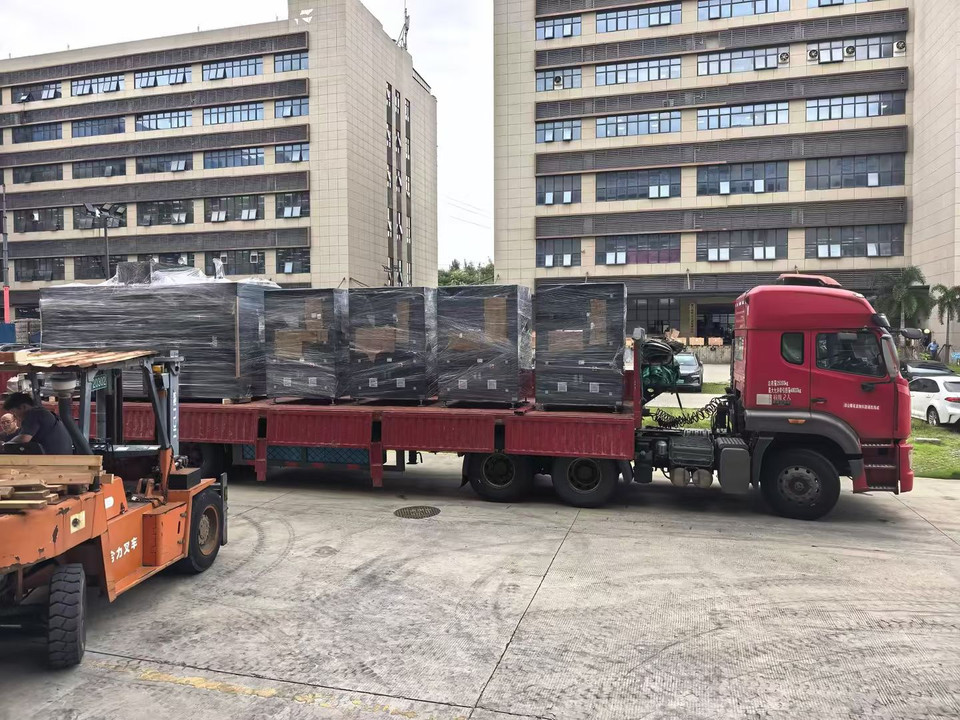
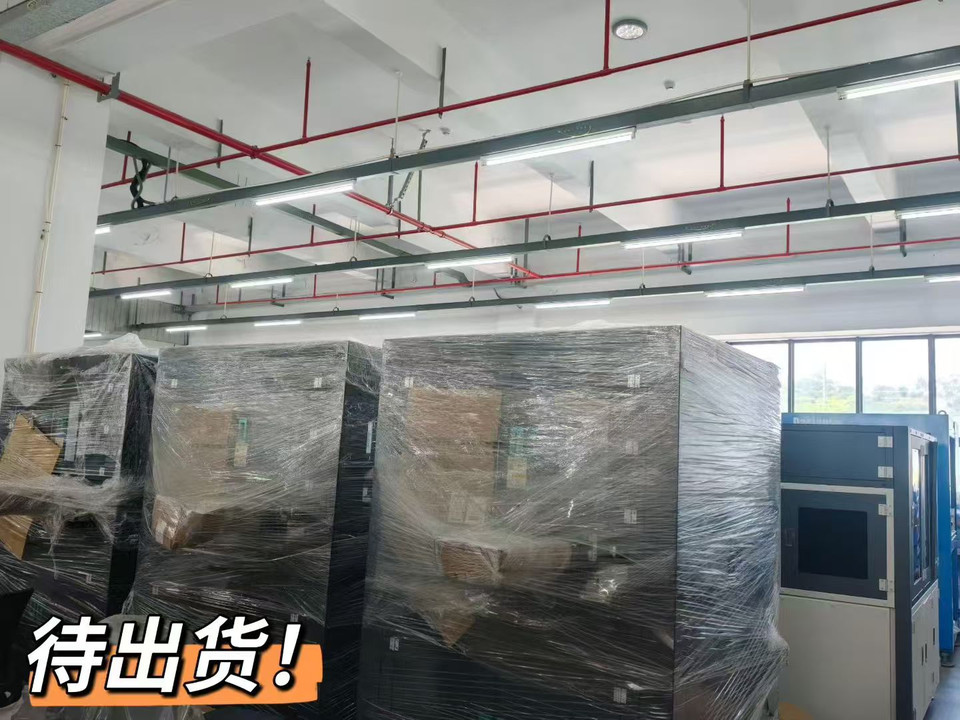
Lead time usually depends on how standardized the machine is. Standard production cabinets tend to fall into shorter planning bands, while customized tool-focused cells often require more design time for fixtures, path development, control programming, and sample verification. Buyers should therefore treat quoted delivery windows as typical estimates until part scope and acceptance criteria are fully defined.
Return on investment is best framed around process stability rather than labor alone. One layer of ROI comes from reducing manual touch-up, repeated cleaning, and inconsistent hand deburring before coating. Another comes from reducing rework, scrap, and coating-related failures caused by unstable edge or surface conditions entering the CVD stage.
For tooling producers, the most meaningful measure is often cost per qualified part rather than the purchase price of the machine itself. If the pretreatment step improves coating support, reduces random early chipping, and stabilizes tool life from lot to lot, the financial impact can exceed the value of raw cycle-time savings. This is especially true in premium carbide tooling where a small loss in edge consistency can have an outsized effect on performance claims and customer returns.
Operating cost should be reviewed with the same discipline as capital cost. Abrasive replenishment, nozzle wear, pump and seal replacement, mist extraction maintenance, water handling, and sludge disposal all influence the long-term economics. A lower-cost machine can become the more expensive choice if it drifts frequently or requires excessive intervention to maintain validated results.
Why Choose DasiAuto?
Established in 2012, DasiAuto develops and manufactures wet blasting equipment for industrial surface treatment. The company brings together equipment engineering, abrasive media, and application development, as described in About DasiAuto.
Application testing and process development help evaluate abrasive media and treatment settings before the equipment configuration is defined. Equipment engineering can bring together the blasting system, fixtures, automation, and part handling around the application.
Suitability for a particular material, geometry, finish, or dimensional requirement needs to be established through representative sample testing. DasiAuto supports installation, operator training, and ongoing technical support through the production workflow.
FAQ
Is Sample Testing Necessary for Carbide Tool Treatment Before CVD Coating?
In most cases, yes. Sample testing helps verify whether the abrasive grade, pressure window, nozzle path, and fixture logic can achieve the intended edge condition without over-rounding or leaving residual defects. It is particularly important when multiple tool geometries will share one pretreatment line.
Can One Wet Blasting Machine Handle Both Inserts and Complex Rotary Carbide Tools?
Often it can, but only if the machine has the right motion capability and the process is separated by validated recipes and fixturing. Simple inserts may run well in a straightforward batch setup, while drills or end mills may need more controlled indexing or multi-axis exposure.
What Information Should a Buyer Provide When Requesting a Quotation?
Useful inputs include tool drawings, carbide grade, current upstream finishing route, target CVD coating, required throughput, and the defect mode being addressed. Photos of edge chipping, coating flaking, burr retention, or inconsistent wear patterns are also valuable because they help define the actual process target rather than just the desired machine size.
How Long Do Installation and Commissioning Usually Take?
That depends on whether the equipment is a standard configuration or a customized tool-focused system. Standard cabinets are generally faster to install and qualify, while more specialized cells may require additional time for fixture tuning, recipe validation, and operator training before they are released to production.
Which Consumables and Maintenance Items Matter Most in Daily Operation?
The main recurring items are abrasive media, nozzles, hoses, seals, pumps, mist-control components, and sludge-handling parts. In precision carbide pretreatment, any consumable that changes blast pattern, slurry concentration, or effective pressure should be replaced on a defined schedule rather than only after visible defects appear.
How Should After-Sales Support Be Evaluated for a Carbide Tool Pretreatment Project?
After-sales support should be judged by its effect on process continuity, not only by emergency repair response time. The most useful support usually includes spare-parts planning, abrasive resupply, operator retraining, and assistance with revalidating recipes when tool geometry, carbide grade, or coating specifications change.